|
|
|
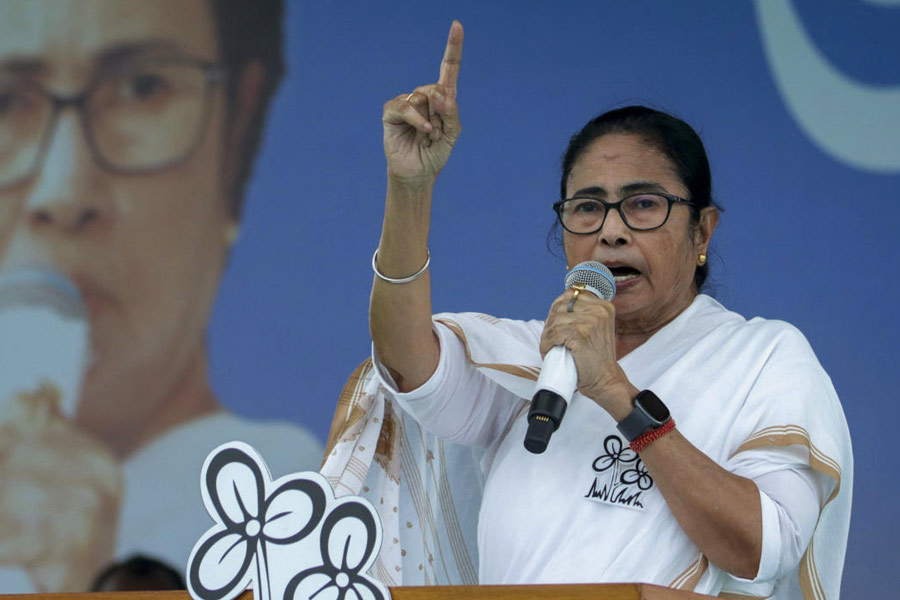
Winning tunes: Shubha Mudgal is one of the artists who complained about musicians being denied royalties |
How many times have you watched Sholay on TV, and hummed Main nachungi along with Hema Malini? You remember the song, but do you recall the channel you saw the film on? Or the name of the producers?
Chances are that you don’t. Strangely, they are the ones who are getting paid every time the film gets aired on television. The lyricist, music director or singer — whose works you still remember fondly — are paid no royalty.
But here’s some good news. The practice — seen by the music industry as blatantly unfair — is set to change. The ministry of human resource development (HRD) has proposed to amend the Copyright Act, 1957. The move has come after the intervention of some noted members of the music fraternity — such as lyricist Javed Akhtar and singers Shubha Mudgal and Jagjit Singh — who made a representation to Prime Minister Manmohan Singh stating that though their creative work was used in films and by channels repeatedly, they never earned any money from the reruns.
The existing law is not very clear about royalty to creative artists. The creative work is treated like an assignment commissioned which, once completed, would belong to the person paying for it. According to section 52(J) of the existing Copyright Act of 1957, “the making of records in respect of any literary, dramatic or musical work is not an infringement of the mentioned Act” if permission has been taken from the owner of the copyright. A person has to give notice of his or her intention to make recordings or copies of a particular work. Copyright owners have also to be paid royalties at a rate fixed by the Copyright Board.
The HRD ministry has proposed that creative artists such as lyricists, playback singers, music directors, film directors and dialogue writers, among others, should be paid royalty every time the film they have worked for is aired by any TV channel. The copyright period of a film is also to be extended from the current period of 60 years to 70 years, provided that the film’s producer enters into a royalty-sharing agreement with the director also. The proposed amendment also suggests that a remix or a “cover” version of any song would require a prior licence from the original copyright holder of the song.
“It’s evident that under the law in its present form, all rights reside with the producers of films. But if the law is amended, and ‘unassignable rights’ are accorded to the creative artistes, not only will it be restoring the rights of the artistes, which is long due, but it will also be giving them some respect,” says retired Justice Samaresh Banerjea of the Calcutta High Court. He adds that this move would be in keeping with the World Intellectual Property Organization (WIPO), of which India is a member. WIPO, the specialised United Nations agency, promotes the protection of intellectual property throughout the world through co-operation among states and in collaboration with other international bodies.
Creative artistes are happy with the move. Music director Shantanu Moitra believes that the measure will help upcoming artistes. “The bigwigs of the music industry, such as Asha Bhonsle or the late R.D. Burman, got royalty when their music was played by radio stations. It’s the lesser known or upcoming singers who are deprived. This amendment will definitely safeguard the creative rights of artistes whose services are bought for a one-time fee.”
Some believe that the move may also nip plagiarism. “In India many films and songs are rip-offs. So, this amendment could be a way of safeguarding a person’s creativity as well as give the original composers their due,” says Calcutta High Court advocate Arindam Mukherjee. But some are not very sure if the new measure will tackle copies. Calcutta High Court counsel Protik Prokash Banerji hopes that the censor board will have the right to stop the screening of a rip-off.
But where does the new amendment leave those who earn their livelihood by singing or re-mixing popular numbers? Disc jockeys (DJ), for one, are a bewildered lot. “Most of the tracks are re-mixed, so paying royalty out of our pockets is going to pinch badly,” says DJ Asad of Big Ben, Calcutta.
While Asad passes on the onus of paying royalties to club owners, producers have their own grouses. If royalty is to be shared with musicians, then the losses should be borne by all quarters, some argue. “I don’t mind sharing the booty with the creative artists. But the lawmakers should keep certain clauses that act as a breather if a film bombs,” says Anjum Rizvi, producer of A Wednesday and Fast Forward.
Academics believe that a via media has to be found. “In this age of Internet, marketing and distribution come really cheap,” says Professor Shamnad Basheer, ministry of HRD chaired professor in IP Law at the National University of Juridical Science, Calcutta. If a project undergoes a loss, perhaps the royalties should be waived. But profits should be shared, says Basheer.
“Copyright in India has always been an issue. This amendment is a rectification of a mistake done long ago,” he says. He points out that the old Copyright Act had a clause which stated that after 25 years, the right to resell or repackage the creative content of an assignment went back to the artiste. After some heavy lobbying by both the recording fraternity and the film industry — who claimed that this right actually stopped them from sharing revenues, in the form of royalty, with the artiste — the law was amended to its present form. “And today if we look back, not much share has been passed on to these artistes many of whom have died in penury,” he rues.
Basheer also stresses on the need of drafting contracts between the producers and the artistes, keeping profit of both the parties in mind. Banerji of the Calcutta High Court agrees. “As in the United States and the United Kingdom, the parties should draft a neat agreement and the creative artistes need to be conscious that they don’t sign away a lifetime right to the producer,” he says.
Clearly, the move — once it gets implemented — will be music to the ears of some in the film industry. Some of the others will have their fingers in their ears.
|