The Telegraph
 
 
IN TODAY'S PAPER
WEEKLY FEATURES
CITIES AND REGIONS
ARCHIVES
Since 1st March, 1999
 
THE TELEGRAPH
 
 
Email This Page

New bonds in banking

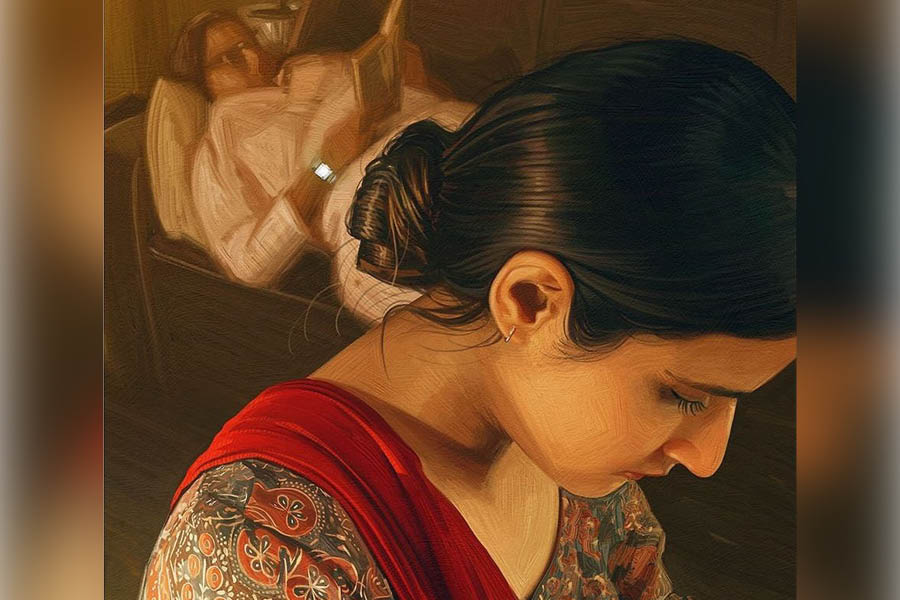
A group of young Indian bankers in London have launched an amateur theatre group called Aks with a production of 30 Days in September, Mahesh Dattani’s dark play about a typical middle class Delhi family where both mother and daughter have to tackle the traumatic consequences of having been victims of incest.

Considering that the majority of the cast members had little or no previous experience of acting, their debut performance in Rudolf Steiner House, a cosy 228-seat theatre, a short distance from Lord’s cricket ground, was surprisingly engaging.

I am not sure how their bosses would react to the theatre group’s mission statement: “Aks Performing Arts is a platform for artistic expression for London-based professionals with more energy than their day jobs can consume.”

“Banking can be a bit dry,” confesses Neha Jain, artistic director of Aks.

She used to be with Lehman Brothers but survived the shock of its collapse to find a job with Prytania Investment advisers.

She chanced upon 30 Days in September in a Delhi bookshop and instantly decided this was the play to do — and secured Dattani’s clearance.

Neha is only 26 but was made up to look old and crushed as the mother, Shanta, in the play. Aditi Vadnagare, whose day job is with Barclays Capital, is well cast as the vivacious but troubled daughter, Mala.

Among other cast and crew, Ankur Chopra, who is convincing as the villain in the play, is with Nomura, the Japanese bank. Neha Datta, marketing girl for Aks, is with PSolve, which specialises in pensions, while Nidhi Kumra, responsible for event management, is now with Standard Bank, having, like, Neha Jain, worked previously with Lehman Brothers.

Two of the group have known each other from their IIT days in Delhi. But new and deep bonds have been formed through the experience of rehearsing after a hard day at the office.

“We became friends through this,” says Siddharth Nambiar, who works for Evalueserve, a knowledge process outsourcing firm, and impresses as the hero.

As a result of the recession, for which bankers are held responsible, many in the UK would like to see them hanging from lamp posts — and not always in the metaphorical sense. But I rather took to the lot I met and will want them spared should the tumbrils ever roll through the City of London.

Aks, the Hindi-Urdu word for reflection, they point out, “aims to be a mirror to contemporary society”. Encouraged by the enthusiastic audience reaction, the actors find they are receiving many requests from other bankers wanting to join the next production which might be a musical.

Neha tells me: “We also think it would be good to do a play about bankers.” A compromise would be a musical about bankers.

True blue

Among the plaques put up in London to commemorate important historical figures who have lived here are ones for Mahatma Gandhi, Jawaharlal Nehru and Rabindranath Tagore.

As a 19-year-old studying law at the Inner Temple in the 1880s, Gandhi lived at 20, Baron’s Court in the borough of Hammersmith and Fulham in west London. According to a new 600-page book, Blue Plaques and the Stories Behind Them, edited by Emily Cole (Yale University Press, £40), Gandhi’s landlady charged him 30 shillings a week but could not give him the vegetarian fare he desired.

It is a pity that neither Barack Obama nor Tony Blair were around then for the American President and the former British Prime Minister have both disclosed that as they would both have liked to have dined with Gandhi, their hero. Instead, Gandhi complained his landlady’s meals were “third rate” and often went hungry.

London’s blue plaque scheme, founded in 1866, is the oldest of its kind in the world and has been imitated around the globe. Run successively by the Royal Society of Arts, the London County Council, The Greater London Council, and since 1986, English Heritage, it commemorates the link between notable figures of the past and the buildings in which they lived and worked.

Nehru’s address — 60, Elgin Crescent in the Royal Borough of Kensington and Chelsea — was altogether more upmarket.

In Hampstead, north London, regarded as a cultural “village” today for left-wing but arty champagne socialists, there is a plaque to Rabindranath Tagore at 3 Villas on Vale of Heath.

It says: “Rabindranath Tagore 1861-1941 Indian Poet stayed here in 1912”.

The UK is gearing up to celebrate the 150th anniversary of his birth on May 7, 2011.

For example, there are ambitious plans to hold a Tagore festival at Dartington Hall, the 1,000-acre rural retreat near Totnes, Devon, founded in the 1920s by the poet’s travelling companion, Leonard Elmhirst.

“The festival will be a living celebration of Indian and British partnerships in promoting sustainability, the arts, and social justice,” says its creative director, Satish Kumar, himself a distinguished environmentalist and monk.

Holed up: Pervez Musharraf

Mushie’s move

What next for Pervez Musharraf who is currently holed up in a three-bedroom flat in London which is somewhat smaller than Army House in Rawalpindi that he occupied as President of Pakistan?

A friend of mine had lunch with Musharraf’s would-be nemesis, Nawaz Sharif, who wants the retired general put on trial.

“Zardari won’t last,” he says. “Nawaz Sharif will be in power in a year or two.”

At least, that is Sharif’s opinion.

But wasn’t Sharif Prime Minister of Pakistan during the Kargil War a decade ago when he was outwardly engaged in peace talks with India? Could such a duplicitous man be trusted by India again?

My friend, who is Indian, says Sharif Mark II is a changed man. “He told me, ‘I’ll not make the same mistakes again.’”

Sharif is supposed to be close to the Saudis but, according to a newspaper report, King Abdullah sent a private jet to London to pick up Mushie. Like the British, who are helping to guard Mushie, all players are hedging their bets.

Far from facing Sharif’s vengeance, Mushie was last week about to begin a lucrative 40-day lecture tour of the US.

Peer pressure

A Pakistani member of the House of Lords, Nazir Ahmed, who does not like Pervez Musharraf, has written to the Home Secretary, Alan Johnson, stating that the former President’s presence in London is having an “adverse impact on community cohesion”.

Lord Ahmed’s usual interest is Indian oppression in Kashmir so his friends will be pleasantly surprised by his new found enthusiasm for law and order.

Could this be the same Nazir Ahmed who has been in prison for dangerous driving in a case in which another motorist was killed and subsequently expelled from the Labour Party?

Tittle tattle

Meanwhile, there is news of another president. I am told Buckingham Palace, where Pratibha Patil is expected to stay during her state visit to the UK from October 27-29, has “taken full charge” of arrangements. There will be no press interaction but she will visit science facilities at Cambridge.

Though I have no strong opinion on the matter, I pass on a tip from a fashion adviser who is otherwise a Pratibha Patil admirer: “For God’s sake, please don’t wear those buttoned-down, long sleeve blouses.”

Top
Email This Page