TT Epaper LHS
The Telegraph
TT Mobile
 
 
IN TODAY'S PAPER
WEEKLY FEATURES
CITY NEWSLINES
FEEDS
  RSS
  My Yahoo!
SEARCH
 
Archives Web
 
ARCHIVES
Since 1st March, 1999
 
THE TELEGRAPH
 
CIMA Gallary
 
Email This Page
Umbrella pact gives way to standard text
- Indo-US arrangement omits ‘on-site’ thorn
Clinton, Krishna

New Delhi, July 21: India has agreed to US inspections of military equipment bought from America at dates and venues that will be decided through “joint consultation for joint security verification”, a highly placed official told The Telegraph today.

Both countries have also shelved a proposal for an overarching agreement, opting for a “standard text” that will be attached to individual bilateral defence deals.

Asked if US weapons inspectors would have access to Indian military installations, the official replied: “Not necessarily.”

The reply leaves room for US manoeuvre on installed weapons systems, although India seems to have managed to keep “physical on-site” inspections — a touchy subject — out of the draft of the “standard text”. This suggests that wherever weapons can be shifted, the inspections can take place away from military installations or even in third countries.

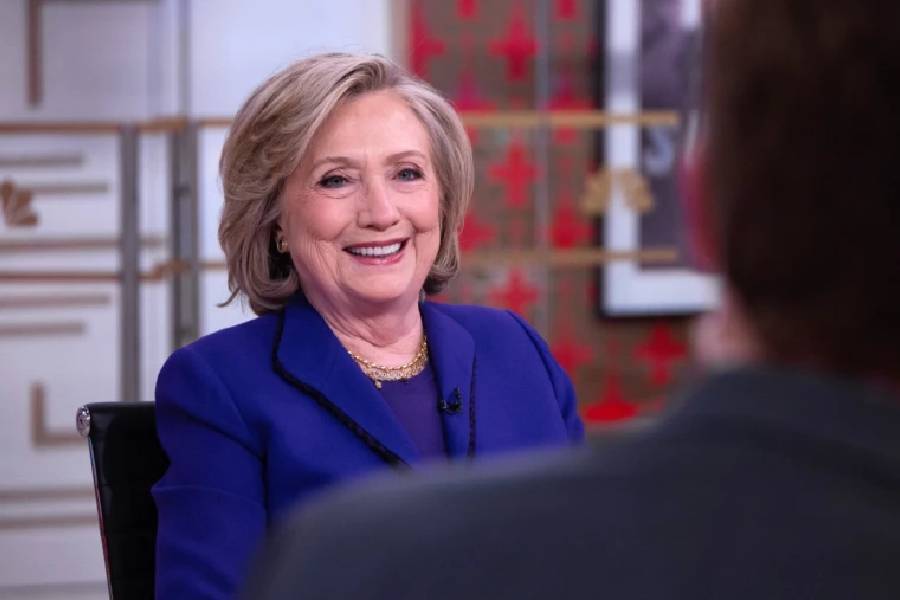
The official was explaining the “standard text” on end-use monitoring that was agreed on by India and the US. The two countries had announced yesterday, after talks between Indian foreign minister S.M. Krishna and US secretary of state Hillary Clinton, that “arrangements” had been reached on end-use monitoring.

India has negotiated separate end-user pacts with the US for defence deals it has done over the past eight years. With a “standard text” now agreed on, there will be no separate overarching pact. Neither is there need for separate discussions on end-user monitoring for each US military equipment that India now imports, the official said.

The “standard text” will now onwards be an appendix to all letters of agreement India and the US sign for defence transactions.

Major US defence companies have immediately welcomed the announcement in anticipation of billions of dollars of sales to India. The agreement came on a day Indian Army chief General Deepak Kapoor reached the US on an official tour.

But Parliament was in uproar today with the BJP and the Left walking out of the Lok Sabha despite Krishna’s statement in the House that there was no question of bartering the country’s freedom.

Asked about apprehensions that US weapons inspectors can walk into Indian military installations on the pretext that they want to check the use of American hardware, the senior official said that the words “physical on-site” do not figure in the “standard text”.

The biggest hitch in the run-up to the “standard text” on end-use verification, which was being negotiated for two years, was whether the inspectors would be allowed access to the equipment inside Indian military installations at will -- in other words “physical onsite” verification.

“The Government of India agrees to make available through mutual consultation to authorised US personnel” access to American equipment used by the Indian armed forces, the official said, reading from the text. The dates and venues are to be decided through “joint consultation for joint security verification”, the official said, reading from the “standard text” that has not been made public so far.

Asked if Washington had made an exception for Delhi, the official said: “Frankly, I do not know about that but certainly they have accepted our concerns.”

In a separate announcement by another top official, foreign secretary Shiv Shankar Menon told MPs during a lecture today: “We can show the text of the agreement to a standing committee (of MPs). We haven’t signed any agreement. We have finalised the arrangement. Now we will be signing a letter of acceptance. The US has the same end-user verification agreement with 82 countries. We also insist on end-use certificate when we sell defence equipment.”

US defence companies expect the announcement on end-use verification to boost sales.

“This landmark pact speaks to the strengthening bilateral relationship between India and the US on many fronts and is a cornerstone of the increasing trust forged by both countries,” Boeing said.

“The agreement will make it easier to share important US defence technology with India and Boeing looks forward to working within the framework of this agreement to support India in modernising its defence forces,” the company said.

Boeing and Lockheed Martin are among six bidders for an Indian Air Force order of 126 medium multi-role combat aircraft that could top $12 billion. A Russian, a French, a Swedish and a European consortium are also in the race. The announcement on end-use monitoring makes it easier for Boeing and Lockheed Martin to offer critical technologies and strengthen their bids.

“We applaud the signing of the End Use Monitoring Agreement. This signals an era of increased defence cooperation between the United States and India and we look forward to supporting the requirements of the Indian armed services in partnership with Indian industry,” said Richard Kirkland, South Asia chief for Lockheed Martin Global.

“Such an agreement will enable defence and security trade between the US and India as never before, and will facilitate the participation of US companies in supporting India in transforming its military and homeland security apparatus," said a statement from the US-India Business Council (USIBC) that represents American companies doing business in India.

“Agreement on EUM, besides opening the door to increased defence trade and security co-operation, indicates a high level of trust and co-operation between the US and India,” said Ron Somers, the USIBC president. The USIBC has urged the Indian government to allow foreign direct investment up to 49 per cent in the Indian defence sector.

Foreign investment in the sector is currently capped at 26 per cent.

General Kapoor’s week-long programme includes discussions with top officials including defence secretary Robert Gates, chairman of the joint chiefs of staff Admiral Mike Mullen, US army chief General George W. Casey and the head of US Central Command.

He is also scheduled to meet US Central Command chief, Gen. David Petraeus for discussions on Pakistan-Afghanistan at CENTCOM headquarters in Tampa, Florida.

General Kapoor is also invited to Fort Bragg in North Carolina, home of the US Army Special Operations Command.

Top
Email This Page