|
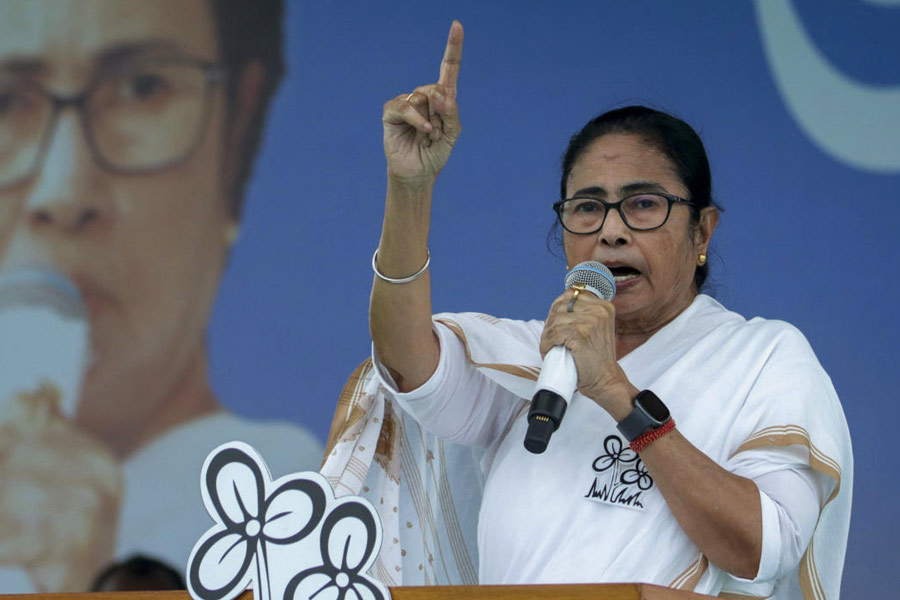
New Delhi, July 3: Mamata Banerjee today commenced her journey towards inclusive growth, presenting a rail budget that kept fares and freight rates unchanged and laid out the road map for public-private partnership in railway infrastructure.
As part of her inclusive-growth strategy, Banerjee promised to expand the rail network and take development to every corner of the country.
An expert committee will advise the railways on innovative financing strategies to implement economically unviable but socially desirable projects an area where her predecessor Lalu Prasad was reluctant to venture.
According to Gaurav Dua, head of research, Sharekhan, The railway budget is more reformist than populist. Rather than the giveaways in the form of lower passenger tariffs, the focus is on the productive utilisation of spare land and development of infrastructure under the public-private-partnership model.
No increase in freight tariffs is also positive for many core industries such as steel and cement, Dua said.
Clear signal
Other analysts said the railway budget had sent a clear signal on the governments intention to pursue reforms, and the general budget on Monday would lay down the road map.
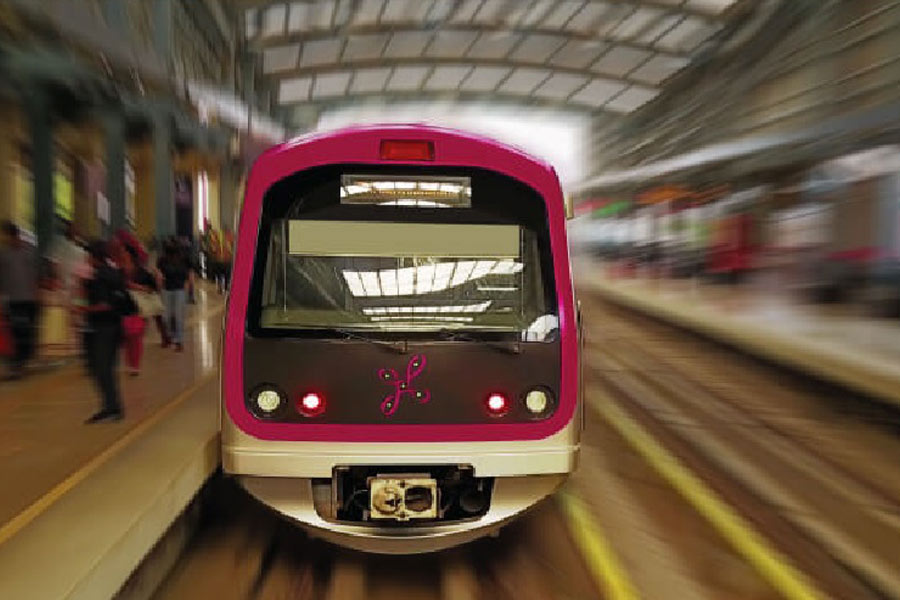
In public-private partnership projects, the land bank of the railways would serve as its equity. Banerjee announced a new coach factory at Kanchrapara in Bengal with annual capacity of 500 electrical multiple units (EMUs) plus carriages for the Metro Rail.
Also under the public-private-partnership ambit are cold storages and air-conditioned centres for perishable cargo along with their transporation.
The economic slowdown has forced the railways to revise its freight targets. The budget estimates for 2009-10 project a freight loading target of 882 million tonnes, an increase of 49 million tonnes, and a six per cent increase in the number of passengers.
Gross traffic receipts have been estimated at Rs 88,419 crore, which is Rs 8,557 crore more than 2008-09.
Target revision
It is very clear that the unrealistically high targets set in the interim budget are not sustainable and warrant a midcourse correction. I have now set more realistic targets for the year based on the continuing trend of recession in manufacturing and exports, Banerjee said.
She proposed an outlay of Rs 40,745 crore for 2009-10. Of this, Rs 2,921 crore will be spent on new lines, Rs 1,750 crore on gauge conversion and Rs 1,102 crore on passenger amenities, which is 119 per cent more than the allocation in the interim budget.
A Rail Board member said the higher revenue target of Rs 88,419 crore for this fiscal reflected the railways perception of a revival in growth.
In the first quarter (April-June) of the current fiscal, the freight growth was over 5 per cent. In June, it was as much as 9 per cent. Prospects are very good. There are signs of economy looking up, Railway Board member (traffic) Shri Prakash said.
Rail Board chairman S.S. Khurana said achieving targets was a big challenge.
We are aware of the difficult year ahead but have already geared up to ensure that we not only achieve these targets but also improve upon them.
INDUSTRY SPEAK
All-inclusive
The pro-people,
pro-industry and
pro-economy railway
budget will create a
win-win situation for
all — the railways, the wagon manufacturers, heavy industries and
the common man.
Venu Srinivasan ,
CII PRESIDENT
Progressive
The Railway Budget 2009-10 is clearly a
progressive and a forward-looking budget. The
industry is pleased that the minister has not
increased freight tariff.
Harsh Pati Singhania,
FICCI PRESIDENT
Expansion cue
In totality, the budget proposals will provide for inclusive growth
and at the same time
ensure expansion of railways.
Sajjan Jindal,
Assocham president
|