|
New Delhi, May 27: The heartlands hold on decision-making has been broken.
Manmohan Singh and Sonia Gandhi today unveiled the full council of ministers that tilted heavily towards the south, east and west and virtually bypassed the big northern states.
The other standout features of the ministry are a high number of Dalits and former chief ministers and fewer Muslims than expected.
Out of the 79 members in the new council, only 16 are from the so-called heartland states of Uttar Pradesh, Rajasthan, Bihar, Jharkhand, Madhya Pradesh, Chhattisgarh and Uttarakhand.
The UPA in 2004 had 59 MPs and 24 ministers from the seven states. Now, the UPA more or less the Congress on its own unlike last time when Lalu Prasad and Ram Vilas Paswan were allies has 65 MPs from the seven states but the number of ministers is down to 16.
Uttar Pradesh, once a kingmaker without which none could have become Prime Minister, will not have a single representative in the cabinet for the first time, although the Congress leapt from nine to 21 Lok Sabha seats in the state this time.
Salman Khursheed, who was tipped to get a cabinet berth, was trumped hours before the list was out because a fellow MP and former minister, Sriprakash Jaiswal, wondered aloud why he was being passed over despite being a three-time winner.
Khursheeds detractors in the party lent a hand to Jaiswal and had their way. Khursheed will now be a minister of state with independent charge.
The fresh lot of 59 will take oath as ministers tomorrow by when the portfolios, including that of 13 cabinet ministers who were sworn in on Friday, are scheduled to be announced.
Sources said the combination of an eagerness to correct past regional imbalances the UPA alliance has done far better than expected in most southern states and conflicting demands from Uttar Pradesh that could have upset rival caste formations made the Congress tread with caution on the state. Speculation also arose that the state was being kept as a stand-by just in case Rahul Gandhi had to be inducted into the cabinet later.
Although the heartland did not dictate the ministrys composition, one of its key players did. Aware that BSP chief Mayavati was down but not deflated, the Congress has appointed several Dalits.
Sushil Kumar Shinde and Meira Kumar, brought in the first round, were dubbed token representations. But the induction of Mallikarjuna Kharge, Mukul Wasnik, Kumari Selja and Krishna Tirath as cabinet ministers and minister of state with independent charge confirmed that the move was part of a strategy to try and reclaim the Dalit base that the Congress had yielded to the BSP, LJP and the RJD in Uttar Pradesh and Bihar.
At the end of an improved showing in Uttar Pradesh and Bihar although the Congresss increased vote share in Bihar did not yield seats the party seemed reasonably sure of getting back its upper caste and Muslim votes. Which was why the absence of any Muslim from the heartland in the cabinet surprised some Congress leaders who had hoped that at least one, if not two, would make it.
Of the five Muslim ministers in the council, only two, Ghulam Nabi Azad and Khursheed, are from the Congress. The other three -- Farooq Abdullah, E Ahamed and Sultan Ahmed are from the National Conference, the Muslim League (Kerala) and the Trinamul Congress. Azad is the lone Muslim cabinet minister from the Congress.
On May 16, as the Congress raced ahead of the BJP, there was a general consensus that the Muslims had played a big role in scripting its victory. OnMay 26, this point was underlined by six Muslim organisations, including the Jamaat-e-Islami Hind and the Religious and Linguistic Minorities Association.
In an appeal to Sonia and the Prime Minister, issued in Delhinewspapers, their leaders asked for at least 11 ministers on the principle of fair representation and the need to empower the community.As regional and sectional interests were either kept aside or misplaced, the factional pulls and pressures within the Congress that had held upthe second list came into full play. Two former chief ministers,Vilasrao Deshmukh of Maharashtra and Virbhadra Singh of Himachal Pradesh,made the cut and increased the size of the ex-chief minister club in the ministry to nine.
Deshmukhs Delhi debut six months after he was booted out in Mumbai raised eyebrows. The most charitable explanation in Delhi was the Congress needed a big Maharashtra face ahead of the state elections in October.
But Deshmukhs inclusion did not come as a surprise for Congress leaders in Maharashtra who felt that he was sacrificed as chief minister as a damage-control exercise ahead of the Lok Sabha polls.
Deshmukh, who turned 64 yesterday, stole the march over Latur compatriot Shivraj Patil as the party chose him over the Nehru-Gandhi family loyalist as a representative from Marathawada. This is indeed a wonderful birthday gift and I am very happy. I thank Soniaji, Manmohan Singh and Rahul Gandhi for giving me this big responsibility. This is my first opportunity to work at the Centre, and I will try to use my administrative and political experience in New Delhi, said a beaming Deshmukh.
Deshmukh, who had tirelessly campaigned during the general election, is also known as an advocate of the go-it-alone line in Maharashtra a mantra that has gained currency in the Congress after Rahul Gandhi experimented with it. Besides, by keeping Deshmukh in Delhi till campaigning begins for the Assembly polls, the Congress is also hoping to minimise the intra-party squabbles with Narayan Rane.
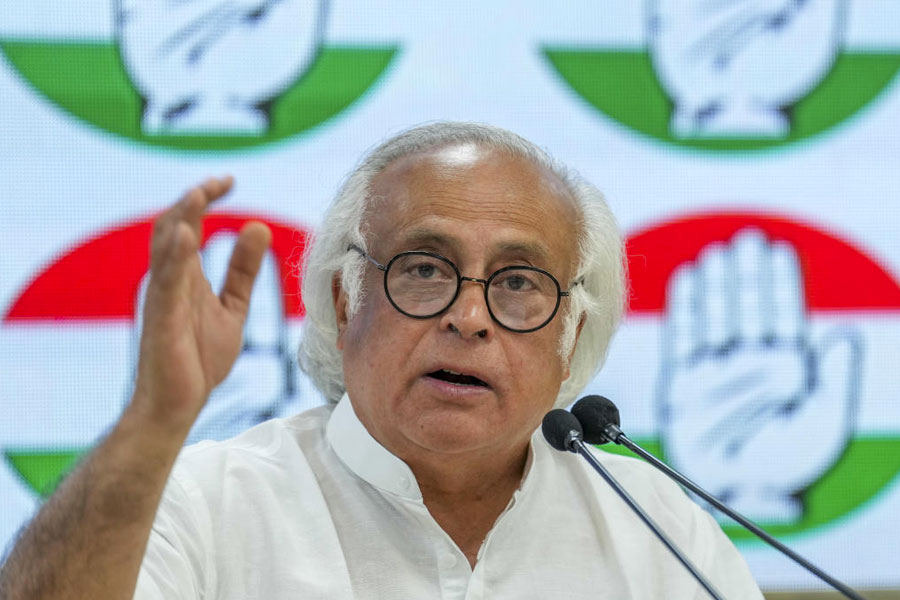
If a silver lining was to be spotted, it was in the overly large number of Lok Sabha MPs who made it today, unlike in the first round. Of the 59 names, only three M.S.Gill, Prithviraj Chavan and Jairam Ramesh -- came from the Upper House.The first list had seven Upper House members among 19 ministers and had made restive battle-weary winners of a long and hard election.
With inputs from Satish Nandgaonkar in Mumbai |