|
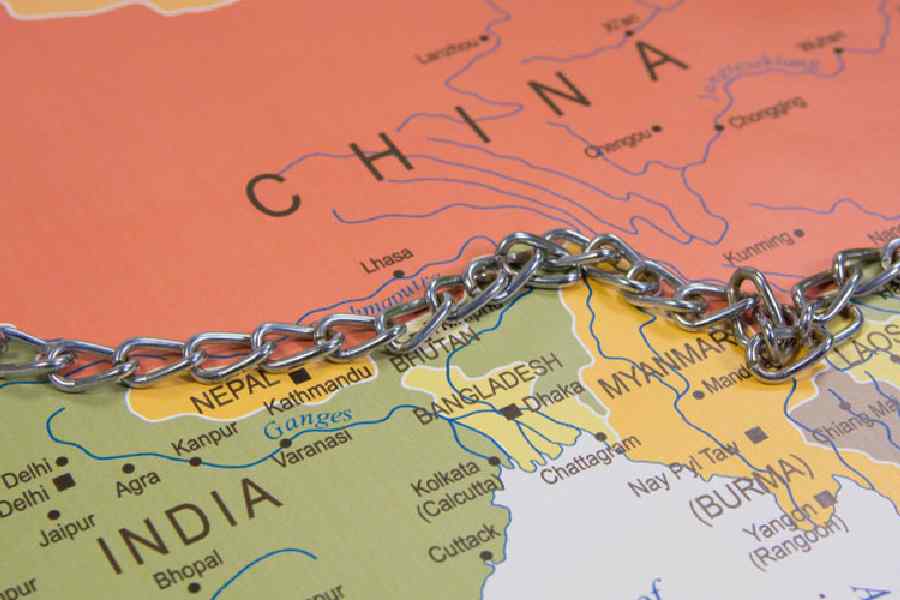
New Delhi, May 4: In pushing a standoff in Kathmandu that led to Prime Minister Prachandas angered resignation, New Delhi may have earned itself another neighbour in turmoil and another regional force irate about Indian high-handedness.
Twice in his address to the Nepali people today, Prachanda blamed interference from foreign powers for the fall of his government and left few in doubt that his Maoists were laying the grounds for a Nepali nationalist campaign that would revolve around exploiting anti-India sentiment.
We have given up government on the high moral ground of a civilian head being able decide who should head Nepals army, a senior Maoist leader told The Telegraph on phone from Kathmandu. Everybody in Nepal knows who forced Prachandas resignation on the issue, can Nepal hope to conduct its internal affairs independently? That is the key issue.
Anxious that the India hand doesnt become a stick in Maoist hands, external affairs minister Pranab Mukherjee issued a carefully worded statement seeking to neutralise allegations of New Delhis interference in the tussle over the Nepal Army chief General Rukmangad Katuwal.
What is happening in Nepal is internal to Nepal. We wish Nepal well in its transition to a fully democratic polity and would hope that the present crisis is resolved in a manner which contributes to the early conclusion of the peace process, Mukherjee said.
We would hope that the broadest possible political consensus would make it possible for Nepal to concentrate on the agreed tasks of Constitution making and of democratic transition.
But analysts in both New Delhi and Kathmandu believe that Indian pressure on retaining General Katuwal as Nepali army boss has become too evident to too many to be denied. It is well-known, for instance, that the Indian ambassador in Kathmandu, Rakesh Sood, met Prime Minister Prachanda over a dozen times in the past week in order to persuade him to retain General Katuwal.
Prachanda cleverly forced the issue and sought Katuwals sacking, knowing that if he did not succeed, he could blame Indian interference with credibility to his Nepali audience, a senior former diplomat said.
He also suggested that Mukherjees preoccupation with the elections could have made things worse for India than they may have been. Mukherjee is an extremely experienced and deft hand, he said, Had his eye been totally on the ball, things in Kathmandu may not have precipitated so fast, he may have been able to handle the situation better.
New Delhi is now hoping against hope that the resignation of the Maoist government will not derail the democratic process in Nepal and that the Constituent Assembly, elected with a Maoist majority last April, will be able to proceed with providing Nepal a stable republican system.
We have done business with various governments and political parties in Nepal. Be it Nepali Congress or CPN (UML) or the Maoists, it is the commonality of interest which is profound, that guides our relationship, government sources said. The government also hopes that the vacuum created by Prachandas resignation will be quickly filled by an alternate formation that can take the peace process forward.
CPM politburo member Sitaram Yechury, who played a vital role in brokering peace between the Maoists and mainstream parties in Nepal is also using his connections across the political spectrum in Nepal to ensure the peace process is not derailed by the current crisis.
Yechury, who spoke to UML leader Madhav Nepal, today and is believed to be in touch with leaders of various other parties, told The Telegraph. Everyone should ensure that the peace process in Nepal is not derailed. I am sure the democratic process in Nepal will continue and the political parties are up to the task, without any external help and assistance.
However, it is unlikely the Maoists will oblige and cooperate with back-channel Indian efforts to cobble an alternative government, at least for the moment. They (the Maoists) have come to believe India is not going to stop interfering in Nepals internal affairs and they will make a big issue of it, a Kathmandu-based analyst said, It serves the Maoists political interests to use the current turmoil for gaining a greater grip on the country.
|