Of all things, it was the masala in the Mahabharata that got Singapore-based writer Trisha Das going. She had grown up listening to tales from the epic from her grandpa. But the real push came when she was studying in college. I started telling my classmates stories from the epic when I lived in a hostel — often through the night. And they never thought the Mahabharata could be so masaledar (spicy). Thats where I got the idea about writing a book, she chuckles.
The Mahabharata — Re-imagined was released earlier this year. Dass book deals with the epic the way domestic dramas highlight familial tensions: its Mahabharata likened to a soap opera.
Das isnt the only one giving the Pandavas and the Kauravas a curious rejig. This year will witness a deluge of books on the epic — each as different from the other as possible. While Dass book is a fictive retelling of the classic, Namita Gokhale will come out with The Puffin Mahabharata, published by Penguin India. It carries illustrations by artist Suddhasattwa Basu and is targeted at children though it has as much appeal to older readers, says Gokhale.
Mythologist Devdutt Pattanaik will enhance his oeuvre with The Mahabharata: An Illustrated Retelling, published by Penguin. Economist Bibek Debroys first volume of the unabridged translation of the Mahabharata in English is ready as well. The project will run into 10 volumes and the first book Mahabharata: Volume I will be in bookshops later this year. Not to be left behind, writer and artist Amruta Patil will bring out Parva: The Epic.
 |
 |
| COVER TO COVER: The Mahabharata —Re-imagined by Trisha Das and The Puffin Mahabharata by Namita Gokhale are among the books on offer |
The Mahabharata, it seems, can never get jaded. Translator and writer Arshia Sattar believes that as a society changes at an accelerated pace, it tends to go back to ideas and texts that have stood the test of time. Also, with the way globalisation is flattening cultural particularities, we seem to feel the need to assert and claim things as our own — and the Mahabharata is certainly one of the central stories that defines our cultural and emotional landscape, Sattar says.
Language changes, audiences change and archetypal stories are kept alive by retelling, adds Amruta Patil. I think the Mahabharata is so embedded in our code that it is almost a rite of passage for Indian writers and artists to grapple with the tale personally, and come to some conclusions.
But the gold, writers and publishers stress, needs constant polish and sprucing up. We need to give readers something new, a fresh perspective in an idiom that communicates to them, says Gokhale. While comic book versions by Amar Chitra Katha kept young audiences hooked in the 1970s and 1980s, they were too straightforward, she feels. Her book, on the other hand, doesnt compromise on dealing with the emotional complexities of the epic.
The Mahabharata is a dense and intense tale and I havent watered down the nuances while maintaining a straightforward and engaging narrative, she says. Her book also deals with sexuality and familial tensions.
Similarly, Trisha Dass entry point is somewhat offbeat. Is it possible Draupadi was in love when her marriage was being finalised with the Pandavas? Did Gandhari cause the death of her husband Dhritarashtra and sister-in-law Kunti? These are questions I wanted to deal with.
The book also details the tension between Draupadi and Kunti, the way soap operas depict saas-bahu tension. I was more interested in the sub-plots than the main story. And almost none of the stories and scenes in my book is in the original epic. Theyre completely fictional, she declares.
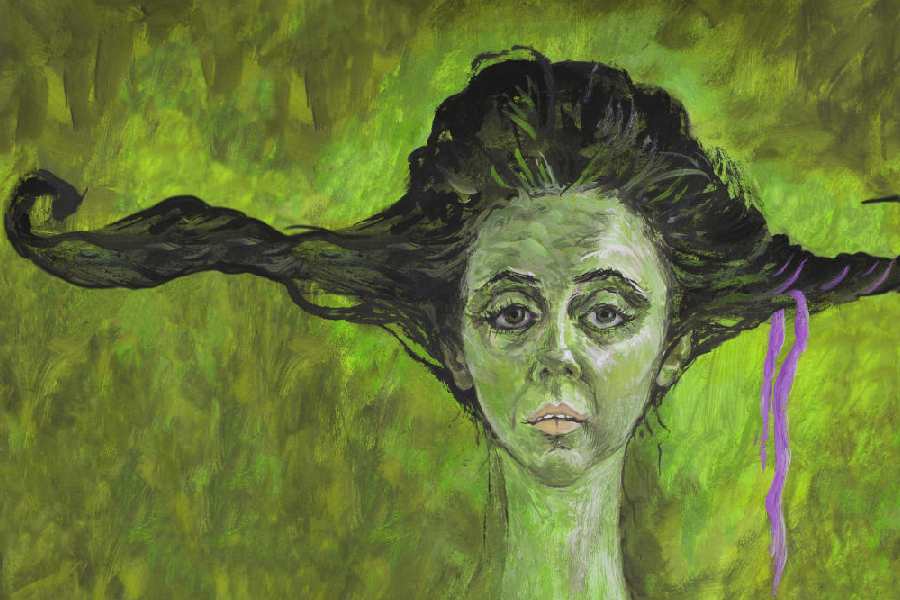
On her part, Patil tells the story of the classic, with her own illustrations, through the recollections of some of the main characters. She is experimenting with the classic by picking three relatively quiet protagonists, and using them as sutradhars for different parts of the tale.
But perhaps the most ambitious is Bibek Debroys project. His volumes will base themselves on three unabridged translations of the Mahabharata in English — translations by Kishori Mohan Ganguly (from the 1870s) and Manmatha Nath Dutta (from the 1890s) and the volumes of the Critical Edition of the Mahabharata brought out by the Bhandarkar Oriental Research Institute, Pune, in the 20th century.
Debroy wants to flesh out the myriad nuances of the Mahabharata. The running theme of the epic is the conflict of dharmas. My volumes will also flesh out the little conversations which run through the epic. For instance, theres the episode where princess Ulupi falls in love with the married Arjuna. She tells Arjuna: If you dont want me to commit suicide then marry me. The epic is rife with such dramatic exchanges between characters (especially the minor ones) which havent got much notice. There are other episodes of female characters asserting themselves, as if they were part of womens lib, he laughs.
All this has insiders in the publishing industry beaming. Dealing with the classics is a win-win ticket. V.K. Karthika, editor of HarperCollins India, explains that the Mahabharata and the Ramayana make for safe publishing. Theres always a market for the classics and you will always sell around 1,000 copies, she says. But the point is to give these old tales a totally fresh angle and a contemporary feel.
Arshia Sattar has the final word. There will never be too many versions or commentaries on the Mahabharata or Ramayana. The texts and the traditions are too rich to be exhausted!
|