|
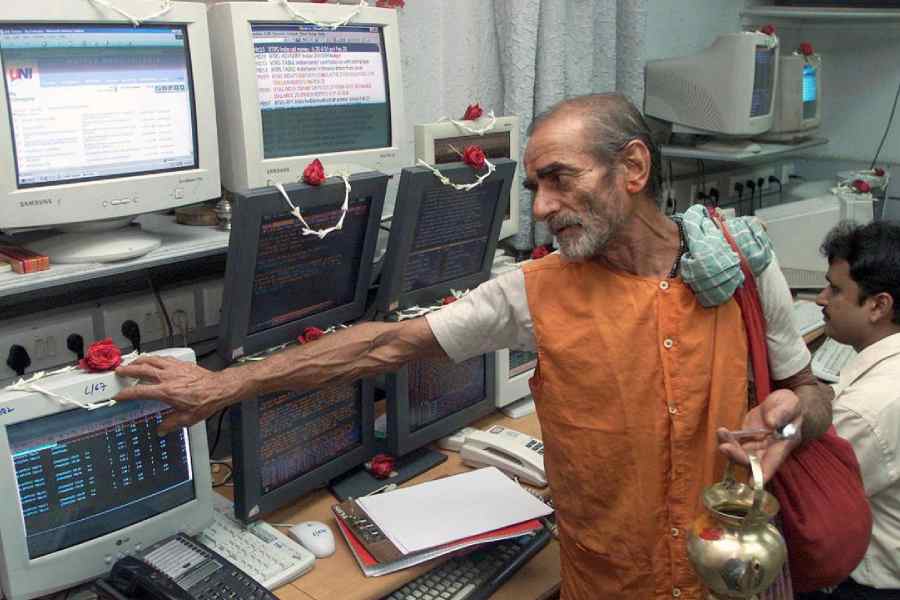
| An auto driver at a katatel outlet in Jadavpur |
Calcutta police needed more than three months to seize less than 1 per cent of the katatel that the city’s two-stroke autos burn in a day.
According to the action-taken report submitted by the government to the high court on Friday, the police confiscated 695 litres of katatel and fuel adulterants between the announcement of the two-stroke ban on July 18 last year and October 31.
No wonder the katatel trade, estimated to be worth over Rs 50 lakh a day, continues to flourish in this city of 67,000-odd two-stroke autos, more than half of which use adulterated fuel and poison the air we breathe.
“A 10-member team of the Enforcement Branch (EB) is responsible for carrying out the crackdown on katatel. But the fuel section of the EB has not conducted a major raid in the past couple of years,” a senior police officer said, requesting that he be not named.
Even if only 50 per cent of the city’s two-stroke fleet ran on adulterated fuel — the actual figure is higher — and each auto burned five litres a day on an average, consumption per day would work out to 1.75 lakh litres. At Rs 30 a litre, the katatel business would therefore be worth over Rs 50 lakh per day and around Rs 180 crore annually.
So, why hasn’t a single katatel dealer been put behind bars so far?
Police officials say they are unable to crack the whip on the trade because it is run by a strong lobby that keeps the official machinery well oiled. “The katatel racket is huge and it survives because of political patronage. We have never been asked to start a crackdown,” an EB officer said.
An officer of the rank of inspector heads the fuel section of the EB. The rest of the team comprises six sub-inspectors, an assistant sub-inspector and two constables. The 48 police stations in the city can also conduct raids on hideouts selling spurious fuel.
“The bulk of the foul fuel that is sold in the city comes from the suburbs, which are not in our jurisdiction,” said Chanchal Dutta, the deputy commissioner of police, EB.
The police haven’t identified outlets that exist in their area of jurisdiction either. “We have no specific information about the places from where auto drivers procure katatel,” Dutta said.
Every auto driver, however, knows where katatel is available. They are all over the city — in auto garages, near auto stands and even makeshift kiosks in markets.
The owner of a fuel pump on Sarat Bose Road said autos accounted for only a fraction of his business. “If each auto consumes five litres a day, pumps should be selling over 3 lakh litres to them on an average. But demand is nowhere near that.”
Auto drivers confirmed that katatel was easily available during last week’s strike by officers of oil companies that led to pumps drying up. Mohammed Taslimuddin, who runs his two-stroke auto on the Lohapul-Dharamtala route, said a garage in south Topsia supplied him his weekly quota of 25 litres.
“There are many unregistered garages in the city that stock katatel,” said auto driver Vinod Sau.
WELL-OILED MACHINERY
●Why is katatel so popular?
It’s easily available and costs much less than
approved fuel.
●What does the law say?
From its manufacture to use, everything about katatel
is illegal. Dealers hold no explosives license, which is
mandatory to sell any inflammable substance.
●What did the high court say about the katatel trade
while banning two-stroke autos?
In its order on July 18, 2008, the court asked police to
immediately start a crackdown.
●What have the police done since then?
According to the report submitted to the court, the
police seized 695 litres of katatel and various fuel
adulterants till October.
●What is the katatel trade worth?
At Rs 30 a litre, the katatel business is worth over Rs
50 lakh per day and around Rs 180 crore annually.
(With inputs from Jayanta Basu)
|