|
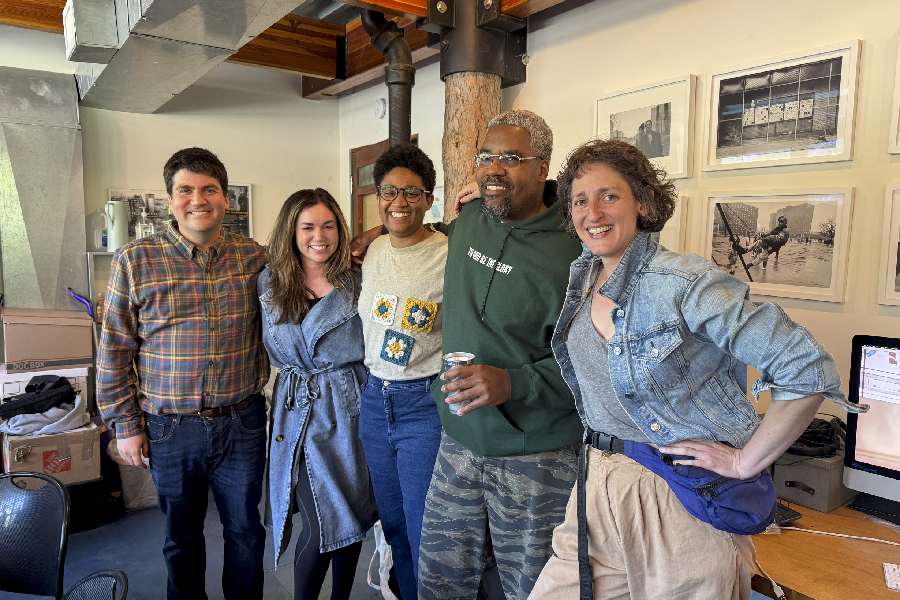
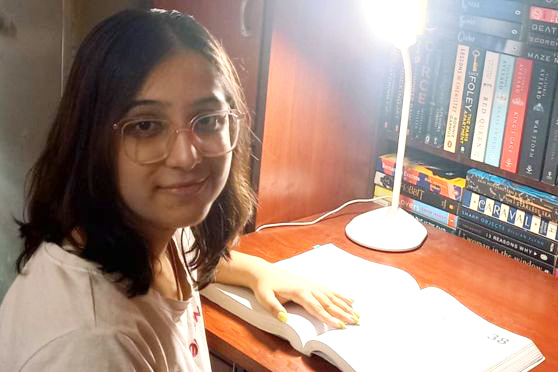
| Winner of the Infosys Science Award, Jewellery Mittra, at the concluding function on Wednesday. A Telegraph picture |
Shillong, Jan. 7: The 96th Indian Science Congress Association tonight recommended setting up of scientific advisory councils in the northeastern states to formulate plans and programmes for the development of a scientific temper in the region.
The suggestion was part of 11 recommendations given to the Centre by the ICSA at the end of the congress, which ended on the North Eastern Hill University (Nehu) campus here tonight.
The association’s president, T. Ramasami, gave a summary of the suggestions, which had come up in the course of the five-day conclave, saying the 11 recommendations were finalised during the general body meeting of the association this afternoon. “The 96th National Science Congress was a great success,” Ramasami said. “I also feel proud to say that in terms of participation of senior scientists, this was the most well-attended in recent years.”
The next session of the science congress will be hosted by Kerala University in Thiruvananthapuram.
Young students — the youngest being Jewellery Mittra, a Class V student from Dehradun — walked up to the dais to accept prizes in different categories tonight, eliciting thunderous applause from the crowd.
There were also several award winners from schools and colleges in the region. V.L. Chopra, member, Planning Commission, hoped that the recommendations of the science congress would be able to help the centre frame policies which can accelerate scientific studies.
He also said the scientific experiments in various fields should be able to help improve the living conditions of the people.
Nehu vice-chancellor and president of the organising secretary, Pramod Tandon, admitted that there were “shortcomings” in hosting the mega event but added, “We have tried to overcome all odds given the inherent constraints in Shillong”.
But there will not be many among the delegates who will go home sulking. Certainly not Japanese scientist Taisei Nomura who admitted that that he was “completely overwhelmed” by the beauty of Mother Nature in Shillong as well as the Northeast.
The caring touch of the hosts — Nehu — will make for abiding memories in over 4,000 delegates from around the world who attended the five-day conclave, the biggest annual gathering of the scientific community in India.
Nomura, who is doing research on cancer treatment, told The Telegraph that in the context of the Northeast, which has a high incidence of cancer compared to the rest of India, there was need for more support from scientists in this field.
Over the past five days, 25 scientific papers were presented at different conferences and panel discussions. The country’s top rocket scientists gave illuminating presentations on how Chandrayaan-I, India’s successful moon mission, was made possible. Isro chairman G. Madhavan Nair gave a sneak peek into the country’s planned human space mission by 2015 while environmental experts spoke about the need to preserve the greens of the Northeast.
The audience at a seminar on bio-diversity this morning were left astounded when K. Venkataraman, from the Chennai-based National Biodiversity Authority, proclaimed that the Northeast was the place where the first poultry in the world was domesticated thousands of years ago.
“The pure red jungle fowl found in the Northeast is the ancestor of the world’s domestic poultry,” he said. The Northeast can now have its chicken and eat it too.
|