|
The trauma will linger. The audacity of the terrorist operation, carried out seemingly by only 10 desperadoes, is mind-boggling. Large parts of the nation, while mourning for the dead and expressing deep compassion for the other victims, will also give vent to a ferocious anger. This anger, signs are already evident, could even reach hysteric proportions.
At such moments, conventional wisdom tends to assume centre stage, what nonconformists wish to say is drowned in collective disapproval. And yet, fatuities of the nature uttered from high places — the perpetrators of the outrage would be made to pay — sound hollow. The young men who carried out the attack have, most of them, paid with their lives; they in any case were prepared to die. The ideologues who inspired them on knew what they were embarking on, and had adequate justification according to their own lights.
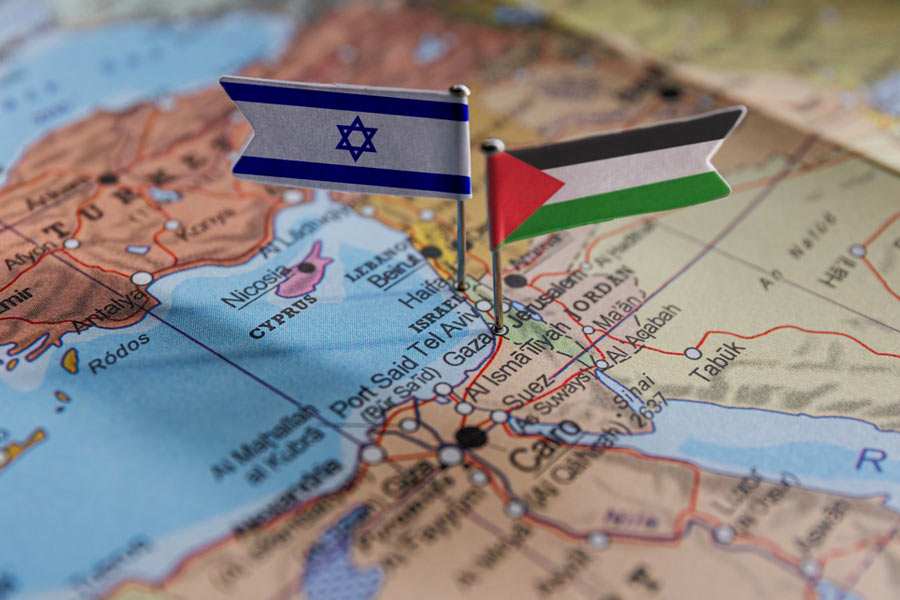
The specific sites they chose make their targets of wrath obvious: the Western countries and Israel. Above all, they picked on India for the bloodbath to express their resentment at the alleged betrayal of the anti-colonial cause the Afro-Asian nations had held aloft, throwing off their shackles in the middle decades of the 20th century. India has sidled away, its government has gradually emerged as a master in dissembling, and it did not make a squeak when George W. Bush overran Iraq and Afghanistan and indulged in the worst bestialities; it has developed filial links with the notorious Mossad, which spearheads the torture of Palestinians in Israel; it has reneged, under American pressure, on the natural gas pipeline agreement with Iran; and now, with the signing of the nuclear deal, has formally declared itself a proud strategic ally of the United States of America. Perfidious India deserved to be taught a lesson.
The grievances have accumulated. Indian authorities had, with scampering hurry, endorsed Bush’s total war against ‘global terror’ as their own. Their police, military and security apparatchiki are striving hard, through plans and deeds, to reach total identification with the global philosophy of the US administration. Islamic terror, as exemplified by Osama bin Laden, is the principal enemy, says the American establishment. President-elect Barack Obama not excluded. Aye, aye, say spokespersons of New Delhi. That clinches the point for the radical plotters itching to give India a bloody nose. By endorsing the American war as our own, we, they will claim, have ourselves imported the war into India; we have not taken the trouble to explore the global roots of Arab — or Islamic — discontent in recent times. Edward Said is left unread. We have made up our mind that the US’s enemy is ours too. Those determined to challenge the US hegemony, therefore, feel no moral compunction in directing their cruelty towards India. Conceivably they have friends and collaborators within the country, such as those who feel strongly about Kashmir. That does not diminish the substance of the basic reality: the terrorists invade our precincts because we have provided them with the rationale for it.
Has not the other phenomenon a-stir — Hindu terrorism, with surreptitious assistance from underlings in the police and the army — the same genesis? The police, defence and intelligence networks are extended arms of the State. If our authorities say it is total war on terror as defined by the US, our police, army and intelligence could hardly view it otherwise: terror is basically Islamic terror; the holy duty of each and every constituent of the forces, it is accordingly taken as axiomatic, is to go to the limit of their capability to crush this particular manifestation of terror.
The jingoistic urge gets swiftly transformed into an indelible fixation. The army and the police recruit from all over the country and from all sections and classes. The recruits are young and full of patriotic frenzy. Even as they go through the nitty-gritty of training and learn the diverse logistics of their profession, they are also told — perhaps elliptically, perhaps in more direct terms too — who the possible enemies, the bad guys, are. Over the past decade, global terrorism, along with its internal agents, has entered the list of baddies. The parameters of global terror, it is constantly dinned into the ear, cover activities of terrorists operating within the country’s borders too.
The syllogism quickly penetrates into the psyche of a young cadet who will soon become an officer. Islamic terror, he is told, is right here, next door to you and me. Muslims constitute an important segment of our population; some of them are guilty of sheltering and encouraging their co-religionists, the Islamic terrorists. True at the official level, measures are being taken to crush these evil initiatives, generated by those many believe to be treacherous. As devout patriots, the young army or police officer hailing from, let us say, Gorakhpur or Hubli or Karamsat or Bijapur, still wrestles it out in his mind: yes, the government is doing all it can to put an end to Islamic terror; as a disciplined cadre, he would fall in line and do whatever the authorities direct him to do in the matter.
At the same time, as an earnest Indian citizen, the youngster feels it in his guts that that was not enough, he owes it to the nation to do, on his own, a bit more, he must, even during hours when he is off duty, contribute additionally to the cause. The young officer lives in a world of hallucination. If terrorism is obsession with the US president and obsession with the Indian prime minister, a young policeman or army cadet has as much right to fall victim to the same obsession. He soon discovers soulmates, even if of particular political tints. Chance acquaintances readily cooperate to organize bouts of counter-terrorist activities intended to stop the terrorists in their tracks.
This is, however, not the entire story. Something else, which goes deeper into history and has semantic roots, abets and assists the process of mind-bending. From the pre-Christian era onwards, the Greeks and the Romans were accustomed to describe the people around and beyond the great river Indus — Sindhu — as Hindus. It was not a denominational description, but one guided by data pertaining to human geography. In subsequent periods, other settlers in the Mediterranean belt as well as the Arabs adopted the nomenclature: the region around and beyond the Indus was land of the Hindus, Hindostan or Hindustan. As centuries elapsed, Hindustan, though, acquired a different kind of significance for groups of denominational Hindus: Hindustan, they trained themselves to believe, belongs exclusively to them, that is, to those who worship the Lords Shiva and Krishna and idolize the puranic king, Ram.
In the view of these zealots, ever since 1947, India is, really and truly, Hindustan, the land belonging to active practitioners of Hinduism, and to them alone. Those professing other religions are to be allowed to reside in this land, but their right of residence is subject to one overriding condition: they must play second fiddle to the Hindus, the true and only legatees of Hindustan. This is not what the Constitution of India says; so what?
All this gives birth to a special Indian phenomenon: the juxtaposition of the war against Bush-esque global terror with the fight against minority riffraff daring to give the lip to the Hindus constituting the overwhelming majority of the nation. It is going to be, as they say, a long night’s journey into the day, unless those in charge of the destiny of the nation in New Delhi learn to read a different script.
|