TT Epaper LHS
The Telegraph
TT Mobile
 
 
IN TODAY'S PAPER
WEEKLY FEATURES
CITY NEWSLINES
FEEDS
  RSS
  My Yahoo!
SEARCH
 
Archives Web
 
ARCHIVES
Since 1st March, 1999
 
THE TELEGRAPH
 
CIMA Gallary
 
Email This Page
Three who fought and fell
- From Mao to the mean streets

Mumbai, Nov. 27: For a man who thrived on his job and read up Mao to beat the Maoists at their own game, it was an uncharacteristic comment.

“It is a stressful job,” Hemant Karkare said.

Just like that, out of the blue.

The evening was warm, a couple of weeks to Diwali. Karkare was seated in his office in Byculla, south Mumbai, and talking about Hindu terrorism.

“With both Hindu and Muslim terrorists, the processes are the same. Both of them have this sense of grievances, real or perceived. And they feel that if you acquire the capacity for violence, then you are safe. The boys who join these terrorist organisations feel empowered.”

Years ago, when I first met him, Karkare was a strapping young man who had just joined the police force after quitting a managerial position in the industrial engineering department of Hindustan Lever. “I drifted towards policing,” he said.

He wanted to join the IAS and become a collector. But he got into the Indian Police Service in 1982, and topped his batch, winning three gold medals.

Karkare was versatile, honest and quick to adapt. When he was posted in the newly created economic offences wing of the crime branch of Mumbai police in the mid-nineties, he taught the men in khaki about equity culture and what the Securities and Exchange Board of India meant.

Wherever he went, he left his imprint. In 1991, when he took on the might of the Naxalites in the heart of Maoist territory in Chandrapur, Maharashtra, there were over a dozen Maoist dalams (squads) operating out of the state.

Karkare first studied the strategy of the Maoists.

“I saw how the Naxalite leaders ingratiated themselves with tribals by speaking their language. I saw that forest guards were largely responsible for the mess that the tribals were in and how the tribals were exploited by tendu leaf contractors.

“The Naxalites are always on the lookout for such fault lines in society to make inroads. When I spoke to the boys in the ashramshalas or orphanages run by the Maharashtra government, the boys told me they aimed to be an ‘anna’ or a Naxalite head. The tribals respect power and the Naxalites wielded power.”

Karkare started off by reading Mao Zedong’s handbook On Guerrilla Warfare. Since the Maoists had brainwashed the tribals into believing that anything to do with the government was taboo, he trained the ashram boys and made them fit for recruitment as constables.

He went from village to village to talk to them about why roads were necessary and should not be allowed to be blown up as they would help them reach primary health care centres faster if their children were sick.

By 1993, when Karkare got a transfer and left Chandrapur, there were just two Naxalite dalams left.

The police are still using similar tactics to woo the villagers in Maoist-infested districts of Maharashtra.But 15 years is a long time — long enough to forget the rules of guerrilla warfare.

When he arrived at the Chhatrapati Shivaji Terminus last night, Karkare did don a helmet and a bullet-proof vest. But somewhere between VT and Cama Hospital, a stone’s throw from each other, he took both off. “He died cheaply,” said a journalist who saw the end.

“At Chandrapur, I slept with a gun under my bed,” Karkare had told me. But after so long, his survival instincts may have rusted. Or, was it the stress?

RAW discovered him in the beginning of 2000 and he got a posting in Austria for seven years.

“I enjoyed this period of my life,” Karkare had said in 2006 when he came back and joined the Anti-Corruption Bureau.

Quick transfers followed. He was shifted to police administration. “My colleagues might think this is a punishment posting. But I am loving this. I don’t think this is sedentary,” he had said.

The queues outside his office while he was in administration was unheard of. The constabulary had learnt that the new officer at the helm was quick at addressing grievances.

“These poor cops need not wait a year for simple redress of grievances and clearances of dues,” he told me once.

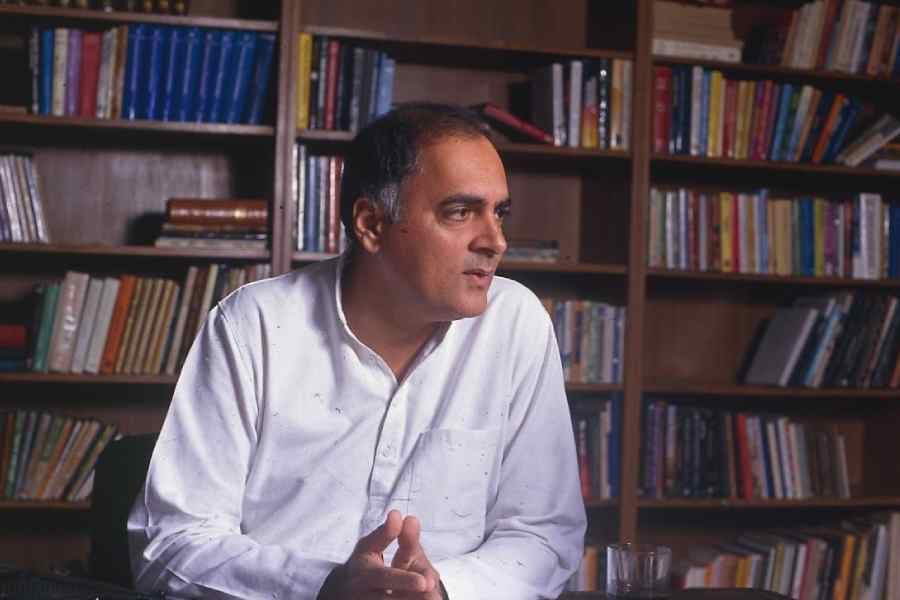
Karkare was often called for inspirational lectures across the country. He was a polished orator, a keen writer, a voracious reader and an artist.

While in Chandrapur he collected driftwood and fashioned items like wall-clocks and paperweights. He read every day for two hours late into the night.

In the early days he started with the classics — Maugham to Eliot, Lawrence to Shaw. “Now I have started reading pulp, too. Jeffrey Archer and John Grisham. The pulp fiction I started reading with my son and we compare notes,” he had said.

His son is in college while one daughter is studying in the UK. Another daughter married recently and lives in the US.

Men like Karkare might abound, but not a policeman like him.

Top
Email This Page