The Telegraph
 
 
IN TODAY'S PAPER
WEEKLY FEATURES
CITIES AND REGIONS
SEARCH
 
Archives Web
 
ARCHIVES
Since 1st March, 1999
 
THE TELEGRAPH
 
 
Email This Page
Vote’s the matter

A young man moves within a crowd of youngsters outside a multiplex, offering them tea in a bid to wake them up. “If you’re not voting on election day, you’re sleeping,” he says in the ad film. Another advertisement has a man quizzing a candidate seeking his vote about his qualifications and performance record, while offering him tea. “Jaago Re (wake up),” goes the jingle in both.

It’s conscience meeting commerce. Jaago Re ads are part of a campaign of the same name, launched jointly by the Bangalore-based non-governmental organisation (NGO) Janaagraha and Tata Tea to shake voters out of their apathy, using the refreshing qualities of tea as a metaphor. The ad spots are supplemented by an online and offline drive to enrol young voters.

Meanwhile, others are telling people to vote sensibly.

Two weeks before the voting for the Chhattisgarh assembly elections, the National Election Watch (NEW), a loose body of 1,200 NGOs in 20 states working on electoral reforms, sent a text message to the state’s voters. “Do you know that 75 members of your legislative assembly have criminal cases against them?” it asked. Voters in Delhi, Rajasthan and Madhya Pradesh can also subscribe to a free SMS service for information on politicians and parties. Meanwhile, the Ahmedabad-based Association of Democratic Reforms (ADR), the driving force behind NEW, has put out a provisional list of tainted Congress and BJP candidates, based on the officially declared names and the affidavits they filed in the 2003 assembly elections.

As election season kicks in, it isn’t just political parties that are gearing up for battle. A host of citizen groups is doing the same — though their fight is for cleaner politics. “Initiatives like these are sorely needed,” says T. S. Krishnamurthy, former Chief Election Commissioner. “Nothing has been done till now to improve civic consciousness and electoral responsibility.”

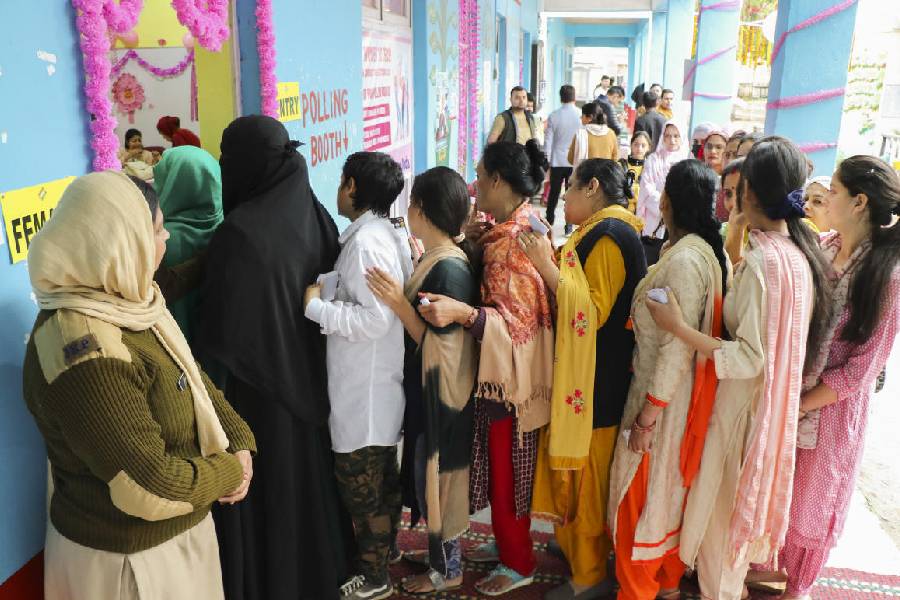
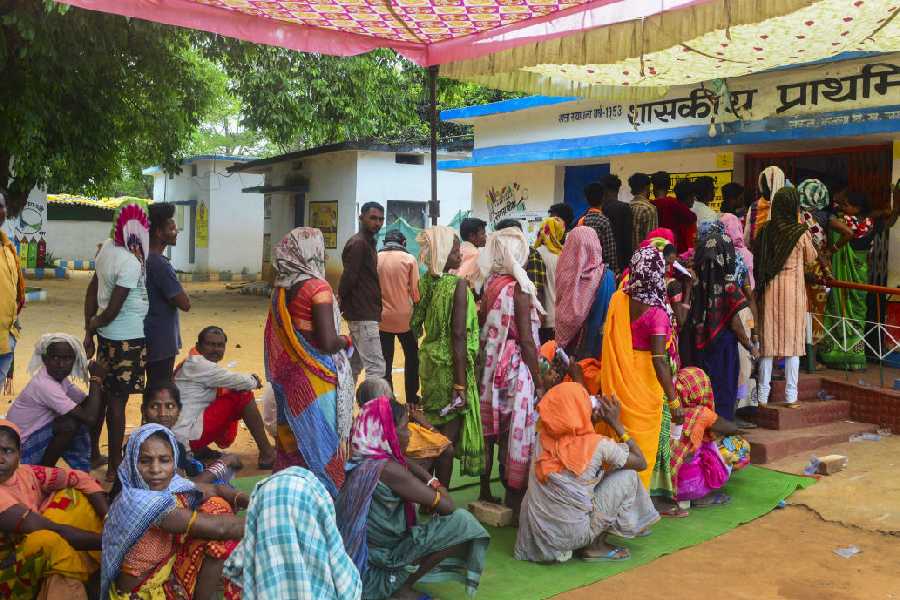
Voter apathy is high in urban areas, with voting percentages in the 40-65 per cent range versus 70-80 per cent in rural India. That’s why some groups are egging people on to vote and helping them get voter ID cards. “Voter motivation isn’t easy; it’s an uphill task to get people interested in elections,” rues Manjunath Sadashiva, joint director of the Bangalore-based Public Affairs Centre (PAC), which had aired 20-30 second ad spots featuring Rahul Dravid, Aamir Khan and Karnataka celebrities to urge people to vote during the 2004 general elections. PAC is now working closely with the election authorities in the revision of electoral rolls.

Jaago Re’s campaign is focusing on getting the 18-24 age group to get enrolled as voters. Two other NGOs, the Delhi-based PRIA and the Hyderabad-based Loksatta, have also been roped in to contact offices and academic institutions in 35 cities, including Calcutta, to tell the youth why it’s important to vote and how to go about it. People can apply for a voter ID card through the website (www.jaagore.com) or contact the organisation through an SMS, and volunteers will track the progress of the application, following up with the election authorities if necessary. NEW is also experimenting with a toll-free helpline in each state to answer questions about candidates, voter registration, constituencies and the polling process.

Jaago Re has received close to 70,000 applications since the programmes kicked off in September. No one, however, is sure whether that will push up voting percentages. People’s Action, working in Gurgaon and Delhi, had got 1 lakh voters registered in Gurgaon ahead of the 2005 Haryana assembly elections. It had got the Election Commission to authorise residents’ welfare associations (RWAs) in Gurgaon to enrol voters in bulk, after evidence that the local authorities were making it difficult for new voters to get registered. Though voting percentages did improve, People’s Action founder Sanjay Kaul laments that many registered only to get their voter cards and use them as identity proof.

Getting people to polling booths is only half the battle. “It’s equally important to get them to make informed choices,” says Krishnamurthy. The idea that the public had a right to know the people they were electing was mooted in Bangalore in 1996, when PAC launched a “know your councillor” campaign during the Bangalore municipal corporation elections. It trained citizen groups in eight wards to get information from candidates and publish it in local newspapers. “The scale was small but the effort was mammoth,” says Sadashiva.

The idea gained momentum after a group of professors from Ahmedabad’s Indian Institute of Management and the National Institute of Design formed the ADR in 1999 and filed public interest litigation which led to the disclosure of the criminal, financial and educational backgrounds of candidates being made mandatory. ADR has been tracking candidates in every election since 2002 and has records of over 25,000 candidates. It mines this data and regularly sends out mail to legislators and political parties with detailed information about party candidates, apart from using the regional media to publicise its findings. “We want to go for the jugular,” says Trilochan Sastry, chairman, ADR, and the dean at IIM, Bangalore. The idea, he explains, is to keep up the pressure on parties not to field candidates with criminal records.

Other groups are getting people to question their candidates. For the coming Delhi assembly elections, the United Residents Joint Action (URJA), a network of resident welfare associations under the umbrella of People’s Action, is planning to hold debates among candidates in constituencies on civic issues. PRIA has held such debates in elections to rural local bodies and found the response from both voters and candidates encouraging. With Kaul joining the Bharatiya Janata Party on November 9, the impartiality of the URJA exercise could come under a cloud, though he had told The Telegraph two days earlier that his personal decisions would not affect the group’s actions.

It’s difficult to gauge the impact of these initiatives. The reach is limited because most of them are web-based. “Yes, there is a last mile problem,” says Barun Mitra of the Delhi-based Liberty Institute, which manages www.empoweringindia.com. “That will be the next challenge.”

These initiatives are also urban-centric. Rural voters may turn out in larger numbers, but, says Krishnamurthy, they may not be making informed choices. It’s time, he argues, that citizen’s groups expand their activities to rural areas and work round the year, instead of limbering up only ahead of elections.

Top
Email This Page