|
GHOST TRAIN TO THE EASTERN STAR By Paul Theroux, Hamish Hamilton, Rs 550
As he packed his bags for a journey that would take him across two continents, Paul Theroux felt like a ghost. He was about to return like a spectre to a route he had taken 33 years ago through distant, exotic lands in Eastern Europe, India and Asia. His mind throbbed with a familiar excitement, but there was anxiety too, for he knew that the fixed contours of the world he had visited in his youth had now changed irreversibly.
Yet, Theroux didn’t quite feel like that Borgesian character who sees novelty as a “timid variation on what’s already been”. A return, he knew, held out its own promises. So he was hopeful as he boarded the Eurostar from London Waterloo for Paris. A journey that had almost taken an entire day in 1973 could now be completed in a few hours, and sure enough, the Eurostar left England, rolled through the tunnel (“the ultimate rabbit hole”) and entered French soil under a leaking sky, a Paris thundering with the roar of demonstraters against the government.
After a delicious bowl of bouillabaisse marseillaise, it was time to begin a journey that would take him to different cities on different trains. Vienna was dull, Budapest shabbier and sleazy, and Bucharest brown, sullen and sinful. Rain pounded the train on each stop, and the penury, decay and hopelessness of Eastern Europe gave way at last to a grand city full of laughing children, beautiful women and bright sunshine — Istanbul.
Istanbul is an important stopover, for both the author and his readers. The monotony of a long journey is broken here, as Theroux strolls through the mosques, churches, markets and promenades, chats with the irrepressible Pamuk and with another writer, the beautiful but combative Elif Shafaq, and breaks the heart of a woman who offers herself to him for money. From Turkey, Theroux moves into Georgia — passing through rural Batumi and Russo-phobic Tbilisi where he encounters a remarkable charity-house and watches ballet — and then to prosperous Baku, in Azerbaijan. Neighbouring Turkmenistan is as enchanting, ruled by a megalomaniac who hated beards, gold teeth, ballet, and had renamed bread after his mother. Theroux, expectedly, trips on this leg of the journey: in Ashgabat, he ruffles this mad man’s feathers by inadvertently riling his government. Soon, it is time to leave for Tashkent, which, to Theroux’s delight, had then been touched by a beautiful spring, promising pale light and cherry blossoms. From Tashkent, he lands into the hustle and bustle of India.
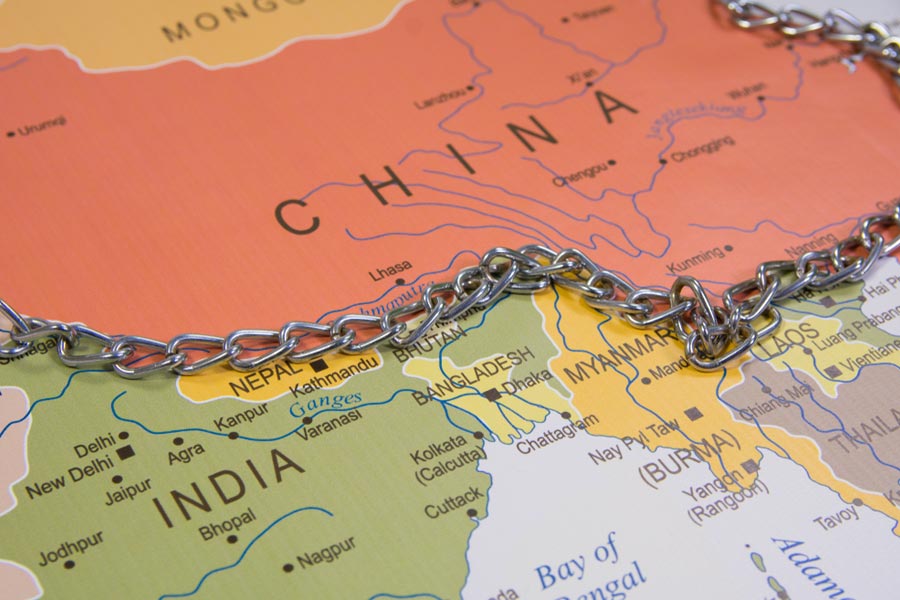
The India chapters, unfortunately, read like a backpacker’s notebook.There are the usual references to colourful Rajasthan, Bangalore’s IT boom, Mumbai’s urban sprawl and Chennai’s serenity. India repels Theroux with its burgeoning population, corruption, communalism and poverty. So it is a relief, both for him and his readers, when he moves on to grill a frail Arthur C. Clarke in Colombo, who recounts many things, including a few lines of a poem he had dedicated to the boy he loved in his youth. Galle lies scarred with the memories of the tidal wave, and Kandy is torn by violence. Next, en route, is oppressed Myanmar where Theroux discovers a skeletal Rangoon, and an almost-preserved Mandalay. Bangkok and Nong Khai (near the Laotian border) appear to be dens of vice, while Kuala Lumpur is a mirage of jungle and skyscrapers. Singapore is “a place without solitude”, a city under constant State vigil, but with a seamy underbelly. Cambodia is broken in Phnom Penh and beautiful in Angkor, Hanoi pretty and decadent with bike-borne Madams. Tokyo is intimidating and futuristic, and Moscow prospering but putrid with ugly Western excesses. There are glimpses of shiny Berlin from inside a comfortable carriage and, finally, the great circle is completed in Paris, where, this time, there is no rain or demonstrations but, once again, the warm smell of bouillabaisse marseillaise.
Surviving such a long route requires humour, insight and endurance, and Theroux lacks none of these. In Jodhpur, there is a pure Wodehousian moment when Camilla, looking older, frumpy and maternal, says to her husband, Prince Charles, “Bother, I’ve forgotten my dark glasses.” Theroux often peels away the gleaming layers of cities to reveal their frightening core, sometimes with the help of friends like Haruki Murakami in Tokyo. Theroux is laid low in Penang by a bowl of spicy laksa, but he doesn’t give up. He lies in bed — for three whole days — alone and sick, trying to understand the strange land through the sounds from the street.
This travelogue, filled with the beauty of train journeys and colourful characters, can be tiring because of the ageing Theroux’s pessimism about a changing world. But he remains almost likeable despite his vanity and fastidiousness. Even as an experienced traveller, he is still the ultimate student, wondering at how travel — “the saddest of pleasures” — always reveals an ever “worsening, shrinking” world, which, inexplicably, is yet full of caring strangers.
|