|
|
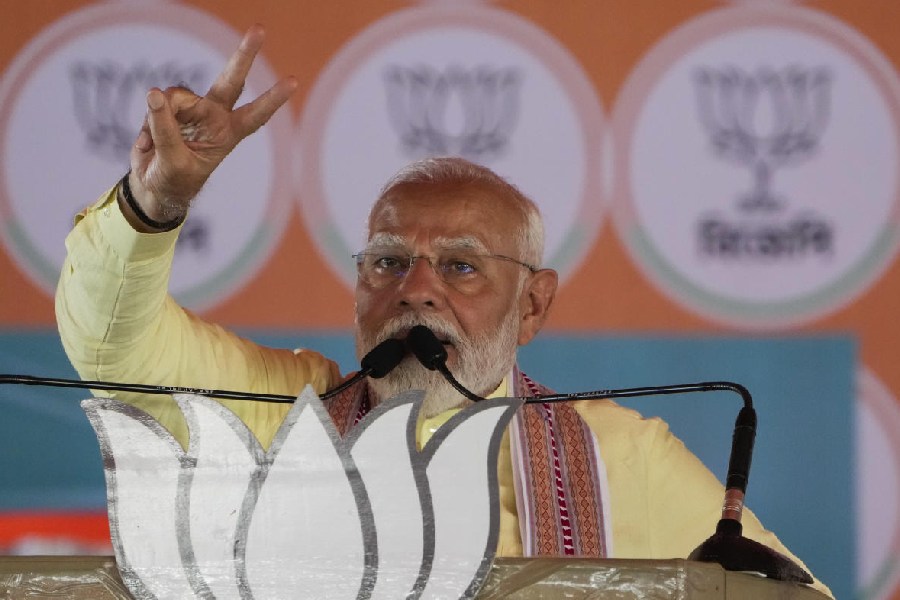
Singh raises a toast in Tokyo. (AP)
|
Tokyo, Oct. 22: Prime Minister Manmohan Singh and his Japanese counterpart Taro Aso assiduously denied that todays joint declaration on security co-operation between India and Japan was directed against any third country — but the unseen presence of the Chinese dragon, hovering over both Tokyo and New Delhi, simply refused to go away.
In response to a direct question at their joint press conference this evening, Singh said: The economic partnership and security co-operation between India and Japan are not at the cost of any third country, least of all China.
He added, for good measure, that India had no competition with China and the world offered enormous scope to both the countries to realise their developmental ambitions.
Prime Minister Aso, too, emphasised that the Indo-Japan security co-operation did not have any assumption of a third country as a target such as China but side-stepped a question on whether it was the stepping stone towards an eventual trilateral (involving the US) or even quadrilateral (including Australia) security framework.
That Japan remains under the overarching US security umbrella and that the upswing in Indo-Japanese relations is in tandem with Indias strategic partnership with the US remained unstated but obvious.
With both Singh and Aso heading to Beijing for the Seventh Asem Summit on Thursday, their denials of any nascent anti-China axis was only to be expected. That, however, is unlikely to assuage Chinese sensitivities on the issue — especially since the cornerstone of the co-operation revolves around maritime security and could be seen as an effort to keep out China from extending its influence in the seas surrounding Japan and right up to the Indian Ocean.
Security concerns apart, India — inspired perhaps by Chinas yin-yang dialectic — sought to play the yen-yuan rivalry to goad Japan into enhancing its trade and investment in India.
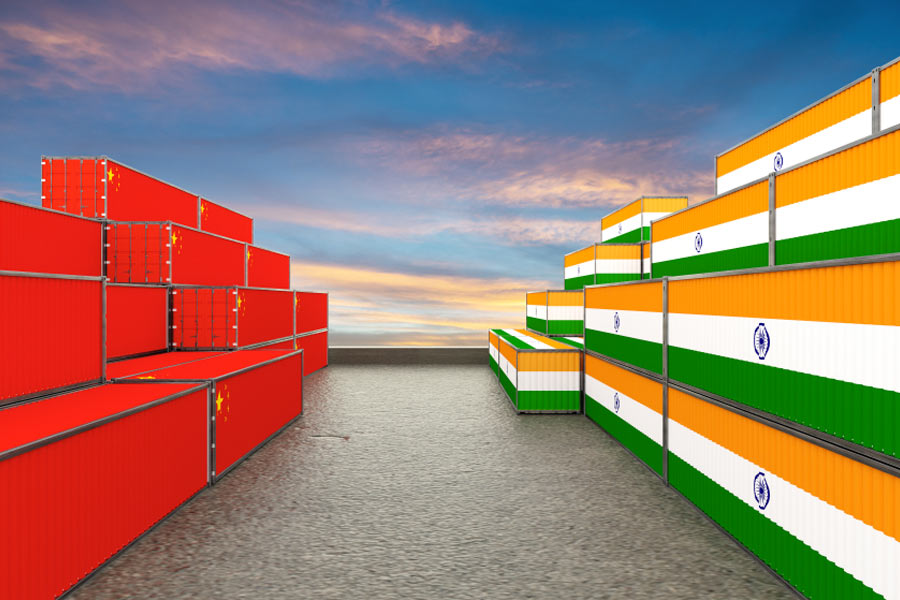
Addressing a business luncheon hosted by Nippon Keidanren, the apex body of top Japanese corporates, today, Singh said: I wish to say that new investors often worry about the difficulties that they may face in a new environment. Let me, however, point out that increase in Indias bilateral trade with China in the past one year alone is more than the whole of Indias total trade with Japan.
That one sentence alone was enough to drive home the point that Japan should not drag its feet about meeting the huge potential for investment in India since China and even Korea were ahead in the race. Japan remains Asias largest economy but China comes second (and India third), and India seemed to subtly play on Japanese fears of being overtaken by the dragon in the coming years.
Although India has been the biggest recipient of Japanese ODA (overseas development assistance) over the past five years and Indian officialdom was gaga over Japans decision to finance the multi-crore dedicated freight corridor project along with the Delhi-Mumbai industrial corridor, Japanese investment and trade remain fairly paltry as of now.
The good news, though, is that Japan is keen on making up for lost time. Asked why Japanese investors remained jittery about India, Prime Minister Aso testily replied: Over the past five years, Japans investment in India has increased tenfold, the number of Japanese companies in New Delhi has doubled — from 100 in the first 50 years to 200 in the last three years. Keep these numbers in mind…
|