TT Epaper LHS
The Telegraph
TT Mobile
 
 
IN TODAY'S PAPER
WEEKLY FEATURES
CITY NEWSLINES
FEEDS
  RSS
  My Yahoo!
SEARCH
 
Archives Web
 
ARCHIVES
Since 1st March, 1999
 
THE TELEGRAPH
 
CIMA Gallary
 
Email This Page
Sign of the times goes unread
Metro board mirrors hunger for work

Calcutta, Oct. 19: The No Vacancy sign is back in Bengal — the dreaded symbol of the seventies bringing to the fore this time the readiness among the educated youths to look for work in places targeted by politicians.

Such a sign hangs from the iron gates of the Metro Cash & Carry store off EM Bypass, the German wholesaler which had to drop hints of a pullout and approach the chief minister to get the Forward Bloc to reissue a key licence to start operations.

Metro hasn’t put up the board because of the economic downturn — the foreign company did so because of the steady stream of job applications it had been receiving ever since the outlet looked set to get off the ground.

At least a thousand young people have handed their resumes to the guards at the gate, following which the company decided to hang up the sign so as not to raise unrealistic hopes among more aspirants.

Not that the sign has stopped everyone from nursing hopes of a job. “I hope to get a call,” says Biswajit Saha, 24, who left his CV at the gate with the security guard.

Biswajit’s family background indicated Bengal’s hunger for jobs transcends perceived barriers. The four-member family lives off a small paan-cum-stationery shop they own in Santoshpur, a few hundred metres from the German store.

Does the youth worry Metro will kill off small businesses like his family’s? No, he says.

“They are wholesalers,” Biswajit explains. “We buy from middlemen. Products change hands many times, pushing up prices. If my elder brother, who runs the family shop, buys directly from Metro, he might get it cheaper.”

The Sahas are one of the many kirana families whose rights the Bloc claimed to be fighting for when it blocked Metro’s entry.

Metro already has 350 employees who will run the Bypass store when it opens in a few weeks and has no vacancies now. But company officials say the wholesaler plans to open three more stores in and around Calcutta and when it does, it will recruit about 1,000 people.

For Bengal’s 33 lakh unemployed men and women — these are official estimates, the actual figure could be much higher — a thousand jobs is a drop in the ocean. But the No Vacancy sign shows the jobless want what parties like the Bloc didn’t.

“I am not doing anything now. There will be a future for me if I get a job with the German company,” says Pradip Kumar Goswami, 28. “I had applied two months back. But they said there was no vacancy. I left my CV at the security gate,” the Nagerbazar resident adds.

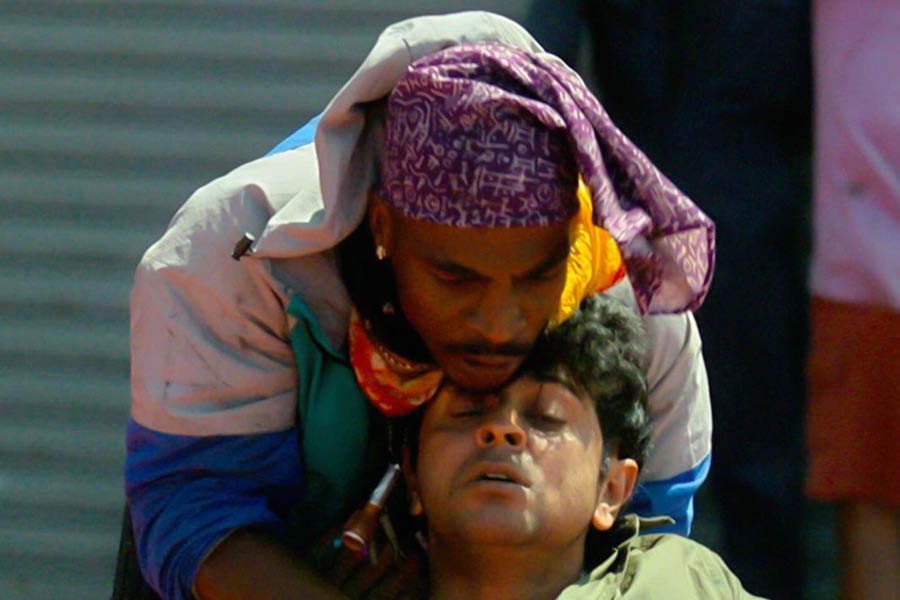
The No Vacancy sign was a familiar fixture in the Bengal of the sixties and seventies, the devastating effect of the two words captured by Satyajit Ray in Pratidwandi, set in Naxalite-ridden Calcutta when corruption and unemployment were rampant. After the protagonist, played by Dhritiman Chatterjee, comes out of an office, having failed to get a job because he is overqualified, a montage shows signboards on factory gates and offices screaming No Vacancy.

More than three decades on, many of the youths in Bengal will empathise with the theme, not necessarily because they are overqualified.

Only this month, the Tatas’ small car project drove out of Bengal, taking with it the prospects of an auto hub in Singur. In an open letter last week, Tata asked the “younger citizens” of Bengal to express whether they wanted “education and jobs” or “violence and lawlessness”.

“I need a job desperately,” says Sudhangshu Biswas, who like Biswajit and Pradip, marshalled the will to walk up to the Metro gate, where guards frisk everyone and let few in, to submit his resume.

The boy who scored a high first division in his Madhyamik exam is preparing for the higher secondary tests next year but doesn’t know if he can continue his studies. Sudhangshu’s maternal uncle runs a “mudikhana” (grocery shop) in Behala, where he has helped out. He has put that experience down in his resume for Metro.

Baruipur’s Mohidul Islam Laskar is also banking on experience. He graduated with Bengali honours and has worked part-time in a Diamond Harbour shopping centre, which he hopes will get him the job his family needs. There is only one earning member in their family of five.

Mohidul was one of the few who managed to reach the other side of the closed Metro gates, get a glimpse of the store and meet an official.

“I was told to submit my bio-data and other documents. I realised I didn’t have an envelope. The official told me to buy one from outside,” he says. But when he went back with the CV in an envelope, a guard, probably unaware of what transpired inside, stopped him. “I left the application with him.”

“I am waiting,” Sudhangshu says, pauses and asks: “Do you know anything?”

Which leader in Bengal will — or can — answer him?

Top
Email This Page