Anandautsav 031008
The Telegraph
 
 
IN TODAY'S PAPER
WEEKLY FEATURES
CITY NEWSLINES
FEEDS
  RSS
  My Yahoo!
SEARCH
 
Archives Web
 
ARCHIVES
Since 1st March, 1999
 
THE TELEGRAPH
 
Fortune 021008
 
Email This Page
Bankruptcy beast prowls next door
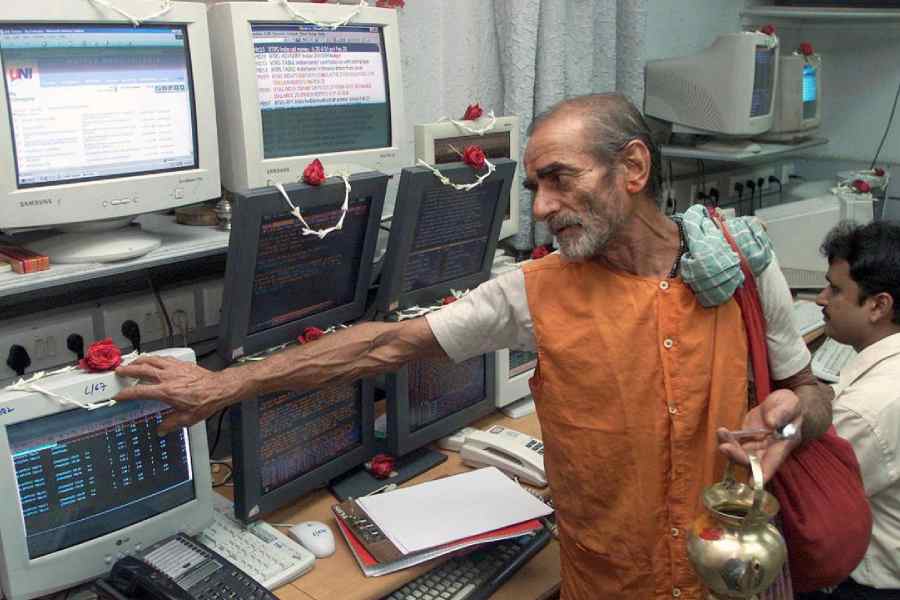
A share trader in Chicago

Oct. 11: The shadow of bankruptcy is threatening to leap from banking behemoths to a clutch of hot-button countries, including Pakistan, thickening the atmosphere of high drama and deep gravity surrounding efforts to tackle the global credit crisis.

What was initially being seen as a financial crisis is now raising the spectre of a strategic crisis in some of the world’s most dangerous spots but the outcome of a much-awaited meeting of rich nations in the US fell short of expectations.

Pakistan is bleeding foreign reserves at an alarming rate, leading to fears that it could default on its loans. There are mounting fears that Ukraine, Kazakhstan and Argentina could now slide into a downward spiral towards bankruptcy, while western banks exposed to the property bubble across Eastern Europe have seen their share price crushed.

The trigger for the latest round of hand-wringing has been the lightning implosion of Iceland. Analysts have warned that the island is heading for “sovereign default” with contagion risks for other economies that have been living beyond their means on foreign credit.

In Pakistan, the rupee has fallen to an all-time low. Standard & Poor’s downgraded the country’s sovereign debt to near write-off levels of CCC-plus. The central bank’s foreign reserves have fallen to $4.7 billion.

“The danger of default is hovering,” said Kaisar Bengali, a professor in Karachi University. “Pakistan may not be able to repay its debt or import anything,” he said, adding that the country could not assume that it would be bailed out for strategic reasons.

The grave warning came as the Group of Seven agreed to a coordinated plan to rescue the financial industry, but fell short of offering concrete steps.

US treasury secretary Henry M. Paulson promised to move aggressively on one part of the plan by infusing US banks directly with cash and taking ownership stakes in return.

In the five-point plan, issued after finance ministers met at the treasury department in Washington, G7 broadly endorsed the idea of taking ownership positions in banks — a strategy first adopted by Britain and now emerging as a major part of the rescue effort in the US. But the countries were vague on how or when that will happen.

The meeting came at the end of one of the worst weeks in the history of Wall Street, which unleashed a bloodbath on Indian stock markets, too.

Many investors had hoped the G7 meeting would result in more concrete steps to restore the paralysed credit markets. Analysts said the surprisingly brief G7 statement was unlikely to allay the panic in the market. “No matter what they (G7) do, it’s not going to be an instantaneous fix and everybody wants a fix that’s immediate,” an analyst said.

The International Monetary Fund (IMF) warned that markets could drop another 20 per cent in a worst-case scenario before turning around.

The G7 session was one of a flurry of meetings in conference rooms from the Federal Reserve to the IMF. The timing was fortuitous: the world’s financial elite had gathered in Washington for the annual meetings of the monetary fund and the World Bank.

But the pageantry and parties that normally characterise the gathering have been replaced by an atmosphere of gravity — a 21st-century echo of Bretton Woods, the 1944 conference in New Hampshire at which the financial institutions of the post-war era were fashioned.

Top
Email This Page