TT Epaper
The Telegraph
TT Photogallery
 
 
IN TODAY'S PAPER
WEEKLY FEATURES
CITIES AND REGIONS
ARCHIVES
Since 1st March, 1999
 
THE TELEGRAPH
 
CIMA Gallary
 
Email This Page
Overthere
Where wannabes go
The institute of chartered accountants of india, calcutta

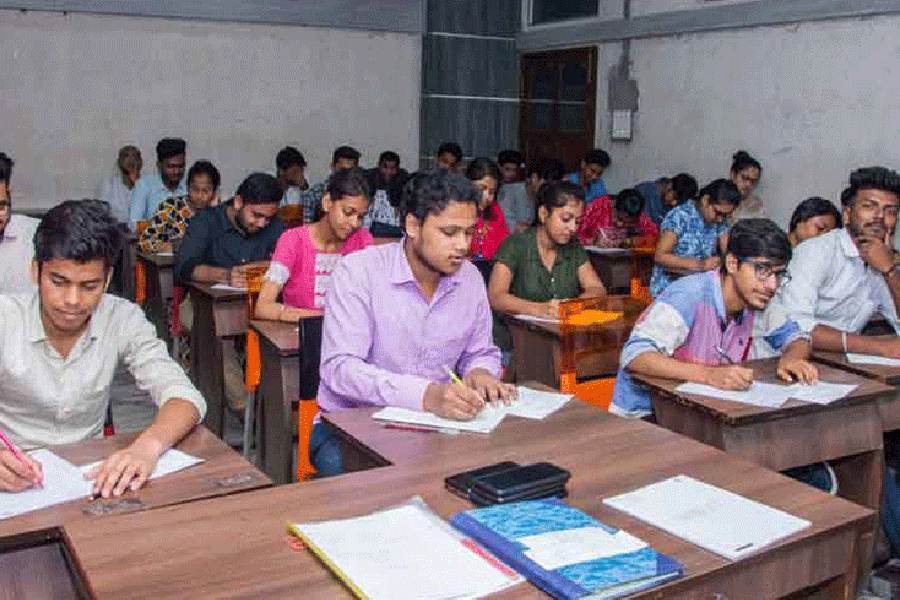
It’s a Tuesday afternoon. The place is teeming with youngsters who are jostling one another to lay their hands on a coveted prize. Is a Bollywood celebrity paying a visit? Or is this an audition for a reality show? None, actually, for 7, Russell Street, Calcutta, is the destination for all those who want to take up chartered accountancy as a profession.

The Institute of Chartered Accountants of India (ICAI) was set up by an act of Parliament — the Chartered Accountants Act, 1949 — for the purpose of regulating the profession of chartered accountants in India. The institute is a corporate body consisting of all persons whose names figure in its register of members. The head office is based in New Delhi and the regional offices are located in Mumbai, Chennai, Calcutta and Kanpur. The institute has three educational wings — the Board of Studies, the Continuing Professional Education Directorate and the Technical Directorate.

The Eastern India Regional Council (EIRC) of ICAI was formed in 1952 and serves the states of Assam, Meghalaya, Nagaland, Orissa, West Bengal, Manipur, Tripura, Sikkim and Arunachal Pradesh. ICAI is a distance learning institute. Does that prove to be a disadvantage? The numbers suggest otherwise. “This year 40,000 students enrolled at the institute for various levels of the CA course. The numbers bear proof that CA is one of the most sought after professions,” says a spokesperson of EIRC.

After passing Class X, a student can register with the Board of Studies and prepare for the entry level test while pursuing his or her Plus Two studies. The entry level test, called Common Proficiency Test (CPT), is a four-hour exam comprising objective-type questions with negative marking for a wrong answer. The CPT replaces the Professional Education (Course-I), as it was known earlier. A candidate can appear for the CPT only after passing the Plus Two exam held by a recognised board of education. The CPT tests students on four subjects — accounting, mercantile laws, general economics and quantitative aptitude. The test carries 200 marks and is divided into two sessions of two hours each with a break in between. The CPT is held twice a year in the months of June and December. “Around 8,000 students appear for CPT every year,” says a spokesperson of EIRC.

The first stage of the chartered accountancy course is called the Professional Competence Course (PCC), which is complemented by three and a half years of practical training and 100 hours of information technology training (ITT). The PCC replaces the earlier Professional Education (Course-II). The registration fee for PCC is Rs 7,500 and students have to pay Rs 100 plus a courier charge of Rs 15 (in case one is from Delhi), and Rs 25 (for the rest of India) for the prospectus. A working knowledge of core and allied subjects in accountancy is covered in the PCC. In the final course, students gain advanced knowledge of core and allied subjects in accountancy.

The PCC includes a paper on strategic management and lays much emphasis on taxation. Paper 1 covers advanced accounting, paper 2 auditing and assurance, paper 3 law, ethics and communication (this paper is divided into three parts), paper 4 cost accounting and financial management, paper 5 taxation, and paper 6 information technology and strategic management. Papers 4, 5 and 6 are divided into two parts each. The PCC subjects are classified into two groups and a student can study and appear in the examination one after the other or both the groups together.

A candidate has to take a 100-hour ITT course after completing three months of articled training (ITT is a 20-day programme, five hours a day, and is part of the practical training).

The candidate has to then appear for the Professional Competence Examination (PCE), if he or she has worked for not less than 15 months as an articled assistant or an equivalent period as an audit assistant (or partly as an articled assistant and partly as an audit assistant), three months prior to the first day of the month in which the examination is held. The candidate should also have completed 100 hours of ITT to be eligible to sit for the exam.

After passing PCE, the candidate has to register for the final course with the Board of Studies. The CA Final course has been designed to impart extensive knowledge of financial reporting, auditing and professional ethics, taxation, corporate laws, systems control, strategic finance and advanced management accountancy. “In CA Final, students are taught strategic financial management and this course compares favourably with an MBA in finance,” says a spokesperson of EIRC.

The students who pass the chartered accountancy course can look forward to a starting salary of Rs 8-10 lakh per annum. Almost 10,000 chartered accountants across India have earned placements in financial companies abroad. “Students who pass out from our institute are well received by industry. The pay package they get after completion of the course is proof of the popularity of accountants in the job market,” says Subodh Agarwal, Board of Studies member from the eastern region.

Vital Statistics

WHAT IS IT? The eastern chapter of the Institute of Chartered Accountants of India

WHO’S THE BOSS? Nirupam Haldar is the chairman

What is the duration of the course? Three and a half years

Where is it? 7 Russell Street, Calcutta-700071 Phone: 30211140, 30211141
Website: www.eircindia.org

Devlina Ganguly

Top
Email This Page