|
|
President George W. Bush, who played a decisive role in getting the nuclear deal past the NSG, on the South Lawn of the White House on Saturday. (AFP)
|
Washington, Sept. 6: The historic compromise exempting India from the rules of the Nuclear Suppliers Group (NSG) that was created to counter the first nuclear test in Pokhran 34 years ago requires an immediate meeting of the 45-nation group if India tests another atomic bomb.
It is a compromise India can live with because unless there are exceptional circumstances, such an emergency meeting will be paralysed in view of the need for all NSG decisions to be adopted by consensus.
Countries such as France and Russia — although not the US — from whom India is expected to buy high value nuclear equipment are unlikely to support any move at such a hypothetical NSG meeting in the event of a hypothetical Indian test unless New Delhi completely alienates the international community in some other way.
The compromise is modelled on the way the UN Security Council deals with crisis situations and takes decisions, diplomats in Vienna who attended the three-day, extended special NSG meeting said.
Although there is voting in the Security Council, five big powers have the power to veto decisions. Instead of a P5 veto, anyone can veto any NSG decision against India in the event of another test, said one diplomat. The Security Council is often paralysed. So will the NSG be if India, God forbid, decides to test again.
The decision to exempt India from NSG guidelines for nuclear commerce came after the group reconvened today for a previously unscheduled meeting after two days of deliberations failed to reach any agreement.
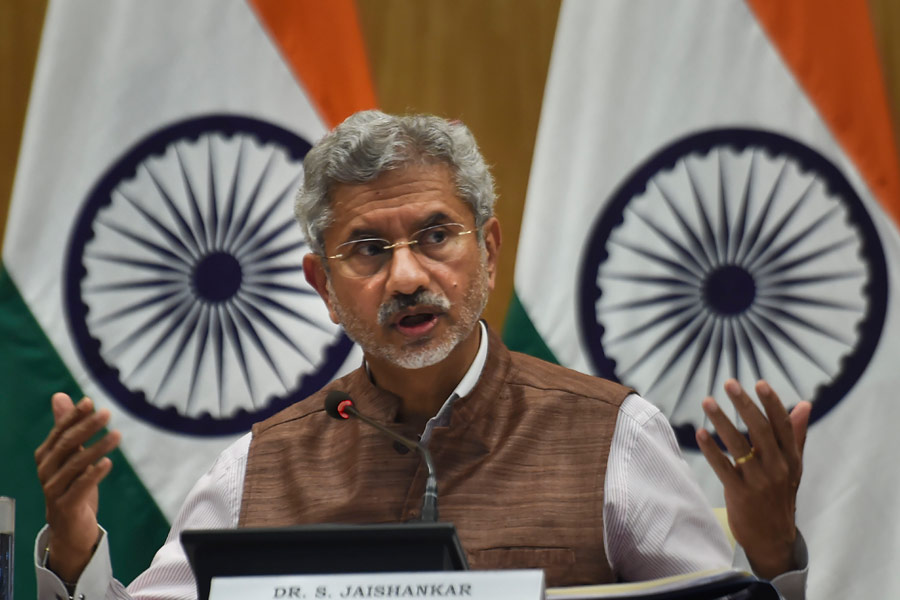
A group of six countries which held out against the India-specific exemption until Friday felt compelled to go along with the majority after external affairs minister Pranab Mukherjee assured the NSG that we do not subscribe to any arms race, including a nuclear arms race.
That assurance went some way to assuage the worries of holdout countries which are extremely concerned about South Asia, especially an unstable, nuclear armed Pakistan.
US diplomats who had been sent to Vienna by the secretary of state Condoleezza Rice interpreted Mukherjees pledge as an implicit assurance that India will not conduct another nuclear test.
An Indian test will prompt Pakistan to test, too, and that will mean a fresh nuclear arms race in South Asia. When the Indian minister says there will be no nuclear arms race, the implication between the lines is that India will not test another nuclear weapon, a European diplomat quoted a US official as interpreting the Indian assurance at private meetings on the eve of todays formal NSG session.
Rice, who is in Algiers, told reporters travelling with her that the NSG exemption for India was a landmark. It is a really very big step forward for the non-proliferation framework, she said.
Rice, who made several telephone calls to her counterparts — including one to Chinas foreign minister — in support of the NSG exemption while travelling in Arab Africa said she hoped the US Congress would approve the nuclear deal package with India in its current term.
The Congressional calendar is short. The main thing is that the international work is now done. I certainly hope we can get it through, she said.
Diplomats in Vienna said the exact wording of the exemption for India was still being finalised by German and US officials after the NSG meeting approved the deal in principle and adjourned after a political decision was taken in major world capitals to change the groups guidelines.
US officials said President George W. Bush made several phone calls to heads of state and government in a personal intervention to save the nuclear deal through an NSG exemption. Officials did not specify the countries that the White House called.
Mukherjees assurance to NSG, which broke the stalemate, said: India places great value on the role played by the International Atomic Energy Agencys nuclear safeguards system. India had earlier been ambivalent about the system despite its own multiple, limited safeguards pacts with the global nuclear watchdog.
Mukherjee gave several other assurances to the NSG, including reiteration of a pledge to work for a Fissile Material Cut-off Treaty.
|