TT Epaper LHS
The Telegraph
World Vision 26062009
 
 
IN TODAY'S PAPER
WEEKLY FEATURES
CITY NEWSLINES
FEEDS
  RSS
  My Yahoo!
SEARCH
 
Archives Web
 
ARCHIVES
Since 1st March, 1999
 
THE TELEGRAPH
 
 
Email This Page
In scary calm, signs of gathering storm

Srinagar, Aug. 13: The place is like a morgue, rent with rage over its dead, wrapped in an enforced postponement of portents.

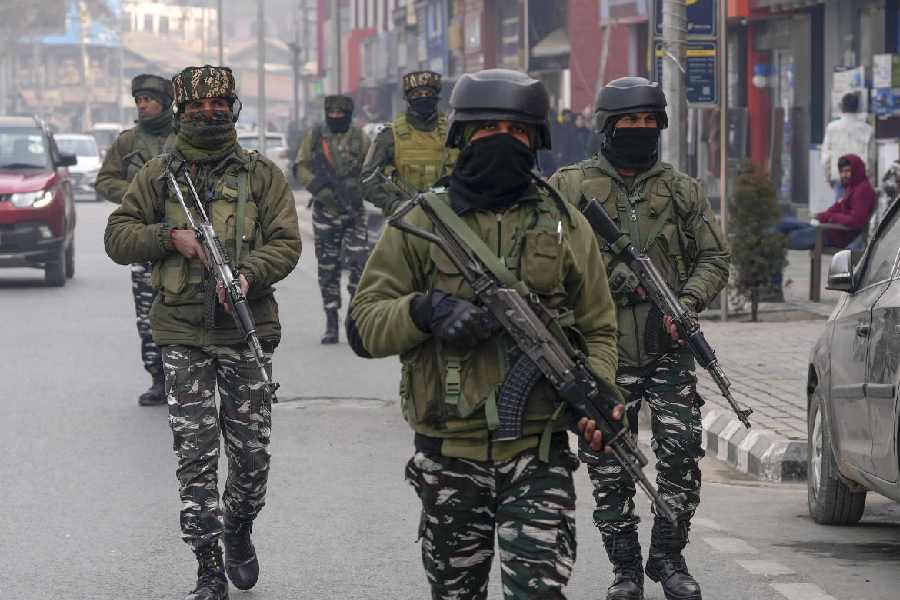
You may have seen images rolling off television all day of a Valley relieved of its recent mayhem. The streets quiet, the inflamed processions stilled, the strident cry of insurrection suddenly silent.

A “relatively peaceful” day in the ledger of Kashmir’s law-keepers; and for reporters, thank heavens, a break from the harried and bloody beat.

But that’s what it is — a break.

This is a calm imposed by curfew and by the gun. Perhaps also by the allocated four-day mourning for Hurriyat leader Sheikh Abdul Aziz who was shot dead with four others during the aborted march to Muzaffarabad near the Line of Control on Monday.

But beneath it, anger seethes unassuaged. Look where television cameras don’t often rove in Srinagar and you would know. Cast an eye off the high streets swept free of tumult by columns of armoured personnel carriers. In the narrow lanes, running off into the warren of Srinagar’s volatile downtown, in the mosques littered across the city, in the swarming neighbourhoods recently stained by death, an uneasy mood brews.

Groups of boys, their faces masked with handkerchiefs, chanting incendiary slogans and daring security men into confrontation, eyeball to livid eyeball, women beating their breasts and screaming unspoken atrocity. Imams discharging passion to the faithful from their high seats — “your freedoms are in peril, pray so you have the strength to protect them in the face of this aggression”.

In Bemina, on the city’s western outskirts, a mob that torches two vehicles and is barely kept from burning down a government facility. In Rainawari, in the centre of town, angered processionists shouting pro-Pakistan slogans that have to be tear-gassed, then fired upon. In Zainakadal and Habakadal, an hour-long fury of stone-pelting. In Habak, a provocative posse that eventually draws policemen into raiding and ransacking homes. Such has been the menu of a “relatively peaceful” day.

This is a scary calm; it is waiting to boil over into frenzy at a myriad locations in the Valley. “And don’t forget,” a top state police official said, “Independence Day is approaching. That is an abnormal day in the Valley even at normal times. I am not trying to be alarmist but be prepared for the worst.”

Arrangements to meet the ominous are rapidly being summoned and put into place. Additional army battalions and paramilitary troops are pouring into the Valley ahead of the goods-laden trucks stranded at Jawahar Tunnel. Srinagar looks the canny ghost of a turbulent past it can’t seem to shed. Quite a return to the grimness of the early 1990s. Swarming with troops, eddied in barricades and bunkers, swelling with frustrations that may require the uncorking of more teargas and guns.

“We are under instructions to keep restraint,” said a CRPF officer bunkered in downtown Safakadal. “But our restraint will depend upon how much restraint these boys keep.” He was pointing to a build-up of youngsters in the lane across the wooden bridge over the Jhelum. “They have been schooled in defiance all their lives, this is sport for them.”

The boys were cat-calling the jawans from the safety of distance across the bridge: “Go home, go home to India. Leave us alone!” One of them was waving a green flag and held a brick in his other hand.

Elsewhere in town, that brick was in more restless hands today. It was thrown, and it was returned by fire. On a day described as “relatively peaceful”, scores were injured and many of them sent to hospital. The toll of the past three days mounted by three, 23 dead now and more than a 150 injured.

There have been desperate appeals for peace but each of those has been superimposed with an appeal to “carry on the struggle”.

Informed by greater realism than today’s calm suggests, governor N.N. Vohra went live on local cable network this evening exhorting the Valley to “think deep and hard” about where the “Muzaffarabad Chalo” call would leave them. He denied there was any economic blockade of the Valley, he urgently assured more than 5,000 trucks laden with essential goods were on their way and he said India remained the biggest market for Kashmiri fruit and handicraft.

Hinting at a conspiracy to drag the Valley back into strife, he said: “You must think how and why normality has suddenly been sabotaged and who is responsible.”

Top
Email This Page