The Telegraph
 
 
IN TODAY'S PAPER
WEEKLY FEATURES
CITY NEWSLINES
FEEDS
  RSS
  My Yahoo!
SEARCH
 
Archives Web
 
ARCHIVES
Since 1st March, 1999
 
THE TELEGRAPH
 
 
Email This Page
A Beat at the Coffee House
Caleidoscope

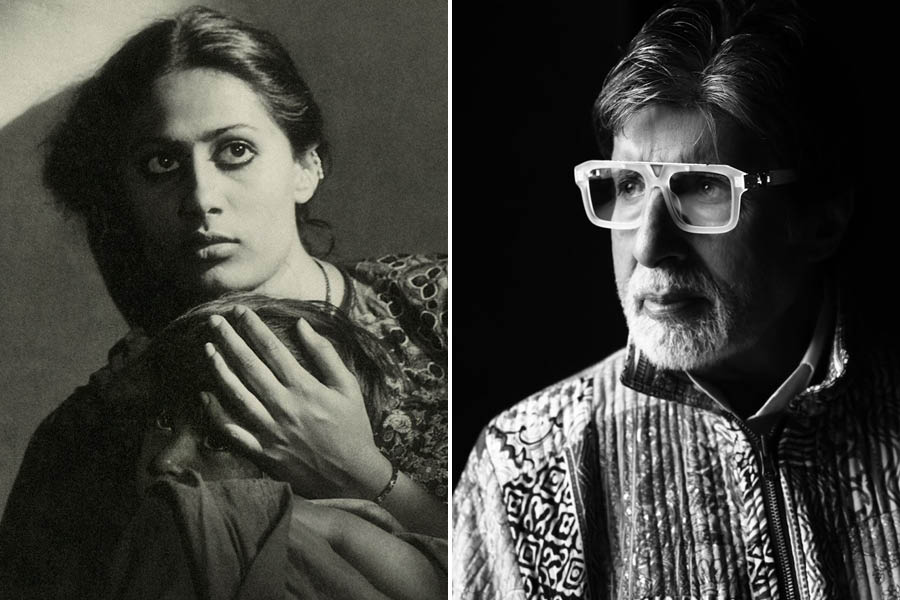
The launch of A Blue Hand: The Beats in India by Deborah Baker was a trip down memory lane with writers and poets talking about Allen Ginsberg, the Beat poet who captured the imagination of a generation with a poem like The Howl.

The launch at Town Hall was attended by Nabaneeta Dev Sen, Nabarun Bhattacharya and Utpal Kumar Basu.

The discussion ranged from a hate mail that Dev Sen had received as a reply to her criticism of the representation of the Bengali poets in the City Lights poetry journal by Ginsberg to her later friendship with the poet in the US, to Basu’s stories of Ginsberg in Calcutta, when Basu was part of a group of Bengali poets.

“We met Allen and Peter (Orlovsky) on a Sunday morning in 1962 in Coffee House. We hadn’t seen such sahibs before with torn clothes, cheap rubber chappals and a jhola and we were quite curious,” said Basu.

“Slowly they drifted into our group. Allen had introduced Peter as his wife and we were quite surprised at the masculine manner in which he had said that,” said Basu. Basu spoke about Allen’s drug habits, his eccentricities and the fact that his singing often plagued other poets like Shakti Chattopadhyay.

“Ginsberg left an important impact on Bangla poetry and opened doors with language, thought processes and belief systems that contributed to the process of growing up and becoming modern,” said Dev Sen.

The majestic space of the Town Hall provided the perfect backdrop to the evening, which was as much about Ginsberg’s past as it was about an interaction between two countries.

“Ginsberg’s time in India was a search for God and running away from his personal demons and he became a vehicle through which I could explore the relations between India and America,” said Baker.

Her book ends with Ginsberg’s visit to Jessore, which culminated in September on Jessore Road: Is this what I did to myself in the past?/ What shall I do Sunil Poet I asked?/ Move on and leave them without any coins? / What should I care for the love of my loins?/ What should we care for our cities and cars? / What shall we buy with our Food Stamps on Mars? / How many millions sit down in New York/ And sup this night’s table on bone & roast pork?

Dark days

The posters in central Calcutta. Picture by Bishwarup Dutta

Loadshedding, as it is also known in South Africa, is taking its toll on life in Calcutta. It is not just that children cannot study in the dark and that the heat makes breathing impossible, that PCs cannot be operated, that it becomes risky to walk on our already battered roads in the evening, that small-time mechanics are practically rendered jobless, that power cuts push patients in government hospitals closer to death’s doors, and that unless you are rich enough to afford an inverter or a diesel fume-spewing generator, your daily life can go haywire for the next several hours.

Power cuts can hit addas and camaraderie in a big way, as it makes chinwagging an arduous task while one is sweating like a horse.

Art galleries have opened in every nook and cranny of the city, and during power cuts exhibitions are either blacked out, or exhibits have to be viewed in the killing heat in the dim lights linked to generators. It suddenly seems as if we are back in the black days of the 1970s.

Over the top?

Is this another Singur in the making? Shops and other establishments in BB Ganguly Street have of late been plastered with tiny but colourful posters that say: “Any attempt to appropriate the space occupied by small traders in the name of building Metro will be resisted” — Central Calcutta Citizens Welfare Association.

The East-West Metro railway project will extend from Salt Lake to Howrah, and a station has been planned in the Bowbazar area.

Naturally, without land a station is impossible, and land in this densely populated neighbourhood is difficult to get. As a pre-emptive measure, traders are planning a movement against forced acquisition of land. Their argument is: The Metro will run underground. So why should their overground space be touched?

(Contributed by Diya Kohli and Soumitra Das)

Top
Email This Page