|
There are the hits and there are the misses. There are the superstars and their sidekicks; the champions and the underachievers. But there are characters that exist in a zone somewhere in between these extremes. They embrace the limelight, and then leave it on their own terms. They believe if you do what you enjoy, the rest follows.
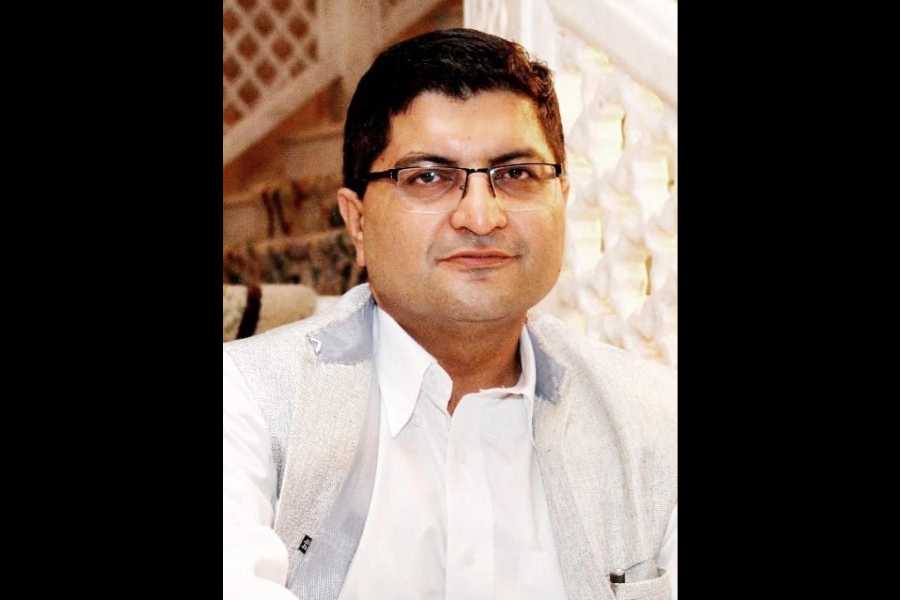
Meet Jayant Kripalani.
When I stopped enjoying acting, I withdrew from it entirely, says Kripalani. It took a lot of effort to get off the dishonest mode I had got into. I had never acted for money. But I was doing that, so I quit, says the 59-year-old actor during a recent visit to New Delhi. He has, however, allowed himself to play a cameo in the Aamir Khan-produced Jaane Tu... Ya Jaane Na, that launched the stars nephew, Imran Khan.
His striking salt-and-pepper hair is now grey, with wisps of black that look hand-painted. Kripalani, who has an affable, no-frills air about him, talks about his new passion honing leadership qualities. He, along with two friends, runs a company called Exper that seeks to build leadership and organisational strategies for companies. Recently, the group launched another company, Catalyst India, to conduct entertaining programmes and workshops for corporate team-building activities. Among their patrons are biggies such as Google and Walt Disney.
But his fans still remember him as the male half of the television series Mr Ya Mrs. After arriving with a bang with the Doordarshan series in 1984, Kripalani went on to play Neena Guptas smooth-but-slippery hubby Rohit in Khandan (1985-86). He acted in films such as Trikaal (1985) and Nagesh Kukunoors Rockford (1999). But all this came on the back of loads of theatre in home town Calcutta, where his father ran a laundry business.
Theatre happened by a stroke of luck. It was 1971. I was accompanying a friend who was to play Hamlet when the director asked me to read from the play. I said I didnt want to make an ass of myself. But she pushed me. So I read and later went for a drink at a pub. The director came hurtling down and said, You are it! I landed my first acting role but I think I lost a friend, he says.
Hamlet became the springboard for The Merchant of Venice, The Dumb Waiter, Sleuth and several other plays. In almost all of them, Kripalani, who studied literature at Jadavpur University, had the lead role.
His family, he adds, was not exactly supportive of his decision to embrace theatre. Initially, my father never came to see my plays. We didnt talk for about a year. But my mom made a deal with him. She said Go and see at least one play. If you say hes not to do it, take my word he wont. My father came for one play and didnt say a word. The next morning, he just patted me on the head and smiled. It was never discussed any more, and he came for every single play of mine thereafter.
By the late 1970s, Kripalani got into advertising and documentary filmmaking. He met his wife Gulan (also an advertising professional who later worked for the UN) in Calcutta, and while shooting for an ad film in Goa they hopped over to Bombay. We loved it so much we never went back to Cal, Kripalani declares. By the early 1980s, Kripalani had found his niche within the media with financial advertising. Theatre continued, and then he landed another windfall.
In 1982, he got an offer to do an ad after he had been spotted in a play. So I did the Gale mein khich khich ad for Vicks. It ran for 15 years! And I got only Rs 500. I resent that, he grumbles. With his first foray into celluloid a hit, he followed up with the Limca series of ads which ran through the 1980s.
Television happened soon after that. And Kripalani, for one, has fond memories of those sepia-tinted days when television was another word for Doordarshan. In retrospect, I think viva la bureaucracy, because if you look at what happened on TV then and compare it with whats happening now, you think may be that bureaucratic business worked. Doordarshan produced good programmes. Also, Doordarshan was the only bloody channel around.
But Kripalani is not pining for the past either. Would I like to go back to those days? No. Would I like to be a part of these days? No. I still get offers from various TV shows. And frankly, no amount of money can tempt me to take them up. I dont mind doing good garbage but I refuse to do bad garbage.
If there are regrets, they probably deal with times that cant be resurrected. Kripalani, for instance, remembers his friendship with the late Jalal Agha his senior at Scindia Public School in Gwalior which was revived once they worked together in Mr Ya Mrs. Jalal was such a joy to work with. But I hated him. He always had the best punch lines, says Kripalani.
I used to live in a very quiet Bombay housing society then. They didnt like noise. At 3 am Jalal would come and shout from below, I am hungry! Wed then rustle up bread, eggs and tea and chat till 6.30. And then hed fall asleep and Id have to go to work, he reminisces.
The last TV series that Kripalani had a meaty role in was Ji Mantriji (1999-2000), the Indianised version of celebrated British satire Yes Minister. He played the smooth, devious, but well-meaning bureaucrat who has to snake his way through the eccentricities of his boss the quintessential Indian politician. That was the last good thing I did.
He quit TV, took a sabbatical and went off to the US, where his wife was on a UN posting. When he returned, he was asked if he wanted to do a summer theatre camp for children in Sitlakhet in the Himalayas. The camp was being run by two Mumbai entrepreneurs, Tarun Chandna and Gaurav Saklani. Kripalani heard that Chandna had quit his well-paying job and had put his lifes savings into the workshop. Why did you do that, I asked. I thought there was more to life than just selling computers, he said. I said Im in, narrates Kripalani.
Kripalanis work not greatly removed from the role that he played on stage and on screen seems to excite him. To build a sense of team spirit and as a way of de-stressing, Kripalani evolved an activity for Walt Disneys India employees called Beats Work. I love the name, he says. The programme involved the rhythms of the samba and every employee was made to play a percussion instrument. For three months I built an inventory of percussion instruments. I went to the Disney office in Manchester and flew out their best beat conductor to India. We made 200 people learn the drums, and most of them had never held a musical instrument in their life. And it took two hours, thats all, he says.
Does he ever feel nostalgic about Calcutta? Whenever I get nostalgic about Bengali food I get some good dab chingri from Hooghly, he says, referring to a Bengali takeaway that his cinematographer son Pushan runs in Mumbai. Is he charged extra or less than usual customers? He laughs. Theyve been told to treat me like any other customer, which I dont mind, he says, rubbing his chin and then adds as an afterthought, My wife cooks better Bengali food.
Kripalani, clearly, is happy with the turns his life has taken. So satisfied, in fact, that he has no intentions as of now of returning to the small screen. Im past that time when I go and spend 18 hours on a set. Im a 9 to 6 person. At 7 I want to finish my correspondence for the day. At 8 I want to pour myself a drink. Its easier for me to say no than say yes and suffer.
|