TT Epaper LHS
The Telegraph
TT Mobile
 
 
IN TODAY'S PAPER
WEEKLY FEATURES
CITY NEWSLINES
FEEDS
  RSS
  My Yahoo!
SEARCH
 
Archives Web
 
ARCHIVES
Since 1st March, 1999
 
THE TELEGRAPH
 
CIMA Gallary
 
Email This Page
TALKING TO LESTER BROWN
- Maybe someone should now think of saving India

I had come across Lester Brown’s works in the Eighties when I was concerned with world energy. He had written about global food supply, and about alternatives to oil, which at that time was causing great worry, just like now. Then the problems of food and oil receded, I went on to do policy and journalism, and left the old concerns behind.

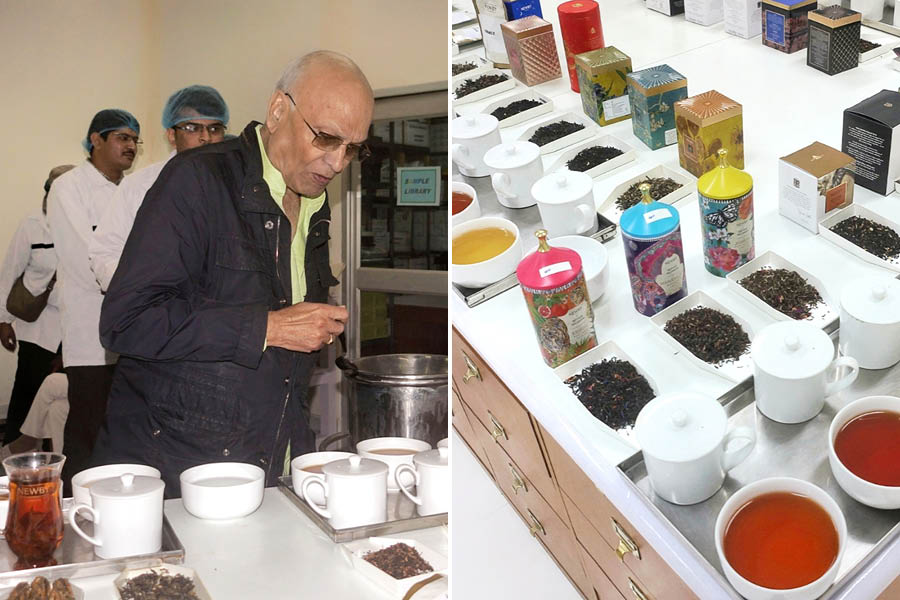
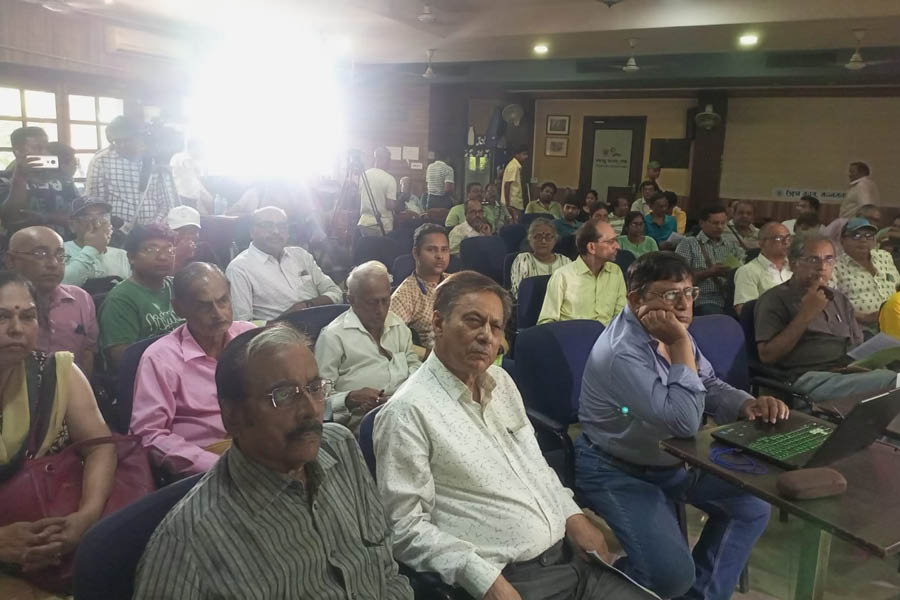
I recently ran into Lester Brown. He is about my age, but remarkably spry. In his old age, he has become amazingly optimistic. He has written a book intended to solve the world’s pressing problems — or rather, he has been rewriting the book every couple of years and republishing it under a new title. Its current title is Plan B 3.0: Mobilizing to Save Civilization. My friend, Ranjit Barthakur, published an Indian edition, and brought Lester Brown to India to release it; that is how I ran into him.

When we started talking, I found that he had come to India as a student. He sailed in Queen Frederica, a Lloyd Triestino ship, from New York in August 1956, a month after its sister ship, Andrea Doria, had collided with Stockholm off the Massachusetts coast. Soon after the ship sailed, it ran into a storm; from his porthole, young Brown could see the clouds one moment and the waves next moment. He was lucky to have got through the Suez canal just before the British and the French tried to capture it and the Egyptians blocked it by sinking ships in it. My ship was in Aden at the point, so it was diverted; I had a long voyage round the Cape of Good Hope. We too had a terrible storm between Durban and Cape Town. I was one of the few people who stayed on their feet; I used to stand at the stern and see the sea over the funnel as the ship went down. The rough sea gave me so much exercise that I used to get ravenously hungry; and since there were only about half-a-dozen passengers on their feet, the cooks really did us honour.

When Brown and his fellow students arrived in Delhi, wrestlers were being chosen to go to the Melbourne Olympics. The officials found out that Brown had wrestled. So he was asked to have some bouts with the hopefuls. He was taken aback a bit, because he did not find a mat in the wrestling pit; instead, it was full of sand. As they sweated, the wrestlers would dry themselves by throwing sand on themselves. Brown’s exploits in the pit got into the newspapers; after that, wherever Brown went in India, local wrestlers would challenge him to a bout. Brown stayed with three families. To reach one, he had to take a bullock cart — the first one in his life. Another host of his was the Rajah of Mankipur. At his place, Brown had the choice of a Buick and an elephant.

Brown told me that some Indian businessmen were looking for land in Uruguay and Paraguay to grow foodgrains and soybeans. This is on a modest scale; it is happening on a much larger scale elsewhere. As grains become scarce, grain-importing countries are getting nervous and looking for land in other countries. For example, Libya, which imports 90 per cent of its grains, has leased land in Ukraine on which grains will be grown for Libya in return for oil. Egypt, which imports half of its grain consumption, is striking a similar deal with Ukraine in return for gas. Korea, which imports 70 per cent of its grain consumption, is looking for land in Sudan and Siberia. If it finds some land in Siberia, it will probably get the poor North Koreans to grow food for it there. The Chinese are looking everywhere — in Myanmar, Kazakhstan, Siberia, Brazil, Philippines. It signed an agreement under which the Philippines would grow foodgrains on a few lakh acres and ship it to China. But the Philippines itself ran into a rice shortage, and an irate public forced the government to renege on the agreement.

I asked Brown what had been his biggest mistake. I had expected him to say that some prediction of his had gone wrong; but I got a surprising answer. Angela Merkel, Germany’s chancellor, was its environment minister in 1996. She was visiting Washington, and after an interesting conversation she suggested that Brown and she should write a book together. Brown had plenty on his plate, so he wriggled out of it. His regret did not arise just from the heights she has reached, but from the fact that she was a trained physicist: “So you can talk science to her and you don’t have to draw pictures. She gets it.” She is not the only interesting woman he knows. He also talked about Marina Silva, the daughter of a Brazilian rubber tapper. She was illiterate till she was 16; then she educated herself, and rose to become Lula’s environment minister. She resigned recently.

Talking about Angela Merkel, I remarked that Brown had not written many joint books. He said it was more efficient to write alone. In any case, he wrote nothing and he does not know how to type. He just wants to share some ideas with others; and for that, he dictates everything.

That is strange for an intellectual, I thought; so I probed a bit further into his background. He is the son of sharecropper who did not go beyond the fifth standard in school. Then in World War II the father did well, and bought a little farm. He left the farm to his two sons, who were in their twenties. At that time, Brown expected to spend his life growing tomatoes. But then he got interested in agriculture, and went and did a degree. That led to a job in the US department of agriculture, where he worked on global food supply. Then came the first oil crisis in 1973, and Brown started thinking about it. That is how, step by step, he came to be concerned about the state of the world.

A remarkable journey, from New Jersey to Mankipur, from tomatoes to global warming. I was, of course, aware of Lester Brown; I had an impression of him as a green ecologist, trying to save the world. But Lester Brown in flesh and blood turned out to be far more interesting. What struck me was his enormous collection of microfacts, from oil demand projections to bushels of corn that America grows per acre. He is not just a walking encyclopaedia; he collects the facts to make sense of them. And he generally makes sense. I am going to sit down and read him more carefully. Anyone who wants to find out how much fun he is has simply to go to the Earth Policy Institute website and read Brown’s Plan B 3.0. It is an immensely invigorating book. If some people mobilize to save the world as the book aims to do, so much the better. The book has more to do with America; some of us should think of saving India.

Top
Email This Page