|
 |
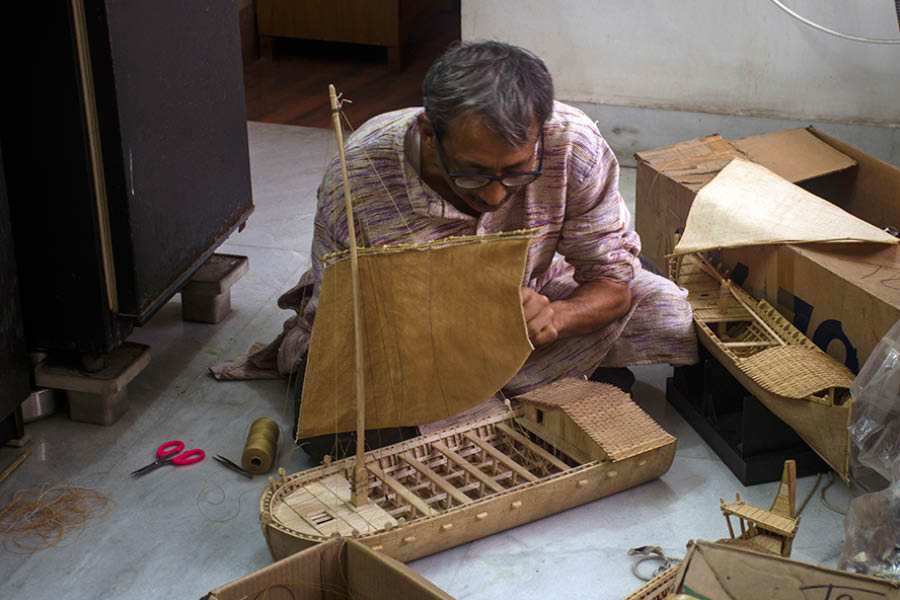
| Subodh Guptas untitled canvas and (above) Raqib Shaws Chrysanthemum & Bee, to be auctioned at Sothebys |
London, June 25: India in transition appears to be the theme of works by contemporary Indian artists, especially Subodh Gupta from Bihar, which are due to be sold at auction at both Sothebys and Christies in London.
On Tuesday and Wednesday next week, Sothebys is offering eight works by the cutting-edge and highly sought-after names of Subodh Gupta, Bharti Kher, Anish Kapoor, Raqib Shaw and T.V. Santhosh.
This will be preceded by an auction on Monday at Christies, featuring works by Subodh Gupta, Anish Kapoor and Syed Haider Raza.
It seems the worlds two premier auction houses are almost competing for the best of contemporary Indian art but, collectively, their sales in London and New York have driven up prices so that million-pound-plus figures are no longer rare.
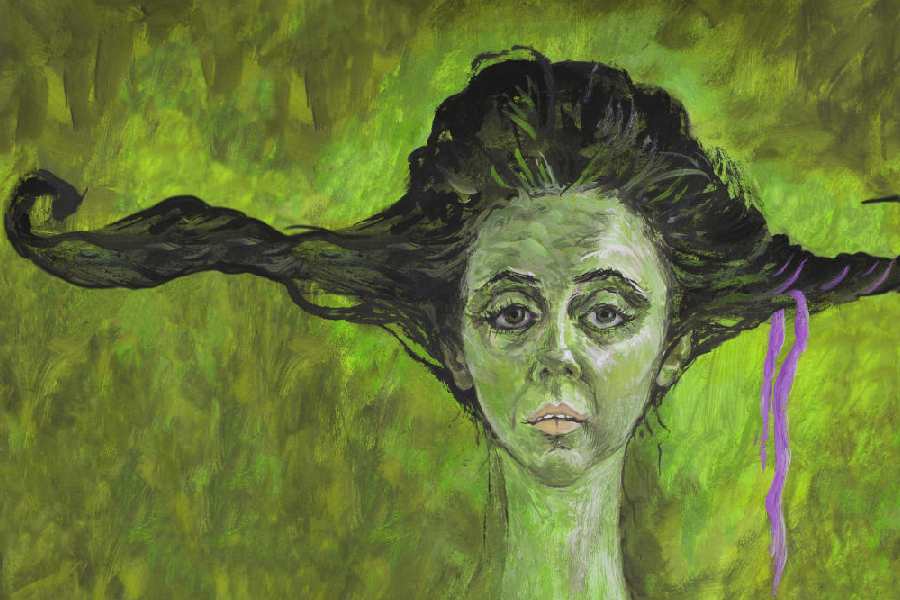
At Sothebys, Calcutta-born and London-educated Raqib Shaws Chrysanthemum & Bee (an explosion of iridescent colours, with a rich gold border), inspired by the Japanese painter and printmaker Kotsushika Hokusai (1760-1849), has a reserve price of £80,000-120,000 (Rs 68 lakh to Rs 1.02 crore).
The auction house has proudly pointed out: Sothebys holds the record for any Indian work of art sold at auction. This was set by Raqib Shaws Garden of Earthly Delights III, which sold for £2,708,500 (Rs 22.7 crore) in London in October 2007.
Sothebys says Indian artists are an ever-growing force in Sothebys international sales of contemporary art and that this summers sales in London will see this trend gather further momentum still.
At Sothebys, Subodh Guptas untitled canvas from 2005, estimated at £200,000-300,000, depicts a vessel stall glistening in the pink dawn of sunrise.
Over at Christies, Subodh Guptas Dubai to Calcutta, bronze and aluminium, in three parts, has a reserve price of £150,000-200,000.
Dubai to Calcutta is one of an important series of works known as Across Seven Seas made in 2006, states an explanatory note from Christies.
Consisting of a series of aluminium and bronze cast replicas of the kind of luggage that millions of Indian migrant workers bring back to India on trolleys as the materialistic fruit of their labour in other lands, these works are commemorative statues of a widespread contemporary economic phenomenon particularly relevant to Subodh Guptas home state of Bihar.
It adds: The impoverished Indian state of Bihar has been providing a large percentage of Indias large population of migrant workers for over a hundred years.
It goes on: Serving as a kind of opposite to Guptas sculptures of commonplace pots and pans, these luxuriously rendered baggage trolleys represent the extraordinary, but in fact also pitiful, material objects from the outside world so proudly brought back into the country by migrant workers, in the same way that the kitchen utensils seem to symbolise the disappearing culture of home.
This insightful observation also applies to Anish Kapoor, who came to London from Mumbai, while Raza settled in Paris (he received a Padma Bhushan last year).
At Sothebys, Kapoors untitled sculpture from 2003, which features hollows scooped from alabaster, has an estimate of £1-1.5 million.
At Christies, there are three of the sculptors works on sale, with the most expensive, featuring a polished purple mirror, given a reserve price of £600,000-800,000.
Kapoor has always striven not to be narrowly classified as Indian or ethnic, though today claiming he is really the son of Mother India may add to his lustre.
Razas La Terre, acrylic on canvas, is estimated to fetch £1,000,000-1,500,000 by Christies, which says: Rooted in Razas childhood memories of life growing up in the small and densely forested village of Kakaiya near the Narmada River valley in Madhya Pradesh, the painting is an evocative expression of the rich density and strong sensory life inherent with the deep, warm, blackness of the Indian night.
Raza, who has lived in France, has given a quote on what has driven him: I have never left India. I love my country and I am proud of it. I have been linked with the profound spiritual, religious message that India has to give to Indians and to the world of which we are forgetful at times, even in India.
|