|
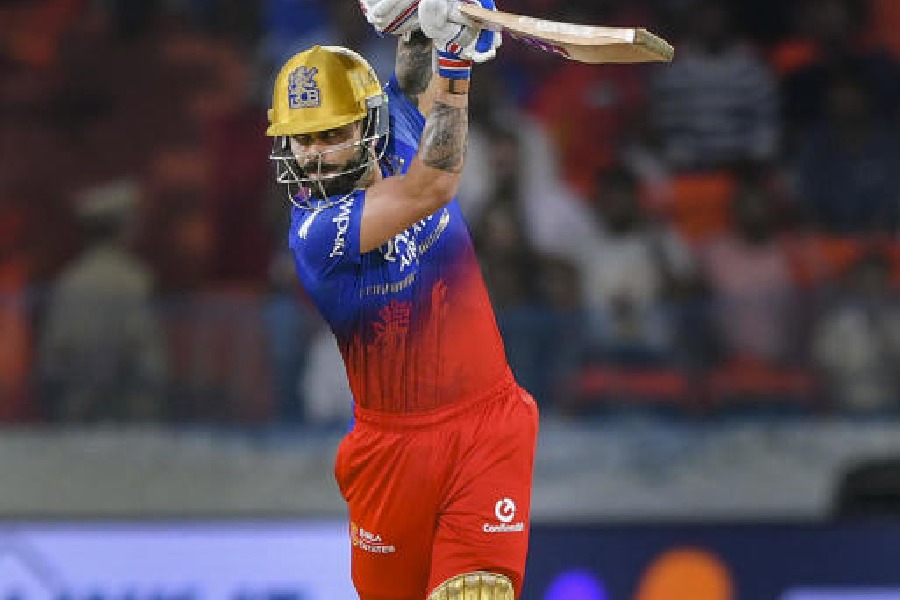
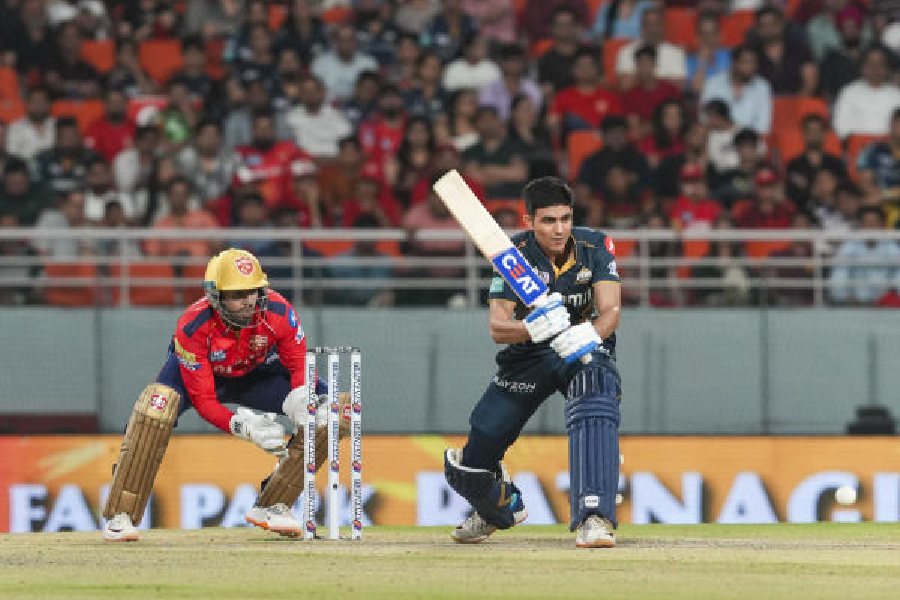
At least one-third of the nation, one dares say, would have heard of Sachin Tendulkar. Social mores, set by the top stratum, have ordained that cricket will henceforth be the national game. The down-and-out ones, including those too who do not have the wherewithal for even an indecent meal a day, cannot but respond with some deference to choices and decisions reached in the precincts of the superstructure. If by mere word of mouth, as a blur on the consciousness, they have by now, therefore, a vague acquaintance with the name of Sachin Tendulkar.
Is it only to be expected, or is this a latent irony: not even one-tenth of one per cent of the more than a billion who constitute the people of India would presumably be able to say who Vijay Tendulkar was? Even Sachin Tendulkar, who knows, might himself not have ever been told of the existence of a Marathi playwright of the same surname as his and with roots in the same village in Maharashtra as his. A playwright is no match for a cricketer in the business of capturing the popular imagination. Sachin T. is a living legend, breaking records one after another. Purists may venture to sneak in a timid suggestion that Vijay Hazare and Sunil Gavaskar were better honed in the art and grammar of classical cricket; their caveats would in no time be brushed aside by the overwhelming majority of the present generation. There can be no superior suffrage than the democratic verdict.
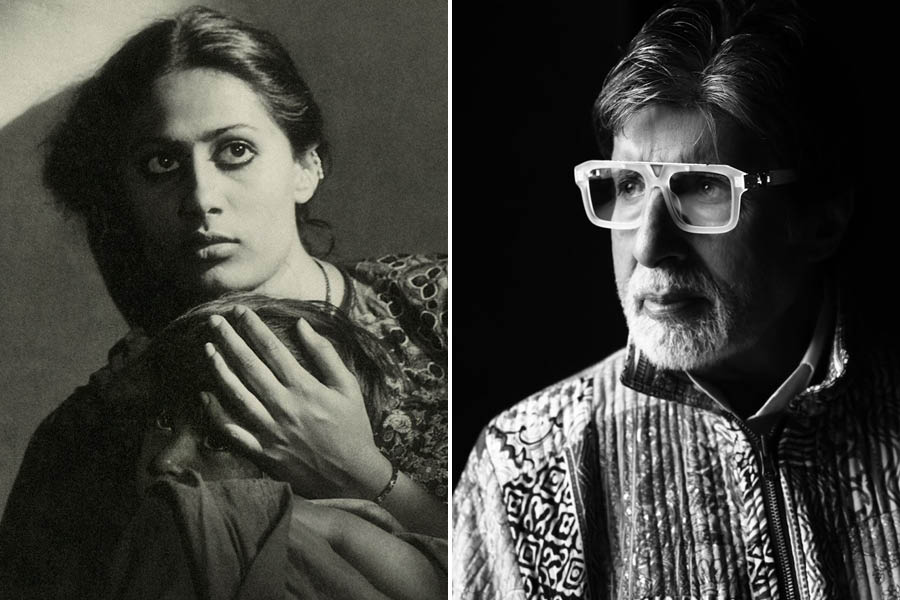
If not fatuous, it is at least futile to grumble over the injustice embedded in what passes as the human condition. Vijay Tendulkar, who died last month, was without question the most powerful playwright this nation has begot in the post-Independence decades. So what? The democratic verdict was not particularly kind to him. Even in his preferred sphere of praxis, he did not break any records, nor set any. He did not find his way to making a fabulous income. His visage was not carried day in and day out on television advertisements. Even as a playwright, he had — why not admit it? — a narrow appeal.
He was well known, but not quite a celebrity. None of his plays, not even Shantata, Court Chalu Ahe or Ghashiram Kotwal or Kanyadaan, attracted any sizeable audience during the limited number of performances that were put up. The worth of his plays, judged in terms of their literary quality, was way above that of the average run of Marathi plays in the contemporary period. For that matter, some of Vijay Tendulkar’s works surpassed the standard set by the Bengali stage in the heyday of Sombhu Mitra and Utpal Dutt. Nonetheless, quality is a narrow, abstract concept; it has, more often that not, little positive relationship with box-office receipts.
Vijay T. was placed on a pedestal, rightly, by the cognoscenti, some of whom were prepared to go even further. There would be fervid, rarefied discussions over his plays in national and international circles; one or two PhD theses have got written on their philosophical import. The average playgoers, however, would have no part of it. They had already made up their mind: Vijay T. might be great, but they would not touch him with a barge pole.
The source of this disenchantment is not difficult to unearth. Vijay T. could not bother to offer any concession to the sentiments and susceptibilities of the play-going middle and upper-middle classes. Each of his plays has a social context. A crusader against hypocrisy in the nooks and corners of society, he was not prepared to make the minimum compromise with hypocrisy. The outpouring of scorn — why scorn alone, hatred too — was for him the great catharsis. “Abandon all illusion” was his motto for those who would dare to enter the portals of his creations. Always full of witticism at the expense of others, he was equally full of derision for those he had made up his mind to lambast: derision, in fact, was central to his style.
He was unshakeable in his belief that just about everything happening around us is sham. Phoniness in the different layers of Marathi society could not ever escape his whiplash. He did not know when and how to stop, and would often explode in language bordering on violence. The prim and self-assured Chitpavan Brahmins or the supposedly sanctimonious Servants-of-India-Society types were never Vijay T’s cup of tea. He took an equally dim view of the species which, while flaunting its credentials as saviour of the downtrodden and the disadvantaged multitude, had its eye on the main chance, to advance its own social and economic status. That there could be one or two exceptions even among the self-seeking crowd was something he was reluctant to concede. The Marxists, understandably, could never feel comfortable with him, nor could the certified emancipators of the Dalits. And, of course, since he loathed from the bottom of his heart the Marathi bourgeoisie, the compliments were returned in full.
This, then, was the tragedy of Vijay T. even though, were he still around, he would scoff at such a description of the situation. A rare master of the craft of writing plays, he was much more. It was not only his command over language, but the deft manner in which he would create dramatic situations and, equally deftly, walk away from them will be long talked of as well. He had unstinted support from his cast and the select band of producers who firmly believed in the Vijay T. cult. The organic problem did not, however, go away. Playgoers could not be convinced that destruction for the sake of destruction constitutes a complete philosophy of either life or the dramatic arts. He became a wreckage artist of manic proportions. Things and persons would wither into insignificance by the intensity of his biting sarcasm liberally mixed with contempt.
Destruction of this vintage, it is possible to argue, has its sanction in the epics. Take Mahabharat: Kurukshetra can choke you by its awesome parade of deaths, violence and destruction. It does not quite end there though. There is, in Veda Vyasa’s epilogue, the hint of a message: destruction is an integral part of the cycle of creation, all that lives must die, destruction creates the ground where you can plant, once more, the seeds of life — so welcome the violence of destruction.
One can only speculate here. Perhaps Vijay Tendulkar took it as his hypothesis that there should be a division of responsibility among creative people too. Destruction itself is as much an affirmative act as bringing something alive is. Unless the bulldozers come and flatten the land, you cannot make it ready for cultivation, and if there is no cultivation, there will be no grains necessary to sustain human life. Why must you then think less of a playwright who believes in division of labour, who thinks that, given the ambit of his talent, time and resources, he should take charge of the demolition job, which is the first half of the drama of creation?
Was this his premise? Nobody knows for sure, and an uncomfortable thought creeps in. Perhaps Vijay T. was equally contemptuous of attempts at putting a veneer of philosophy on his works. Perhaps he wanted to carry his hatred of the universe to the limit, to the point of purposely alienating even an appreciative audience. No thanks, he did not want to have their admiration or sympathy. This wouldn’t still mutilate the truth: he was the most powerful playwright independent India has produced. It is hardly of any concern that the other Tendulkar, the vastly more successful one, had possibly never crossed his path with Vijay Tendulkar’s. That was possibly a good thing for both of them.
|