|
What became popular in the 1950s is still going strong today. The humble pair of jeans has successfully retained its essential appeal as the rugged, cutting edge and individualistic piece of clothing that is always in vogue.
Brands like Levis have been instrumental in accelerating growth of the denim market and acceptance across the globe. In India, Levis has a design centre in Bangalore that spearheads around 60 per cent of the Levis products for the Indian market. Merchandise is also exported to countries like Malaysia, Korea, Pakistan, Taiwan and Singapore.
The latest from this widely-recognised casual-wear label are tees that provide fashion for thought. Levis Skyes, the street-wear brand, offers water soluble tees that promote the say no to plastic cause. It has bio-degradable covers attached to the neck and one of the sleeves, which dissolve when immersed in water.
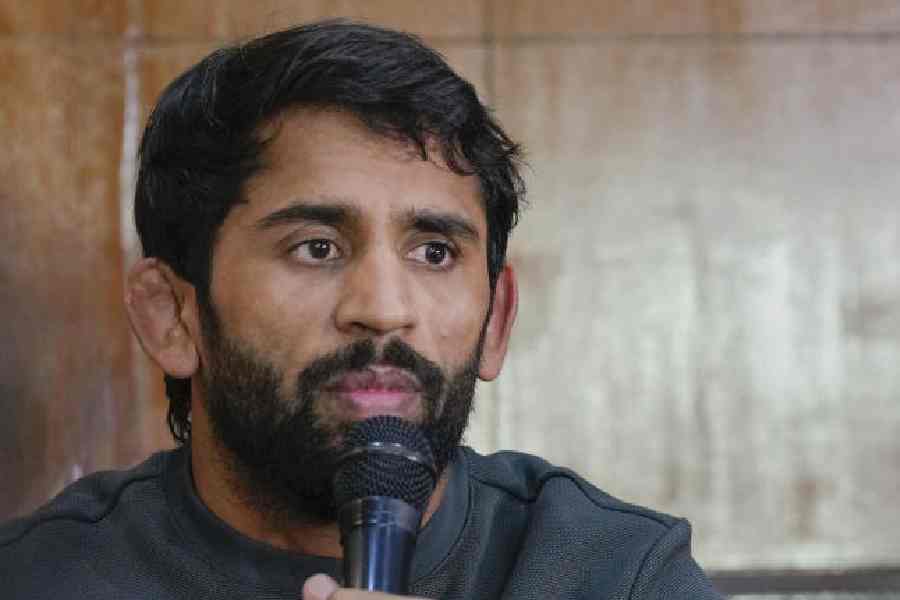
On Friday, Shumone Chatterjee, managing director of Levi Strauss (India) Pvt Ltd, was present at the launch of these unusual shirts at Tantra, at The Park. He spoke to t2 on brand building, brand ambassadors, jeans and also Calcuttas genes:
How important is the east for Levi Strauss (India) Pvt Ltd?
We have 21 exclusive stores in the east (18 Levis, 2 Dockers and 1 Signature). In the next 12 months we are expected to be have 100 stores (32 Levis, 8 Dockers and 60 Signature). Calcutta should have around 34 stores (10 Levis, 4 Dockers and 20 Signature). This is how important the east is.
Levis is growing at a rate of 60-65 per cent in the east and it is expected to double year-on-year in the next three years.
How would you describe Calcutta when it comes to choice of jeans?
Around 2002, when we had launched the low-waist theme in the city, we had lengthy discussions.... A school of thought said that the Calcutta crowd would find it too sexy, another said that low waist should be easy. If our mothers and grandmothers could sport saris that started lower down the waist, why not low rise jeans? The rest, as they say, is history. But that was then, today Calcutta is different — as fashionable as the rest of the country.
 |
|
Deepika Padukone is the face of Levi’s
|
Today there are so many brands that have entered the Indian market. How do you handle the competition?
Product innovation is a key strategy. In terms of retail innovation, one cannot change the store design every now and then but we can definitely work on visual merchandising every season. Our facades are 30 ft in width and 12 ft high, so it gives a good view of the store.
What are the threats from the unorganised sector?
The jeans market in the country is close to 150 million units per year. Around 135-140 million units constitute the unorganised sector and 10 to 12 million units constitute the organised segment. A lot of action centres around tapping the unorganised sector. With Levi Strauss Signature, priced at Rs 599 plus, we have entered a new price segment.
In terms of the age bracket, have denims broadened scope in India?
Before, the 15-24 years age group constituted 60 per cent of the jeans market. While the 25-34 years age group constituted 25 per cent, 35 to 54 year-olds constituted a meagre five per cent. Today, the 15-24 years age group is only 40 per cent of the market. The 25-34 years bracket constitutes 35 per cent and 35-54 years makes up 25 per cent of the market.
Your brand has signed stars like Bipasha Basu and Deepika Padukone as its brand ambassadors. What goes into selecting a brand ambassador?
We look at the right balance of power — whether the right balance between our brands set of values and the stars value can be achieved or not.
Who has the best and worst taste in jeans?
Kareena Kapoor wears the right stuff. Akshay Kumar is good. Shah Rukh is conservative when it comes to jeans. The worst has to be some of the television actors. They sport some of the worst washes.
|