The Telegraph
 
 
IN TODAY'S PAPER
WEEKLY FEATURES
CITY NEWSLINES
FEEDS
  RSS
  My Yahoo!
SEARCH
 
Archives Web
 
ARCHIVES
Since 1st March, 1999
 
THE TELEGRAPH
 
 
Email This Page
CONGRESS BANGALORED
- A game where BJP strategy & script paid off

In January this year, well before there was any clear indication of when the Assembly elections in Karnataka would be held, BJP general secretary Arun Jaitley commissioned a private opinion poll by a low-key psephologist whose findings had been remarkably accurate in Bihar, Uttar Pradesh, Punjab and Gujarat.

There were four major findings of the poll. First, it suggested that the BJP was likely to hover around the 90- to 100-seat level (in an Assembly of 224), mainly on the strength of its clear lead over the Congress in rural Karnataka. Second, contrary to conventional wisdom, the Congress was significantly ahead of the BJP in urban Karnataka, particularly Bangalore.

Third, that H.D. Deve Gowda’s hold over the Old Mysore regions was unaffected but the Janata Dal (S) had slipped in other parts of Karnataka. Finally, the poll indicated that S.M. Krishna in the Congress and B.S. Yeddyurappa in the BJP had strong popular support for their chief ministerial ambitions.

The BJP acted on the findings of the poll: it announced Yeddyurappa as its chief ministerial candidate, it went out of its way to recruit and promote Vokkaliga leaders who could tap into crumbling JD(S) bases outside Old Mysore and firmed up its organisational machinery in urban Karnataka, particularly Bangalore.

The Congress, on the other hand, rushed into a series of miscalculations. First, after having brought Krishna out of political hibernation in Mumbai, the Congress couldn’t muster the nerve to project him as its chief ministerial candidate. The failure to capitalise on Krishna’s strengths led to a failure to create a countervailing force to Deve Gowda among the Vokkaligas. This in turn nullified the possibility of an alternative social pole around which a non-Lingayat combination could be crafted.

Second, the Congress, egged on by the Bangalore media and some influential figures in the IT industry, was convinced that it was the natural beneficiary of the disgust with 30 months of fractious coalition politics. This was not an unreal assumption. Unfortunately, it faltered at the threshold of rising inflation which neutralised the party’s natural advantage over the BJP in urban Karnataka.

The BJP took full advantage of the Congress disarray over inflation to drive home a parallel message: that it was the Congress which was responsible for the urban chaos in Bangalore.

The Karnataka Assembly election was in many ways a game where strategy took centre-stage. Nothing momentous happened in the six months of President’s rule to induce a dramatic shift of political alignments. In a war of manoeuvres, the BJP chose its candidates purposefully and ran a campaign that focussed on the party’s strengths. Despite pressures and temptations to shift the agenda to extraneous issues, such as an overkill on terrorism, the BJP systematically targeted the Congress on the latter’s points of vulnerability and simultaneously instilled belief in its support base that this time it was in a position to win.

The Congress campaign on the other hand lacked focus. It ran a campaign, borrowed from the BJP national campaign of 1998, promising a “stable” government under an “able” leader. Yet it was unable to name this leader. At the same time, encouraged no doubt by an alliance of NGOs which were campaigning against the BJP, it introduced themes such as secularism which had no bearing on the political discourse in Karnataka. A seminar was held in Bangalore to show that Gujarat was actually a state lacking in human development. And Union cabinet minister Kapil Sibal convened a special media conference to demonstrate that Karnataka was well ahead of Gujarat in higher education!

In the past, the BJP was often faulted for trying to impose an unfamiliar political culture based on Hindi and Hindutva on a sceptical south India. In this election, the BJP stuck to a script faithfully, refusing to be derailed by either the media or internal pressure. The Congress, on the other hand, lacked a script and fell back on improvisation — with unhappy consequences. Individual Congress candidates ran effective campaigns centred on money and community appeal. Unfortunately, these local initiatives were not complemented by a central campaign.

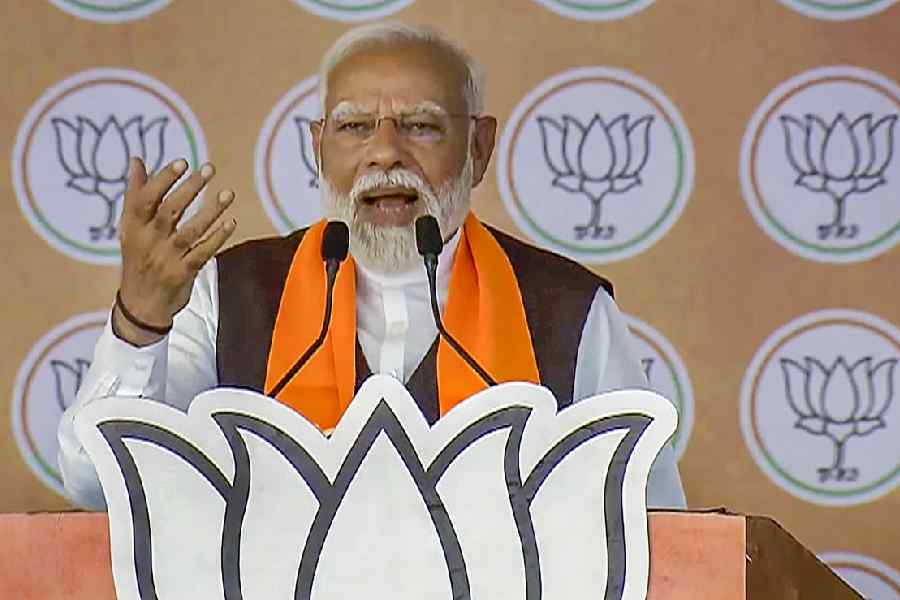
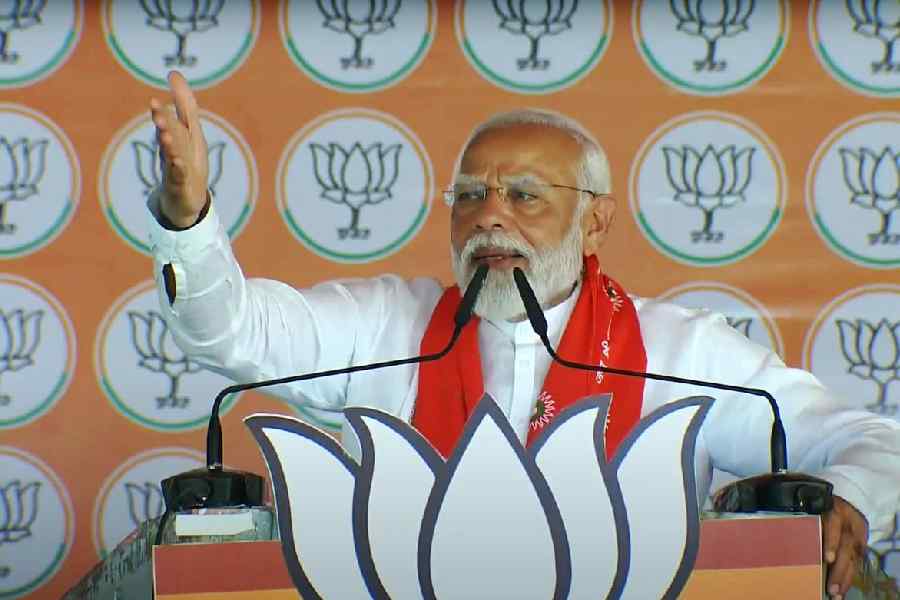
In the case of the BJP, an effective central campaign relieved the pressure on local candidates. Apart from Yeddyurappa and Ananth Kumar who toured intensively, the BJP kept its central campaign confined to L.K. Advani, Sushma Swaraj and Narendra Modi. They stuck to a similar tune.

It has been said that the BJP played the role of a regional party. The charge is both right and wrong. The party didn’t have a template campaign model. There was, for example, nothing apparently similar between the BJP campaigns in Bihar, Gujarat and Karnataka, except that they were all conducted by the same party general secretary. And all were calibrated to suit local circumstances — the hallmark of good politics. As Narendra Modi remarked to a TV channel on Sunday: “Gujarat model or Karnataka model, the name doesn’t matter. As long as it works.”

Top
Email This Page