TT Epaper
The Telegraph
 
 
IN TODAY'S PAPER
WEEKLY FEATURES
CITIES AND REGIONS
ARCHIVES
Since 1st March, 1999
 
THE TELEGRAPH
 
CIMA Gallary
 
Email This Page
DARKNESS VISIBLE
- The governor’s concern has highlighted the CPI(M)’s dilemma

When a bomb hit Buckingham Palace in 1940, Queen Elizabeth (the present queen’s mother) famously remarked, “I’m glad we have been bombed. It makes me feel I can look the East End (which German strikes had almost flattened) in the face.” The incident added tremendously to the monarchy’s prestige and popularity. According to Churchill, it transformed the king and queen from constitutional abstractions into flesh and blood with whom the populace instantly identified. Ever the publicist, Mountbatten wrote, “If Goering had realised the depths of feeling which his bombing of Buckingham Palace had aroused throughout the Empire & America, he would have been well advised to instruct his assassins to keep off.”

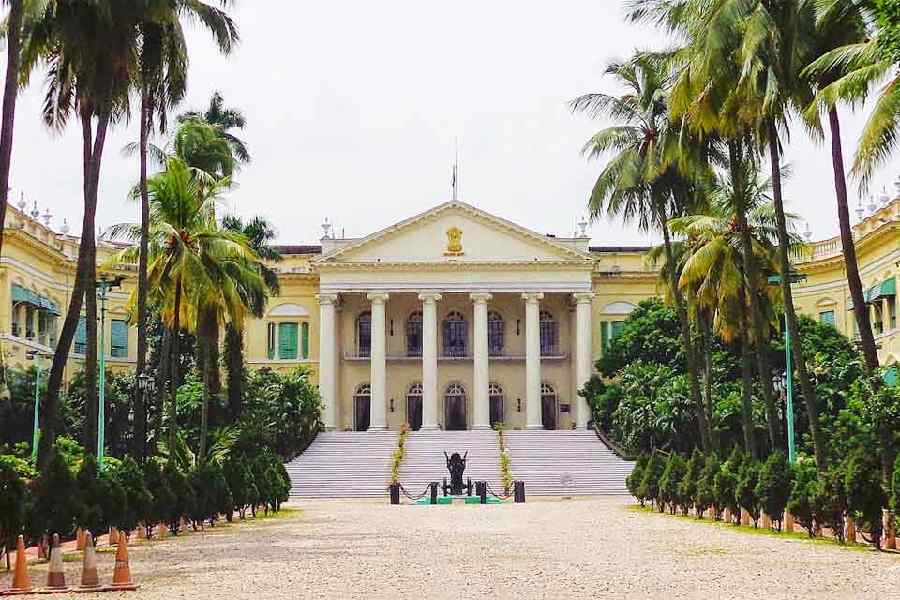
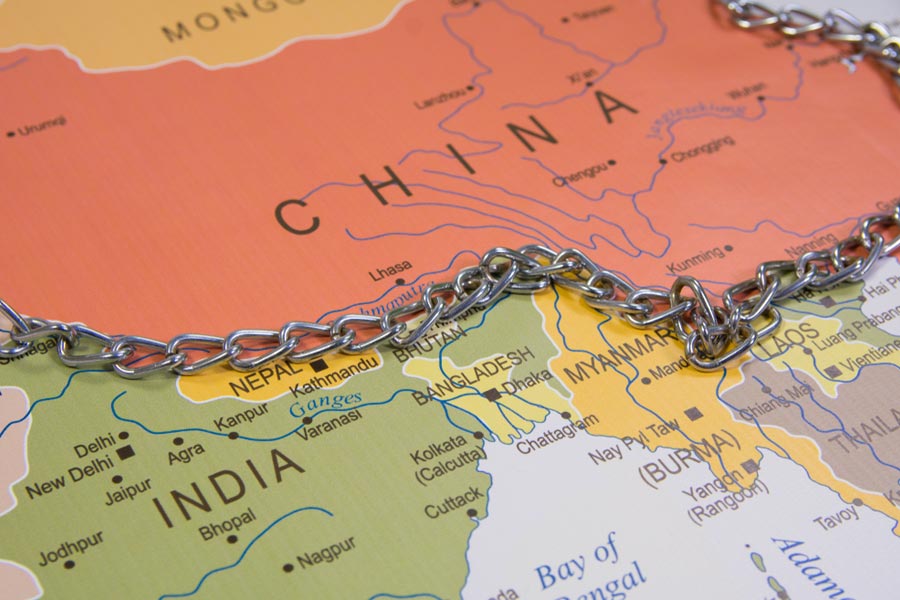
The anecdote came to mind when I read the West Bengal governor’s touching and by now famous order “that Raj Bhavan need not be an exception to the city’s electricity supply situation”. But only the Marxist establishment’s subsequent venomous response highlighted the nuances of his studied understatement and of his Curzonian bureaucratese in which “need” means “must” and “may” is “shall”. The reaction reveals how deeply the party has been stung by this exposure of its failure to provide adequate electricity at a time when the panchayat polls threaten to expose the more resounding failure to invent a catch-all formula like Deng Xiaoping’s “socialism with Chinese characteristics” to legitimize its mix of ideological rhetoric and capitalist economics.

As conceptual monarchs, our governors must function within the constraints of a republican Constitution. A supposedly revolutionary party that has held office for 31 years compounds the contradiction. I say “supposedly” because a straightforward commitment to revolution would have given short shrift to a relic of the raj. But Marxists who are circumscribed by a liberal democratic dispensation and, moreover, now seek capitalist growth in cooperation with Singapore, Tata and Salim feel the need to pitch their rhetoric even higher as a diversionary strategy.

In a recent conversation, Singapore’s prime minister, Lee Hsien Loong, recalled with fond respect Buddhadeb Bhattacharjee going to see him. “He told me, ‘Reform, Perform, or Perish’. He sent his party secretary to visit China and said you learn from them. He came back and he is trying to do the right thing in West Bengal, including having a big industrial park.” With some experience of ideologues who see the light, Lee also mentioned Lim Chin Joo, a local “hard-liner” whose brother, Lim Chin Siong, a charismatic young communist firebrand in the late Sixties, was our much mellowed neighbour in the Nineties. Lim Chin Joo wrote a very poignant newspaper article after visiting China. “He asked the tour guide, ‘What do you learn in university? You learn Marxism-Leninism-Maoism?’ ‘Yes, of course. It’s a compulsory subject’. So he asked her, ‘So, what do you think about Marxism-Leninism-Maoism?’ She said, ‘The kind you practise in Singapore is the best kind’. So, Lim Chin Joo, the old communist activist, said, ‘I didn’t know whether to cry or to laugh’.”

Planning to invest Rs 130 crore in the proposed airport near Durgapur, Lee probably feels that Buddhadeb Bhattacharjee also regards the brand of “Marxism-Leninism-Maoism” practised in Singapore the best. But, alas, his politburo, where “there's no responsibility, they just take a hard line”, won’t allow pragmatism. Viewing politics through an economic telescope, Lee has little idea of the additional complications of comrades yearning to be bhadraloks but not daring to admit it. Or of the dynamics of power in a state where mobs can determine the outcome. Sir Frederick Burrows, the last British governor, recorded how he and his wife cowered in one room while a delirious crowd stampeded through the palace, ripping curtains, smashing furniture, slashing portraits and pocketing the hallmarked silver. As a British historian observed, Chakravarti Rajagopalachari, Gandhi’s grandfather and West Bengal’s first Indian governor, “was left with only a few teaspoons”. No wonder a local hotel has (or had) to provide all the crockery and cutlery for Raj Bhavan’s formal dinners for foreign celebrities.

Though Bhattacharjee’s government has not needed to have recourse to the mob in Calcutta, the capability lurks there. Sain Bari, Marichjhanpi and Bantala are names that most of us would rather not think about. But Gandhi’s comment on Nandigram was a reminder that the spectre of manipulated violence cannot be wished away. The governor’s observation also created a political frame for all his future remarks, however innocuously meant. To say that West Bengal politicians have had reason to suspect gubernatorial motives ever since Dharma Vira, or that T.V. Rajeswar’s relations with the then chief minister were strained, is not to take sides. It is to recognize the simple fact that a Congress Centre and a Marxist state are on opposite sides of the political divide and that the job of any governor worth his salt is to be the Centre’s eyes, ears and, if necessary, stick. For all his benign charm, Gandhi must know that every word and action of his will be interpreted in political terms in the run-up to the Lok Sabha polls.

His ostensible purpose of sharing public discomfort like Britain’s late Queen Elizabeth could have been served by quietly ordering the government of which he is the titular head to include Raj Bhavan in the loop that brings (or doesn’t bring) power to the rest of us. That would have meant either drastically reducing Raj Bhavan’s present connected load of 700 kilowatts or delinking the special line that is now free of load-shedding. In either case, the building would sooner or later suffer power cuts, and people in the Esplanade and Dalhousie Square areas would notice the gubernatorial mansion plunged in darkness. Nor would this be for only two hours of his choosing. It would be as and when a transmitter trips, a storm disrupts transmission, a cable collapses or any of those things that are lumped under the opacity of “technical fault” happens.

Raj Bhavan might then even have shared what was for me a unique experience earlier this week. Our generator clattered to life as usual when the current failed late one night. What was unusual was that the police arrived within minutes to order us to switch it off and swelter in the heat and dark because the noise disturbed the next building. Policemen gone, we switched it on again; the police were back within minutes and stayed on this time to ensure obedience. Things have obviously changed during the 18 months we have been away. Previously, the much bigger block of flats next door had a far more noisy generator that reverberated through the entire length of Mandeville Gardens. Now, they have probably equipped the machine with an expensive silencer. More significantly, they appear to have acquired a hold on the police who, normally impervious to ordinary citizens’ pleas, are ready to jump to uniformed life at their beck and call even at dead of night. It was an eye-opener to the reality of power and influence in Calcutta. Or has the police force also changed?

Had the governor willy-nilly had to suffer the city’s pains and pleasures, he might have been able to say à la Queen Elizabeth, “I am glad we have load-shedding. It makes me feel I can look Golf Gardens in the face.” That would have burnished his image without infuriating politicians who know that the sons of peasants demand white collar jobs but cannot satisfy them with industry without alienating other peasants whose support still counts. With Congress in disarray and the Trinamul Congress a shrieking farce, Bhattacharjee has no legislative opposition to contend with. But his party is caught in the cleft stick of its conflicting ambitions — to preside over Bengal’s revival as honest bhadralok or pose forever as comrades at the barricades — which is tearing apart the Left Front. The governor’s much admired public expression of concern for ordinary sufferers has highlighted that dilemma

Top
Email This Page
 
 
" "