|
Situated almost smack in the middle of the Indonesian archipelago, Bali is a masterpiece of nature. It doesnt need an introduction, for its name is a synonym for paradise, if not blissful exile. Thousands of tourists arrive daily not just to soak in Balis stunning beaches and lush landscapes, but also for its exquisite arts and spirituality embodied in its countless temples.
The plain Tegallalang village was our first stop in east Bali. We were more interested in the sculpted rice terraces than the brightly painted woodcarvings displayed in the shops lining the road.
We stopped at a roadside eatery (warung) midst gently sloping rice terraces and coconut trees. The air was crisp and clean and the views deep and green. It was still early in the morning and women in sarongs emerged from their homes to put tiny bamboo offerings to their gods on paths littered with frangipani.
A thing not to worry about is stepping on these offerings. Given their profusion its almost impossible not to. In fact, offerings are sometimes left in front of shrines in the middle of roads where they are run over by taxis.
A few miles north of Tegallalang, one must visit the lovely spring temple of Pura Gunung Kawi in the village of Sebatu. Attractive and refreshingly uncrowded, the water temple is built on the site of holy springs. The water is channelled through carved stone spouts into seven walled bathing pools within the complex. Around the pools, shrub-lined paths run through the manicured gardens past ornamental pavilions to the main shrines.
We lost track of time as our eyes fell on a delightful cockatoo, locked up in a rather small cage. The bird was evidently lonesome and eager to talk to us. It squealed kakatua a number of times and was very reluctant to let us go. Finally, we slipped away after a lot of coaxing and cajoling and promises to return.
We looked forward to our next destination — the small town of Tampaksiring. To the east of this town, bordering the Pakrisan River, nine immense monuments have been carved into the sides of the valley. The Gunung Kawi Royal Monuments or tombs were erected as memorials to a king — possibly the 11th-century Anak Wungsu — and his queens.
To reach the tombs, we walked past scores of souvenir stalls and down a steep flight of 300 steps through a massive rock-hewn archway to the river. Some of the stalls were selling exquisite bone carvings. We ended up buying one portraying a scene from the Ramayana.
Pura Tirta Empul, a sacred spring temple near the River Pakrisan, is pleasant to visit. Discovered in the 10th century and believed to have magical powers, there are springs that bubble up into a large, crystal-clear tank within the temple and gush out through waterspouts into a bathing pool. People come from all over for holy water, particularly on the day of the full moon night.
The exit route from the temple is through a lengthy warren of souvenir stalls. If you dont want to buy, simply cover your ears and follow the painted arrows on the ground to find your way out.
Most of Balis mountains are volcanoes — some dormant, others most definitely active. Although Gunung Batur (Mt Batur) is not the largest volcano in Bali, its the most active, erupting more than 20 times in the last 200 years. Most visitors stop at Kintamani, one of three small villages set high on Baturs caldera rim. The view from Kintamani into the caldera of Mt Batur is perhaps the most famous one on the island — as the rush of tourist buses testify.
Id read somewhere that the most aggressive hawkers in Bali frequent Kintamani. It proved true as a couple of peddlers swooped down on us even as we were getting out of our car. You want sarong?, you want T-shirt and you want to climb mountain were some of the questions fired at us in rapid succession. Our refusals left them enraged and they went away muttering in Balinese. It was clear that if we were not going to provide cash, we were of no use.
We made a quick getaway to Pura Ulun Danu Batur, the temple adjacent to Batur lake and the second most important on the island after Besakih. It honours Ida Batara Dewi Ulun Danu, the goddess of the lake, who controls the water for the irrigation systems on the island. The sheer number of shrines is overwhelming, but the most significant is the eleven-roofed meru in the inner courtyard dedicated to the goddess and the god of Gunung Agung (Mt Agung).
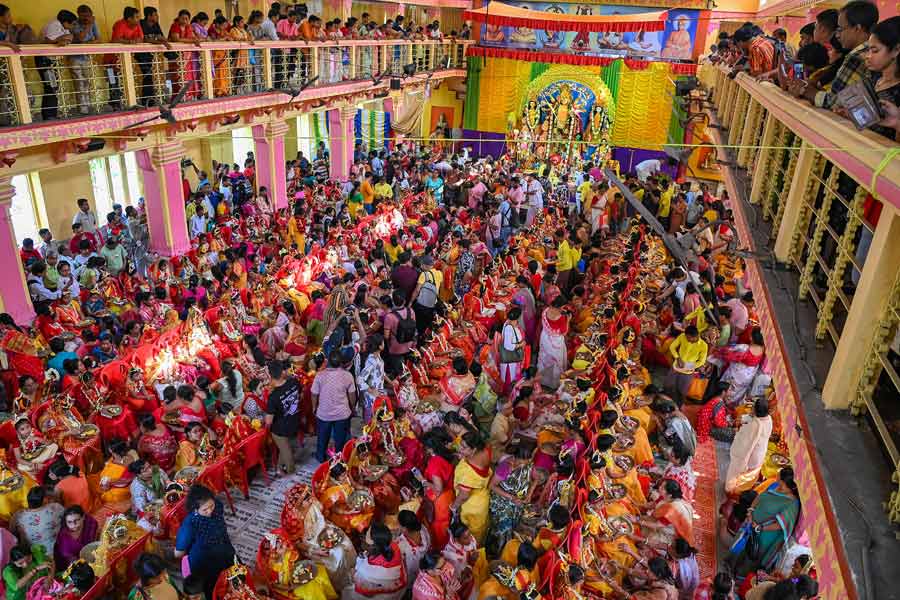
We had chosen to visit the temple during a festival. But then, there is almost always a temple festival taking place somewhere. The whole place had come alive as in a carnival. Elaborate offerings, including palm leaves, flowers and fruit, were being made to the gods. Male devotees are expected to attend ceremonies clad in sarongs and headcloth. My husband and our friend had to purchase some from a shop outside the temple and they ended up paying a huge price for their purchases.
On the way back to the hotel, we stopped at Bangli for a glimpse of the Pura Kehen temple. Rising up steeply in terraces lined with religious statues, Pura Kehen is large and imposing. The entrance leads into the outer courtyard containing a massive banyan tree. Steps lead up to the middle courtyard, from where you can look into the inner courtyard, with its eleven-roofed meru, dedicated to Siwa, and other shrines devoted to mountain gods.
It was raining cats and dogs when we stepped out. But, did that deter the hawkers? Certainly not. There were two waiting for us near the entrance holding umbrellas. Did we want to buy them, they asked? Wherever the tourists venture, the peddlers will be close behind — and thats a fact of life on this Island of the Gods.
Ready reckoner
Where to stay: Cahaya Dewata Resort and Spa in Jalan Raya Kedewataan, Ubud, Bali. Rooms (American breakfast included) are available from $48 per night.
Website: http://www.cahayadewatahotel.com/main.html. You can also mail to info@cahayadewatahotel.com.
Food faves:Try Terrazo in Jalan Suweta, Ubud. Signature dishes include double-baked goats cheese souffle and braised Moroccan lamb shank with tomato and lentils served with pilaf.
When to go: High seasons include mid-December to mid-January and in July and August. |