TT Epaper LHS
The Telegraph
TT Mobile
 
 
IN TODAY'S PAPER
WEEKLY FEATURES
CITY NEWSLINES
FEEDS
  RSS
  My Yahoo!
SEARCH
 
Archives Web
 
ARCHIVES
Since 1st March, 1999
 
THE TELEGRAPH
 
CIMA Gallary
 
Email This Page
Where revolution meets Ramayan
- In Nepal, communism and Hinduism go hand in hand against monarchy

Kaski (northern Nepal), April 10: One has famously been called the opium of the masses, the other is meant to be its potent antidote.

But here, in the hilly heart of Maoist country — as in many other parts of Nepal — religion and communism are in sublime merger. Vermilion has mingled with Red, temple bells have become the vanguard notes of protest, the Ramayan and radicalism have struck a common theme in justice.

Liberation theology is no longer Latin America’s preserve; if Catholicism joined hands with communism there to fight tinpot regimes, Hinduism is walking arm in arm with it in Nepal to undo the monarchy and put in place an egalitarian republic.

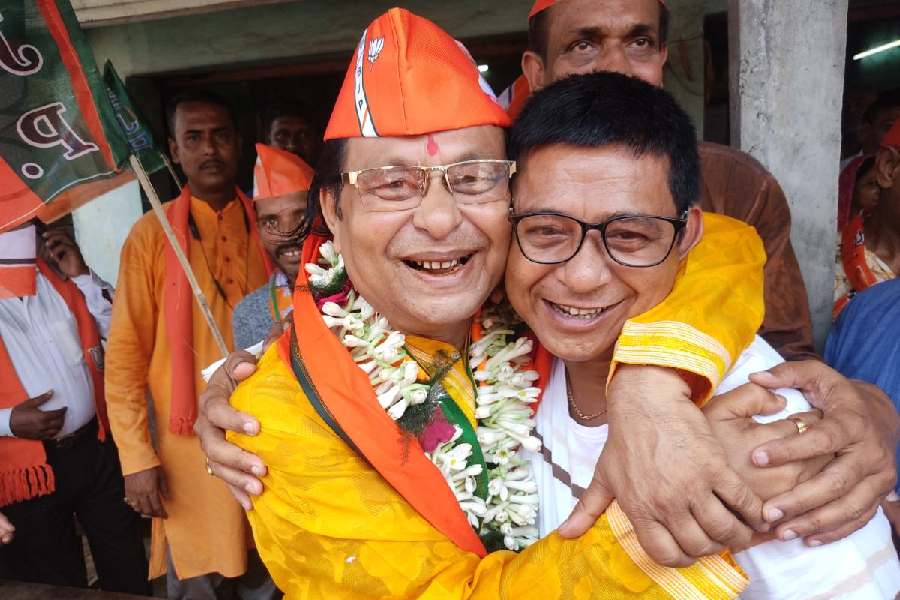
Prachanda starts his campaign day with a gulp of propitious dahi and tika on his forehead; he has no quarrel with steeped Hindu ways of reception and greeting. His comrade-in-arms Baburam Bhattarai pays regular obeisance to Gorkha deities and Goddess Manokamana.

For both, this exhibition of comradeship with religion is more than mere electoral necessity; it is meditated political strategy. The Maoists grasped early that in a country where every turn is a temple, they couldn’t hope to win the people if they waged war on faith. They embraced it instead.

“There are many feudal traditions and social practices we oppose,” says Krishna Darji, a Maoist worker in the village of Abukhareini. “Exploitation, the caste system, alcoholism. But religion cannot be among them, it is at the core of what Nepalis are.”

Co-activist Mahendra Shreshta has a more sophisticated explanation. “My religion and my politics teach me the same thing,” he says. “Both are about justice. I pray for it, I fight for it, where is the contradiction?”

Religion has been an effective instrument for the Maoists, Shreshta argues, not an impediment. He remembers a time, immediately after the massacre of royals in the summer of 2001, when political protest and processions were banned. Or even later, when King Gyanendra grabbed absolute power in 2005 and put the nation under the army’s heel.

“We would just congregate at the temples for evening aartis, light our torches with the holy fire and walk through the villages. That is how we were able to take out our “mashaa” rallies even during the big ban. Nobody could object and everybody knew what we were trying to say. Religion has helped us proceed towards our goal,” Shreshta says.

Perhaps nowhere is this engrossing alchemy of communism and religion more tactile than in the little heritage town of Bhaktapur, east of Kathmandu. It is, at once, one of Nepal’s most ancient and revered temple sites and cradle of Marxism.

Bhaktapur’s loyalties don’t lie with the Maoists but it is distinctly red, dominated by the left-wing Nepal Workers and Peasants Party (NWPP) of veteran Narain Man Bijukchhe. Undefeated in the last three elections, Bijukchhe is in the run again and few doubt he will keep his unblemished record on the poll sheet.

Among Bhaktapur’s magnificent multi-tiered temples, strewn around dainty cobbled lanes, prospers a thick hammer-and-sickle crop. “Religion is the basis of the culture of Nepali people,” Bijukchhe says. “You cannot hope to have their support by attacking their culture, some of my best workers are also men and women who run these temples, there has never been a problem. There would be if it wasn’t so.”

His office in the heart of Bhaktapur is a quaint gallery of an era almost gone: portraits of Marx, Engels and Rosa Luxembourg, turning sepia and fraying at the edges. A young Fidel Castro hacking his way through a Cuban sugar field, Mao and Ho Chi Minh, the late helmsman Kim Il Sung and successor Kim Jong Il, even a faded East European, perhaps the young, and since slain, Ceaucescu.

His glass cupboards, tidily locked, are packed with leather-bound volumes of Mao and Kim, on his table lies a miniature of the red star over Kremlin, long since fallen, and a metal engraving of Mao on the Long March, long since trampled under the march of capitalism. And the sounds you hear in this office are the sounds of bells and chanting — his constituency of the devout engrossed in their daily devotions.

“Every Marxist must adapt to his objective conditions, that is important,” Bijukchhe says. “Here, we must adapt to religion and it is apparent religion is adapting to us.”

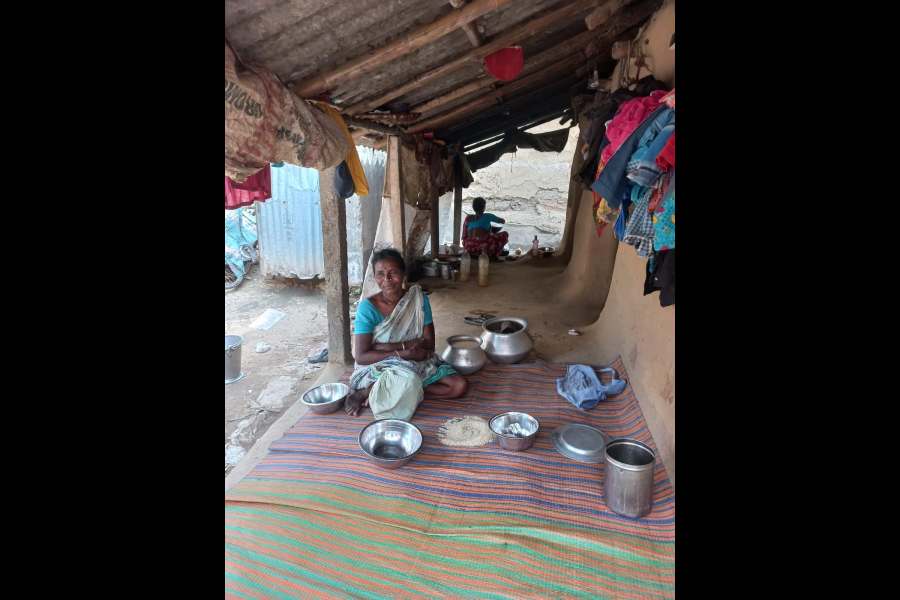
It isn’t a great surprise why. The Nepali Left has offered the only real hope to people who have for centuries been no more than manipulated subjects, used, abused, discarded under monarchy and short spells of democracy alike. Bhaktapur is a little oasis of prosperity buoyed by heritage tourism in the middle of a pitilessly deprived countryscape: no roads, no electricity, no drinking water, little governance and too much poverty and exploitation.

Scarcely do you come across a government establishment that isn’t padlocked or abandoned. Scarcely can you miss the daily hardship people must bear with. That hasn’t broken their faith in the temples, though. And that’s where the Maoists have gone to try and rejuvenate it.

Top
Email This Page