TT Epaper LHS
The Telegraph
TT Mobile
 
 
IN TODAY'S PAPER
WEEKLY FEATURES
CITY NEWSLINES
FEEDS
  RSS
  My Yahoo!
SEARCH
 
Archives Web
 
ARCHIVES
Since 1st March, 1999
 
THE TELEGRAPH
 
CIMA Gallary
 
Email This Page
Chinese radars set off air-track scare

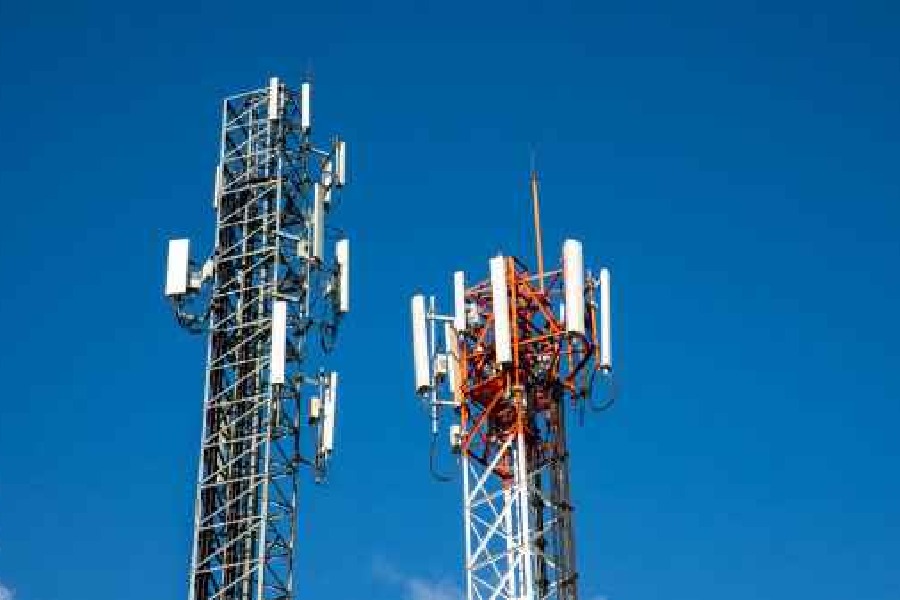
New Delhi, March 30: The possibility of Chinese-made weather radars — based on technology from a US company — being deployed across India has triggered concerns among some radar specialists about its potential for tracking aircraft.

The India Meteorological Department has shortlisted Beijing Metstar — a joint venture between a Chinese company and Lockheed Martin — and Germany’s Gematronic as two vendors technically qualified to supply radars for proposed installation at 12 sites, a source in the IMD has said.

As reported in The Telegraph on March 23, the earth sciences ministry has not finalised the order yet, but the IMD’s rejection of an indigenous radar from Isro has caused disquiet in some scientific circles.

The radars are to be installed in Delhi, Mumbai, Goa, Patna, Patiala, Mohanbari, Lucknow, Paradip, Karaikal, Bhopal, Nagpur and Agartala. But some experts have expressed concern that each radar with a range of several hundred kilometres will have the potential to track aircraft over Indian air bases.

“A Doppler weather radar can be configured to track aircraft,” an expert in radar electronics said. “It will demand changes in the software and certain parameters but, in principle, it can be done.”

But weather scientists have dismissed the concerns as unfounded. “This exposes a lack of understanding of the configuration of Doppler weather radars and their operations,” a senior weather scientist said.

“These radars and all the data generated from these radars will be completely under the control of Indian scientists.... These concerns about tracking are meaningless.”

A senior official not involved in the radar procurement process said it was possible that organisations or companies that had been technically disqualified by the IMD committee evaluating the radars might be spreading misinformation. “It’s likely to be an expensive order, somewhere in the range of Rs 150 crore to Rs 200 crore, and those who’ve been left out are probably unhappy,” the official said.

However, experts said radars work by observing echoes of electromagnetic waves of specific frequencies. “Both clouds and aircraft reflect waves of different frequencies — and radars with the capacity to be tuned to either set of frequencies can be used for aircraft tracking,” a former air force official said.

“Reflections from clouds or moisture are far weaker than the reflections from the metallic surfaces of aircraft,” said Ananjan Basu, an associate professor at the Indian Institute of Technology, Delhi. “A radar that can detect moisture can detect aircraft with even greater ease.”

“The catch is that a cloud is slow-moving, and an aircraft is moving fast. But if a radar has appropriate flexibility of hardware and software built into it, it could be used for both purposes,” Basu said.

“But it cannot be done surreptitiously — as long as it is completely under Indian control,” Basu added.

The former air force official now involved in providing weather services said the worry stems only from a future possibility. “It is a source of discomfort — a window of opportunity that someone might want to exploit given a chance,” the official said.

Top
Email This Page
 
 
Biz2Credit Bizsense