|
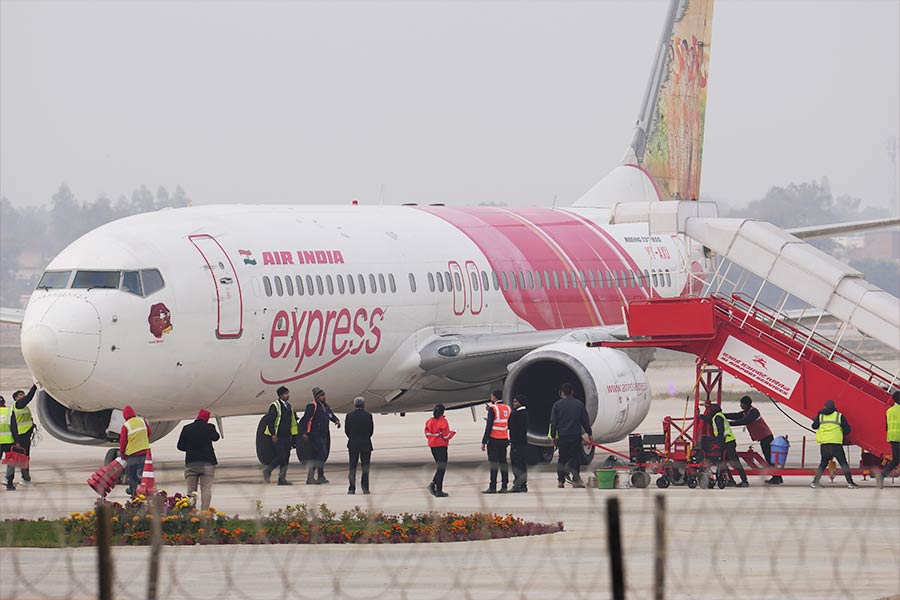
Notwithstanding common perceptions about the malevolence of British rule, India should consider itself fortunate that it got at least 200 ready-made airports by the time the British left. Independent India has taken almost 61 years to construct three airports of international standard at Bangalore, Hyderabad and Kochi. There were once two operational airports in Mumbai, and in Delhi (Palam and Safdarjung), besides several flying clubs of repute. Till the Sixties, the Safdarjung airport handled the Indian Airlines Dakotas, and the Fokker Friendship. The airstrip today is all but abandoned. Similarly the much-reputed and pioneering Behala flying club in Calcutta is as good as dead.
One does not need to be a Nobel laureate economist to see that there is a crisis looming for India if its population continues to grow at the present rate. There will be demand for more food, clothing, housing, transport, medical care, road, rail and aviation facilities. Both qualitatively and quantitatively, things have to match the demand of an upwardly-mobile population.
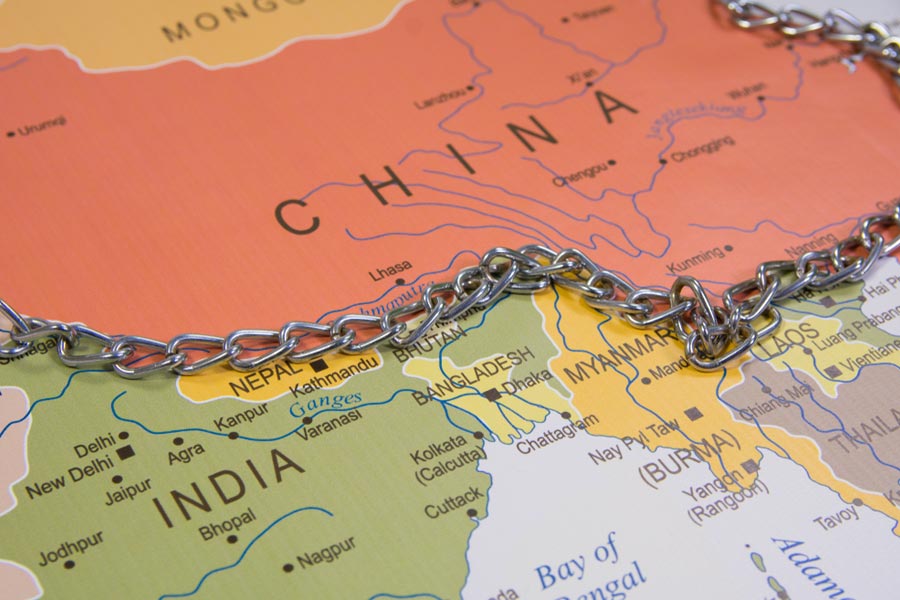
China is aware of a similar challenge and has decided to have 97 more airports by 2017. That would be a tremendous achievement for an agricultural economy. As China’s air traffic has increased at rates nearly double that of the rest of the world for much of the Nineties, it is predicted that China’s fleet of airlines would make up 10 per cent of the aircraft in service worldwide by 2017. The Chinese have also realized the utility of having twin airports to scatter the traffic and economize on time, money and energy.
Loot and scoot
The Nanyuan airport, which is new and relatively small, is located around 15 km from downtown Beijing and happens to be closer to the capital’s hub than the Beijing International Airport. Nanyuan handles more than one million passengers, giving some relief to Beijing’s main airport. Another remarkable feature of China’s forty main airports is that at least 25 of them have more than 10,000 feet-long runways and there is no airport with a runway less than 8200 ft. Quite obviously, India is still way behind China.
In Japan, the airports serving civil aviation routes are governed by the aeronautical law for safety, by the noise prevention law for safeguard against pollution and by the airport development law so that airports do not forget their purpose of economic development. When the new Narita (Tokyo) and Kansai (Osaka) airports were completed, the old airports of Tokyo (Haneda) and Osaka (Itaki) stopped intercontinental flights. Unlike in India, none closed down. There are 24 second class airports which handle regional and some international traffic and 56 airports of a third kind that handle domestic feeder flights.
The most fascinating is Moscow, which has seven airports, all operational and none shut down. In the west, London has three fully operational airports. In the United States of America, Chicago has three, Dallas two, New York three and Washington, D.C. two.
Indian aviation stagnated under State control for more than half a century. And now, when the monopoly has given way to competition, private players appear to be putting the clock back by subtle cartelization and by clipping the wings of rivals. If India is to sustain its present rate of growth, it has to try to do so not by shutting down but by upgrading the existing infrastructure and finding use of its skilled manpower. To realize its aim of having 500 airports by 2020, India would require enormous investment and a Herculean enterprise on the part of both public and private developers. And the latter must stop thinking in terms of closing the existing set-up out of the fear of reduced profits. Laissez-faire does not give anyone licence to loot, and then scoot.
|