|
|
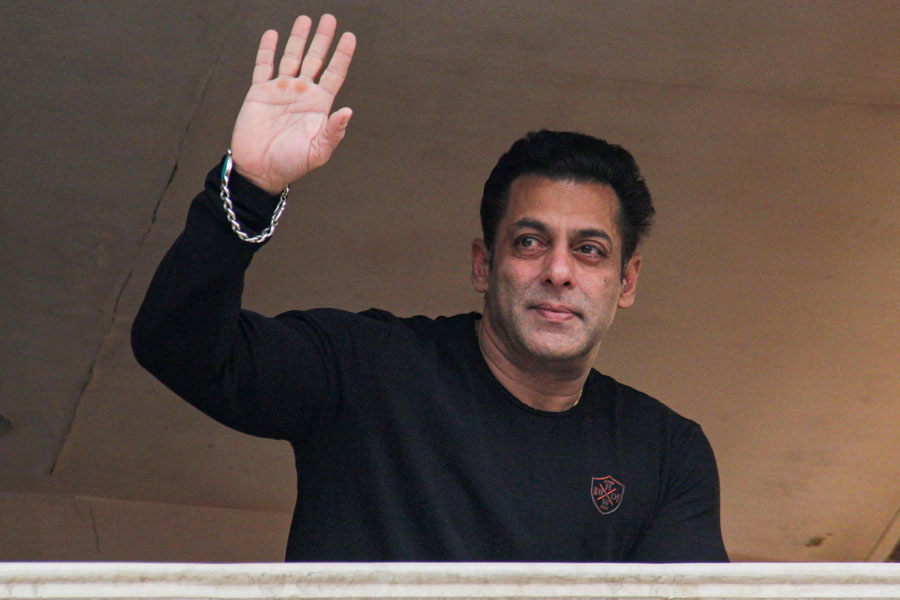
Salman Khan, the bad boy of Bollywood whos famous for being generous
|
New Delhi, March 20: People are happier when they spend money on others rather than on themselves, a study has shown, providing hard scientific backing to an idea long promoted by cultures worldwide.
The study by researchers at the Harvard Business School and the University of British Columbia in Canada may also explain why the growth of income — whether for an individual or for a nation — does not always mean increased happiness.
The researchers found that people who spend on gifts and charity experience greater happiness than people who spend on themselves. The experiments were designed to explore whether how people spend money was as important as how much people make.
The results contain an element of surprise. They illustrate that most people think spending more money on themselves will make them happier, but we find the opposite, said Elizabeth Dunn, a psychologist at the University of British Columbia and lead author of the study, to be published in the journal Science on Friday.
These findings could be viewed as empirical support for cultural intuitions that helping and spending on others can have a positive impact on the givers mood, Dunn told The Telegraph.
Several studies in the past have indicated that rising income levels in a society does not seem to increase happiness, particularly after the peoples basic needs have been met.
In the mid-1990s, economist Richard Easterlin from the University of Southern California, Los Angeles, had shown that although higher incomes within a country leads to happier populations on an average, raising the income of all people does not increase the happiness of all.
Our results suggest a novel answer to this paradox, said Michael Norton, assistant professor at the Harvard Business School, and a study co-author.
Money frequently fails to buy happiness, because people use it for pursuits that do not lead to lasting changes in happiness, he said. Use it correctly, however -- for example, by spending it on others -- and money can buy happiness, Norton told The Telegraph.
In their experiments, Dunn, Norton and graduate student Lara Aknin examined a sample of 630 Americans, 55 per cent of them women. The researchers rated the subjects general happiness levels and matched them with their income and their spending patterns on personal expenses, bills, mortgages, gifts to others and donation to charity.
Regardless of how much income each person made, those who spent money on others reported greater happiness while those who spent on themselves did not, Dunn said.
The study also measured the happiness levels of employees at a company in Boston before and after they had received a profit-sharing bonus ranging from $3,000 to $8,000.
How individuals spent the profit-sharing bonus -- whether they spent it on others or themselves -- was more important for happiness than the size of the bonus, Norton said.
In another experiment, the researchers gave participants $5 or $20 and asked them to spend it by 5pm the same day. Half were asked to spend it on themselves and the rest to spend it on others.
The results again showed that those who spent the windfall on others felt happier than those who spent it on themselves.
How one chooses to spend money -- even small amounts -- can have a significant impact on their happiness level, said Aknin. This had never been tested before.
|