|
Tibet is in the news. Chinese troops in Lhasa are violently suppressing demonstrations that commemorate the rising 49 years ago which forced the Dalai Lama into exile.
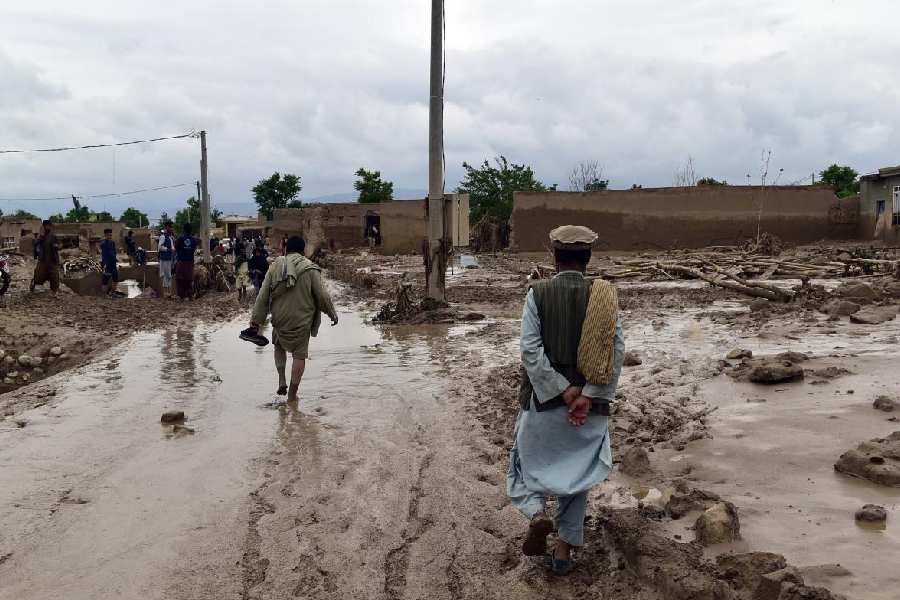
Meanwhile, on the country’s northern edge, six months of snow and record low temperatures have created a catastrophe in the Chinese province of Chingai. According to China’s official news agency, 500,000 animals have died and three million people face starvation. When a similar, if much smaller, crisis 10 years ago hit Ladakh, in northern Kashmir, thousands of lives were saved by the expert intervention of a British charity, ApTibet, working with the Dalai Lama’s Tibetan Relief Committee.
No charity would be better placed to save lives in Chingai than ApTibet, of which the Dalai Lama is the patron. It has carried out more than 150 aid projects in India and Tibet, funded by many well-known trusts and individual donors, more than 50 of them co-financed by the European Commission.
But this is no longer possible. Two years ago, after China and Europe became “strategic partners” under an agreement signed by Tony Blair, the European Union’s acting president, in December 2005, the Commission suspended ApTibet’s operations because of its link to the Dalai Lama. Since then, it has done all it can to close the charity down, such as demanding repayment of 451,000 euros (£340,000) it had given ApTibet for a project in Chingai which it had approved, inspected and signed off as satisfactory.
The EC has become so ruthless in its desire to appease its “strategic partner” that it is now threatening to recoup a further £1.5 million from the charity it has already bankrupted, for other completed aid projects with which it had previously expressed satisfaction. It is also demanding legal costs of £75,000 for a court case brought by ApTibet’s trustees in fighting for the charity’s survival.
This chilling story began in 1984 when Max Comfort, a British architect visiting Tibetan exiles in India, saw a striking example of technical aid — an expensive but useless pump — wholly unfit for people’s needs. Starting in the kitchen of his Cricklewood home with just £300, he and a group of friends set up ApTibet to supply simple, suitable aid for Tibetans in exile (the “ap” stands for appropriate).
They had won a high reputation for expertise when, in 2000, they planned their Chingai project, co-financed by the EU. Realizing that the link to the Dalai Lama might cause problems, ApTibet set up a subsidiary charity to act as its agent, in the full knowledge of Brussels. Its Chingai project, providing thousands of ethnic Tibetans with clean water, medical clinics and basic equipment with which to cook and keep warm, was signed off by the EC in April 2005.
By then, though, the EC had opened an aid office in Beijing. Later that year, after talks covering a wide range of issues on which the EU and China agreed to collaborate, Mr Blair signed the “strategic partnership” agreement. Two months later, the EC suspended its outstanding contracts with ApTibet — claiming that it should not have used the subsidiary charity as its agent — and in June 2006 demanded repayment of the 451,000 euros it had given for the Chingai project. (It subsequently terminated all Tibetan aid projects involving other charities.)
When the EC failed to answer letters, ApTibet asked the London High Court, in July 2007, to quash the repayment claim and order the Commission to make payments due under four other contracts in India and elsewhere. The Commission failed to turn up, and ApTibet was ruled to have won by default. But this was challenged by Brussels, in a case just concluded. Master Fontaine accepted that, since the contracts were drawn up under Belgian law, British courts had no jurisdiction.
ApTibet’s lawyers made enquiries in Brussels, to discover that the charity would need to hire Belgian lawyers, at prohibitive cost, and that, since the Belgian courts invariably found for the EC in such cases, there would be no point in proceeding. The Commission is still therefore seeking 451,000 euros, its legal costs for the recent action in London, and a further £1.5 million, from a charity which it has in effect forced to cease all operations.
Doubtless in Beijing, the EU’s “strategic partners” are happy. Meanwhile, its troops are again shooting at Tibetans in the streets of Lhasa, while to the north, three million people are starving, without any hope of assistance from the outside world. If Tony Blair hopes to become President of Europe, we should be aware what sort of government he aspires to preside over.
|