Anandautsav 031008
The Telegraph
 
 
IN TODAY'S PAPER
WEEKLY FEATURES
CITY NEWSLINES
FEEDS
  RSS
  My Yahoo!
SEARCH
 
Archives Web
 
ARCHIVES
Since 1st March, 1999
 
THE TELEGRAPH
 
Fortune 021008
 
Email This Page
Islamic classes for women, by women

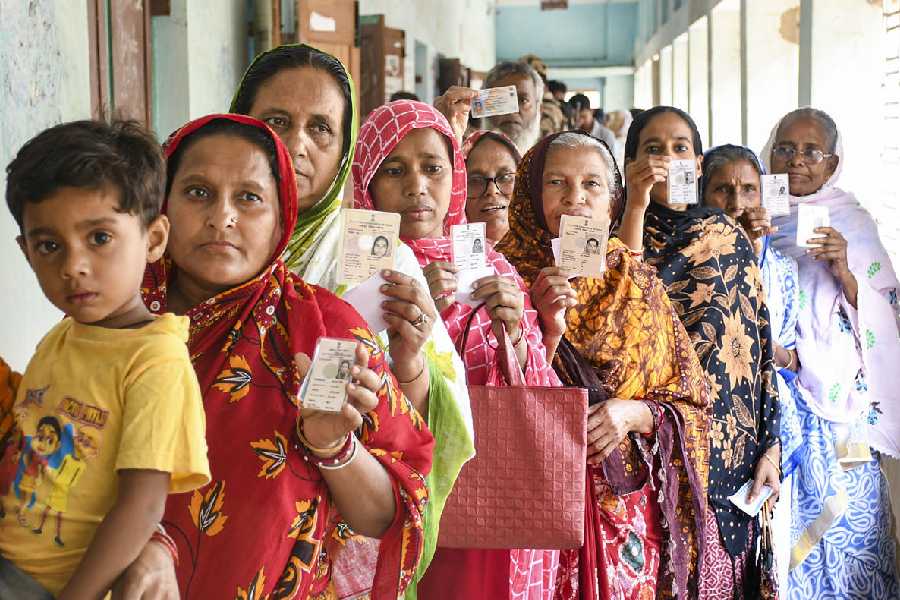
Bhopal, Feb. 24: More and more Muslim women are gathering at religious classes every week to ask questions and listen to debates on divorce and jihad and whether it’s permitted to eat ajinomoto.

What is unusual about these private, informal dars (religious tutorial) sessions is that they are attended and organised exclusively by the women themselves.

The tutorials have the support of neighbourhood mosques, which are announcing their time and venue and urging the men to send their sisters, mothers and wives.

Some liberal Muslims, however, feel that the sessions may encourage women to adopt ultra-conservative views and reject western influences.

“Across the world, the Jamaat-e-Islami’s views are beginning to appeal to women. Their allure can be explained in part by the US ‘war on terror’ and Iraq invasion that has created resentment across the Muslim world,” former JNU professor Imtiaz Ahmed said.

Ahmed, a pioneering researcher on Muslim society, said women-only dars sessions had become a popular trend in Bhopal, Lucknow, Hyderabad, Delhi and many other towns and cities.

The tutorials usually start with an orator — usually a female teacher versed in Islamic laws and history and locally considered to have religious credibility — addressing the class. There are no fixed norms: she can be interrupted with comments and questions.

Besides the basic pillars of the faith and stories of the life of the Prophet, the discussions touch on a wide range of religious issues linked to the women’s lives. For instance: haram (prohibited) and halal (permissible) food, and whether ajinomoto carries pork enzyme. The subject of choice is sadaqa or charity.

In the audiences are graduates and postgraduates, lawyers, doctors, engineers and entrepreneurs.

Bilquis Begum, a dars orator, said most of the women are middle-aged and married with children but some teenage girls come, too. Only about half wear the hijab but all come with a scarf so they can pray together.

Often a small number forms a dars group. Then more and more start coming. Slowly, a network is formed and the venue keeps rotating among participants’ homes. Sometimes tea or snacks are served but the one-and-a-half-hour sessions continue without a break.

Shagufta, 28, said attending the classes has helped her improve her relationships with her children, husband and in-laws.

“I have learnt what their rights are and what my rights are — and this is the essence of the family. By improving your family, you improve your community and society. I have realised that one can’t be selfish and just learn for oneself; you must help others improve themselves as well.”

Salma Khan, a schoolteacher, said dars sessions had deepened her understanding of Islam and increased her ability and desire to communicate what she had learnt to others.

Madhya Pradesh Jamaat-e-Islami chief Abdul Ahad Khan said these for-women and by-women sessions helped the gender — often viewed as silent and oppressed — gain a sense of initiative, organisation and independence.

“These sessions are promoting spiritual growth, personal responsibility and accountability, and an increased understanding of Islam,” said Mahnaz Saheba, the principal of Bhopal-based Crescent School who organises seven to eight dars sessions a month.

“They are also helping the formation of informal female networks with positive consequences for the participants as well as the larger Muslim community. Women have more lasting impact on children,” Saheba, a Jamaat member, added.

Imtiaz Ahmed, however, remains sceptical. “It is the puritan form and the hidden political content (anti-West) of these gatherings that bother me,” he said.

“Personally, I would have preferred the old practice of aiwan-e-niswan (gathering of women) that used to take up social issues like health, education, child-rearing and communal harmony instead of pursuing a sole religious agenda.”

Top
Email This Page