The Telegraph
 
 
IN TODAY'S PAPER
WEEKLY FEATURES
CITY NEWSLINES
FEEDS
  RSS
  My Yahoo!
SEARCH
 
Archives Web
 
ARCHIVES
Since 1st March, 1999
 
THE TELEGRAPH
 
 
Email This Page
Pimple pill for deadly virus

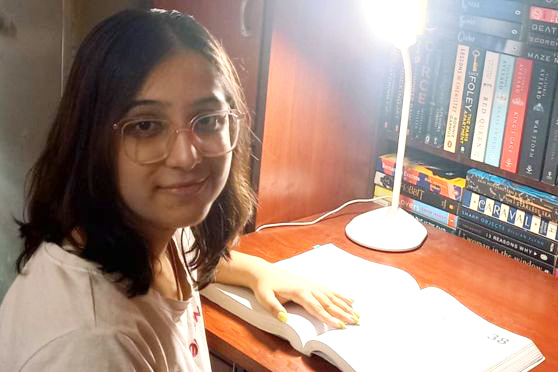
New Delhi, Feb. 16: In nearly 15 years of bench biology, Anirban Basu hasn’t been as thrilled as now to watch sick mice regain strength, stir and scurry about in their chambers.

The mice have escaped death from brains teeming with billions of particles of the Japanese encephalitis (JE) virus, an organism that kills mice more easily than it does humans.

Basu’s experiments at the National Brain Research Centre (NBRC), Manesar, about 40km from the capital, have shown that an inexpensive antibiotic often prescribed by doctors to teenagers for acne is a possible cure for JE — a potentially lethal brain infection for which no treatment exists today.

The JE virus, which spreads through mosquitoes, damages the brain and spinal cord and can be particularly lethal in children below 15 years, killing one out of three infected children. Outbreaks of JE in eastern and southern India have killed thousands of children over the past decade, including more than 1,300 in eastern Uttar Pradesh during 2005.

In the absence of specific treatment against JE, the standard medical strategy today is to wait for the body’s immune system to wage war against the virus and — hopefully — win. During this wait, doctors give patients drugs to reduce fever and combat inflammation and other symptoms caused by the infection.

Now Basu and his student Manoj Mishra have shown that JE-infected mice injected with a synthetic form of tetracycline, called minocycline, can be rescued from death.

Their study, to be published in the Journal of Neurochemistry, has shown that minocycline blocks virus-triggered death of brain cells and prevents the activation of substances that damage the brain.

“We have compelling evidence to argue that this antibiotic must be tried in patients with JE,” said Basu, 39, a soccer-loving biologist who studied at the Indian Institute of Chemical Biology, Calcutta, and then pursued studies on neuroinflammation in the US before joining the NBRC 10 years ago.

“But the finding is not a complete surprise,” Basu told The Telegraph. Over the past decade, studies in the US and Europe have signalled that minocycline can partially protect brains of animals with symptoms of stroke and brain injury.

Last year, scientists in Germany showed through test-tube studies that minocycline can prevent the replication of the West Nile virus and the death of cells triggered by the virus.

“The JE virus is very similar to the West Nile virus,” said Sudhanshu Vrati, a virologist at the National Institute of Immunology, New Delhi, not connected with this study.

“This looks promising and the antibiotic treatment is simple,” Vrati said. But he cautioned that the NBRC used a strain of the virus that grows slowly. “I’d also like to see similar studies on fast-growing strains of JE viruses.”

The findings have prompted the department of biotechnology to call a meeting of experts to plan for human clinical trials in areas affected by JE — perhaps in eastern Uttar Pradesh and the Northeast.

“We desperately need a medicine against JE, and this is a drug we’ve known for long,” Nomal Borah, the director of the Institute of Neurological Sciences, Guwahati, said.

But the protection offered by minocycline depended on how soon it was given to mice infected with the JE virus.

The mice normally do not live beyond 10 days after being infected — virtually all the mice die.

Minocycline given as an injection in the abdomen on the first day after infection protected 100 per cent of the mice, but when given after symptoms appeared on day five, the drug rescued only 70 per cent of the mice.

The dose of the minocycline given to the mice was within levels expected to be tolerated by humans, Basu said.

Top
Email This Page
 
 
Biz2Credit Bizsense