|
Easy rider
Sir — Producing a small car at the affordable price of Rs 1 lakh is an enormous engineering feat. Ratan Tata and his team of engineers deserve applause for their achievements (“From no-no to Nano”, Jan 11). Who would not like to travel in the safety and comfort of a car available at the same price as some high-end two-wheelers? The government must keep a low VAT on the car, so that those attracted by the ‘1-lakh’ tag do not feel cheated. It is sad, though, that certain political forces are bent on scuttling the addition of this milestone on India’s technology map.
Yours faithfully,
Raghubir Singh, Pune
Sir — The ‘people’s car’, Tata’s Nano, has taken automobile makers across the world by storm. The car promises to be easy on the pocket, fuel-efficient and environment-friendly. It would, however, help the potential customer to form a better opinion about the car if the size of the wheels and the measures taken to ensure that it is safe for the roads are revealed. The people of West Bengal have greater cause to celebrate, for the car will ultimately roll out from the factory in Singur. Perhaps, one day, Singur will become synonymous with Tatas just as Detroit is with General Motors.
Yours faithfully
B.C. Bhowmick, Asansol
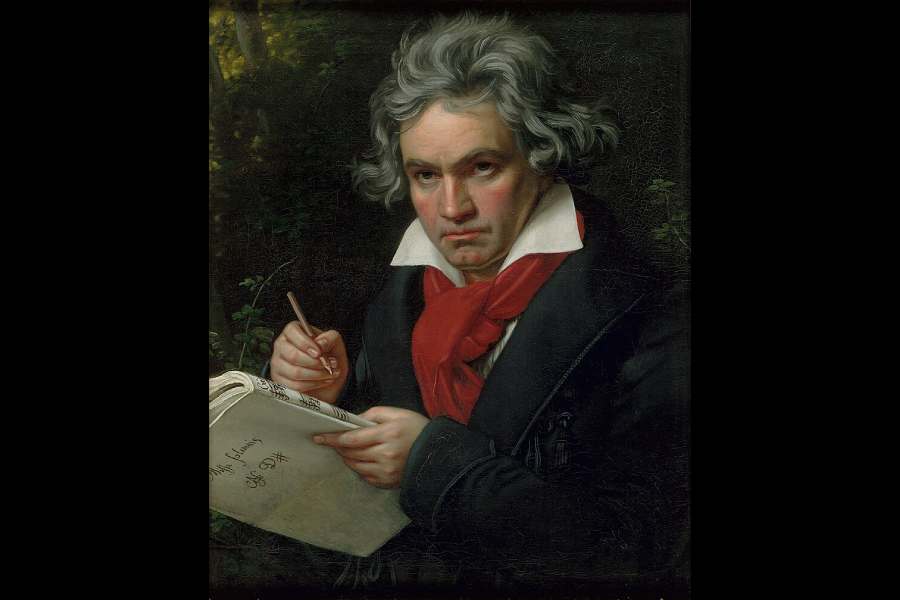
Sir — The report on the launch of the Tata Nano shows up the correspondent’s woeful ignorance of Western music. He mentions that the launch opened with the score titled Thus Spake Zarathustra from Stanley Kubrick’s film, 2001: A Space Odyssey. In fact, this immortal piece of music, originally called Also Sprach Zarathustra, was composed by Richard Strauss in 1896 and has since been used on several occasions — films being only one of them. For example, the King of Thailand inaugurated the Asian Games in Bangkok in 1998 with a stirring rendition of Strauss’s composition. To describe Thus Spake Zarathustra as music “from Stanley Kubrick’s groundbreaking film”, does scant justice either to the piece or to its composer.
Yours faithfully,
Sujoy Gupta, Calcutta
Sir — Ratan Tata has kept his promise by launching the “Rs 1 lakh car” within five years of announcing his intent. But will the country’s infrastructure be able to sustain a sharp shift from two-wheelers to four-wheelers? Our roads are certainly not ready for more cars. The government should see to it that the Nano targets the export market rather than the domestic one.
Yours faithfully,
Madhu Agrawal, Dariba, Delhi
Sir — While the launch of the Tata Nano was breathtaking, many industry insiders, two-wheeler mogul Rahul Bajaj included, are unable to fathom the economics behind the making of such a cheap car. Nobody would doubt the integrity of the Tata Group, but one hopes that the cars that will be sold to buyers will be of the same quality as the dazzling models put on display at the launch. The Tatas must also keep their promise of pricing the base model of the Nano at Rs. 1 lakh, and not increase the price after a couple of years. It did not go unnoticed that Ratan Tata trod very gently around the car, handling it with extreme caution, almost as though any brisk move would make it come apart.
Well over a thousand guards are stationed at the factory in Singur, providing tight, round-the-clock security. Will it be feasible for the government or the company to continue with such elaborate security measures and still cut costs?
Finally, the Tata Nano is priced at one-fourth the price of an Ambassador. It also claims to be more fuel-efficient. Perhaps it should become the new Indian taxi, so that there can be a reduction in the exorbitant taxi fares.
Yours faithfully,
Govind Das Dujari, Calcutta
n Sir — The photograph of the Tata Nano reminded me of the print campaign for the Volkswagen car conceived by the legendary David Ogilvy many decades back. It had the caption: “Think small”. Ratan Tata has come out with a product that has the potential to challenge the leadership of Maruti in the small-car segment.
Yours faithfully,
Kisholoy Roy, Calcutta
Sir — The Telegraph on January 11 looked like an advertising brochure for the Tata Nano. I wondered what all the song and dance was about, since the car costs quite a bit more than the promised Rs 1 lakh — around Rs 1.25 lakh, including VAT, delivery cost, and so on. The actual cost of the car, when one factors in the subsidies given to Tata on the purchase of land, a virtually interest-free loan, zero-expense on infrastructure, cheap electricity and other overheads, comes to well under a lakh. Without these benefits, I am sure the cost of a Nano would have gone up by at least 30 to 40 per cent.
Yours faithfully,
S.B. Gupta, Calcutta
Sir — While automobile history is being made, environmentalists are going ballistic. Apocalyptic visions of midnight traffic jams and dark clouds of smoke hanging thick over our cities are being paraded by our present-day doomsayers. But they forget that their predecessors have had to eat crow for forecasting that computers would usher in the end of the world. True, the existing Indian roads are not the best equipped to cope with the onslaught of thousands of Nanos, but this is perhaps the only way to make our zombie government wake up to the realities of life. Engineering innovations cannot possibly wait for everything to be in place.
It turns out now that the price of a Tata Nano will be over Rs 1 lakh, mostly by way of taxes. If a capitalist like Ratan Tata could keep his promise, why can’t the government match it by waiving taxes, as it did for Maruti, to make the final product available at Rs 1 lakh? That is the least it can do at this moment when the world is watching India with admiration.
Yours faithfully,
Sarat Pattanayak, Bhubaneswar
|