|
|
|
A world of opportunity
|
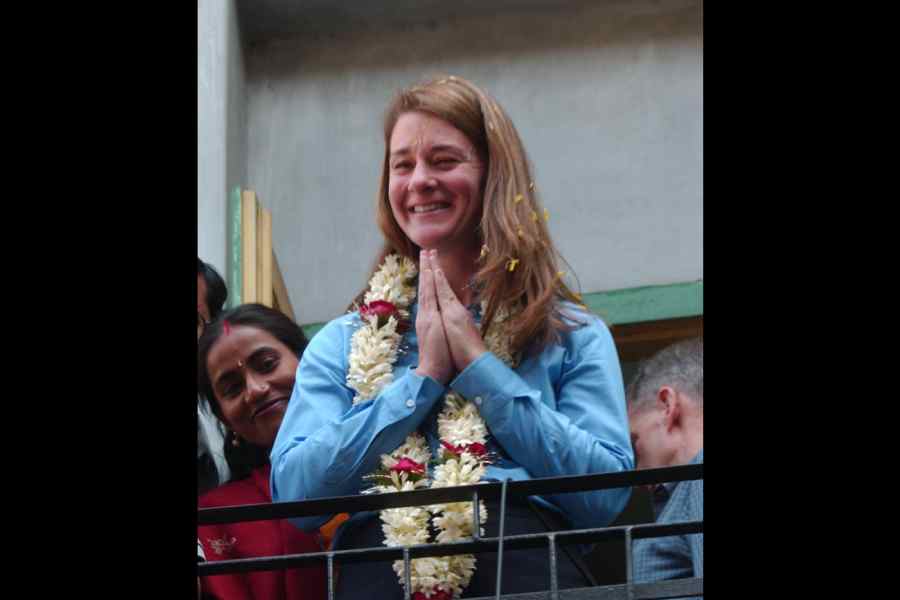
The prime minister, Manmohan Singh, may not have much time to spend with Meena Barot during his hectic visit to China from January 13 to 15. It is likely that the ambassador, Nirupama Rao, would invite Barot to her customary reception for the prime minister. If the 26-year-old Indian is able to travel 320 kilometres, to Beijing from Shijiazhuang, the capital of Hebei province, on a working day for the ambassador’s reception, Barot may get a few minutes — and perhaps a photo opportunity — with the prime minister as she gestures a namaste to Singh. But if the prime minister, who is making his first official trip to China, is to broaden Sino-Indian engagement beyond State banquets and official communiqués, he must engage the likes of Barot with a greater sense of purpose and commitment.
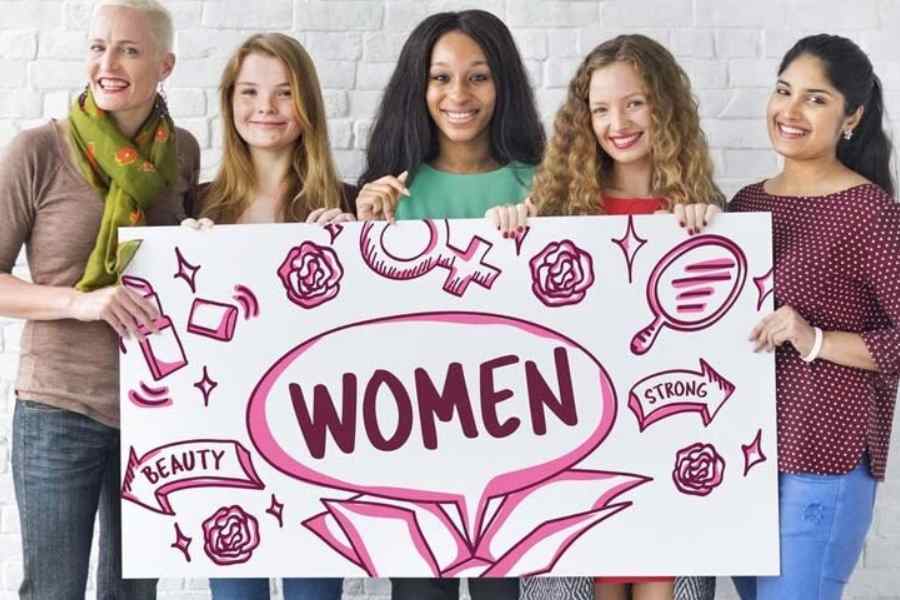
This pretty and enterprising Indian woman has been in China for less than three years as a business manager for Mumbai’s Shalina Laboratories at its representative office in Shijiazhuang, but she was “elected” by the Chinese two months ago to be one of only eight foreigners to run with the Olympic torch on Chinese soil preparatory to this year’s Olympics in Beijing. Barot was not the only Indian in China to collect a considerable number of votes to be an Olympic torch-bearer in a contest in which nearly a quarter of a million people voted. There was Annapurna Rao from Bangalore, who lives with her executive husband in Beijing as a home-maker, and Senthil Nachiappan, a businessman in Guangzhou, who missed the honour by a mere 1,250 votes.
They are among a new crop of Indians who can play a significant role in any radical transformation in Sino-Indian relations. There are close to 200 Indian companies now in China: most of them are staffed primarily with Indian personnel. In addition, there are many multinational corporations, which employ people of Indian origin from their headquarters, be it the United States of America or Europe. All these men and women are in constant and continuous contact with the Chinese and are actively engaging them in China’s new ideology of making money.
Yet, in New Delhi, there is little recognition of their role and potential or, sadly, any significant awareness of even their existence.
This week, amidst a lot of fanfare and celebration, New Delhi is once again hosting the annual Pravasi Bharatiya Divas, the praiseworthy annual gathering of Indians and people of Indian origin who live abroad. There have literally been scores of panel discussions during three continuous days this week featuring more than 100 speakers, but not one of them is an Indian from China.
These days, when half-a-dozen Indian-Americans sneeze, it is not unusual for official New Delhi to catch a cold. How else does one explain the embarrassing reality that Indian-American organizations, including ones with a questionable reputation, have no difficulty in meeting the prime minister, but there is no effort to even begin that kind of an engagement with Indians in China? After Vayalar Ravi became the minister for overseas Indian affairs, he considerably diluted the excessive Indian-American content in the Pravasi Bharatiya Divas’s participation and substance, but only to the extent — commendable though — of being inclusive of Gulf Indians.
The neglect of an emerging Indian presence in China, not just at the Pravasi Bharatiya Divas, but across the board in New Delhi of what could be done beyond the narrow sphere of official bilateral engagement, flies in the face of what the prime minister claims he wants to do with China.
This year, India and China will jointly commemorate the 70th anniversary of the arrival of Dwarkanath Kotnis in China. Singh will dwell on it at length in Beijing during his visit. Big celebrations are being planned in 2008 by the two governments to revive the spirit of the physician from Maharashtra’s Solapur district, who was sent along with four other Indian doctors to Yanan by Jawaharlal Nehru and Subhash Chandra Bose to help the people reeling under the Japanese invasion of China. Among the celebrations will be the creation of a Dr Dwarkanath Kotnis Memorial Joint Medical Mission in which 10 doctors from each country will participate in the service of their people.
It is a worthy effort, most so for those of this columnist’s generation whose impressionable years were influenced by stories of Dr Kotnis long before the United Nations launched anything like today's world-wide volunteer programme. But China is a nation that is looking ahead and is less and less obsessed with its past. Men and women like Barot and Nachiappan have taken the place of Kotnis today and they are the ones who can replicate what the good doctor did seven decades ago.
There is much talk these days about the blossoming of ties between India and the US, the so-called natural allies in the post-Cold War world. Amidst such hype, it has scarcely been noticed that India and China are arguably the only two countries that have succeeded in increasing their bilateral trade by an incredible 25 times in the short span of the 21st century. If this trend continues — and there is no reason to believe otherwise — China will soon replace the US as India’s biggest trade partner.
More than 45 Chinese companies have jumped onto the bandwagon of India’s emerging market and set up offices in the country. Let us face it, Chinese businesses do not enjoy a level playing field in India unlike American, European or other Asian businesses, and yet they have executed about $7 billion-worth of projects in India and are grudgingly being let increasingly into domestic infrastructure-building efforts.
Equally striking was a meeting that took place in Beijing five weeks ago when the finance secretary, D. Subbarao, travelled there for a meeting of the China-India “financial dialogue” that was agreed upon during the visit of the Chinese prime minister, Wen Jiabao, to New Delhi in April 2005. The statement that was issued after the Beijing round of this dialogue was a reminder of how much the world has changed in recent years.
It was reminiscent of the communiqués, which the Group of Seven rich countries used to issue in the Seventies and the Eighties expressing deep concern about poverty, corruption and lack of development in the Third World. The joint statement by India and China in December is an indication that the shoe is beginning to fit the other foot: the two countries expressed concern about “the potential risks to continue economic growth” that they faced, “enlarged by factors such as (the US) sub-prime crisis.”
The ‘infrastructure’ in South Block for consolidating Sino-Indian relations has never been better. It has a foreign secretary, who would have been a celebrated Sinologist worldwide — if he had given up his diplomatic career at some point, like Baron Wilson of Tillyorn, the British diplomat who rose to be Hong Kong governor, after whom the Wilson Trail in Hong Kong and the Lord Wilson Heritage Trust to preserve Hong Kong’s historical culture are named. South Block has an ambassador in Beijing who made more trips to China as a regional specialist before her posting there than any other ambassador today in the Chinese capital’s large diplomatic community.
But they will find it hard to overcome the games within the Manmohan Singh government at higher levels against cementing relations with China. When Sonia Gandhi was preparing to visit China last year, those who want India to join the US in an alliance against Beijing put out the canard that the Chinese would not respect her because she had surrendered to the Left parties on the nuclear deal. These elements have the means to ensure that Singh’s visit to China is a routine non-event, going by how they have held India’s ties with Russia and France hostage to a virtual surrender of Indian interests to Washington.
Fortunately, the Chinese seem to be alert to this intrigue and appear to be ready to wait for the general elections next year before proposing any grand engagement.
|