TT Epaper LHS
The Telegraph
TT Mobile
 
 
IN TODAY'S PAPER
WEEKLY FEATURES
CITY NEWSLINES
FEEDS
  RSS
  My Yahoo!
SEARCH
 
Archives Web
 
ARCHIVES
Since 1st March, 1999
 
THE TELEGRAPH
 
CIMA Gallary
 
Email This Page
Let it pass!
BBD Bag, named after who?
Vice-President of India ‘Aftab’ Ansari
He did not write Vande Mataram; did A.R. Rahman?
Motilal ‘Karamchand’ Gandhi
The longest-serving chief minister of India is easily recognised
Led an army called ‘Quit India’
Rajendra Prasad: We got him right, thanks to our Class V teacher
August ‘16’, Pakistan’s Independence Day

Fifty Calcuttans in the age group of 14 to 25 years — ranging from students to professionals in various fields — were asked a set of 10 basic questions relating to Indian politics and modern history. The respondents belonged to educated middle-income and high-income families. The results were alarming for a city that takes pride in its political awareness, a city that was at the forefront of the freedom movement. A city where no para adda is complete without heated arguments on politics. (The exercise also threw up some outrageously funny moments.) We take you through our experience…

Off with the heads

India has a new Vice-President in office since August 2007. And no one knows who he is. For 80 per cent of those quizzed didn’t have a clue — and only six persons came up with the surname Ansari. On being probed for the full name, none could deliver it — M. Hamid Ansari. For four of the six who came up with the surname, the answer was Aftab Ansari — the man charged with the January 2002 attack on the American Center in Calcutta! Two persons claimed it was Bhairon Singh Shekhawat (Ansari’s predecessor), while for one it was Pratibha Patil. One person came up with the name of Manmohan Singh.

If one thought that a slightly “non-political” question would go down well, well, there are doubts. Quizzed about whose pen was behind the text of Vande Mataram — on which the first Indian President Rajendra Prasad bestowed the status equivalent to that of the Indian national anthem — the most common answer (68%) was Rabindranath Tagore. The confusion can be explained, somewhat, since Tagore has not only written the national anthem Jana Gana Mana, he set Vande Mataram to tune. Only 13 persons could put their fingers on the correct answer — Bankim Chandra Chattopadhyay (Vande Mataram is a rousing call in his novel Anandamath, 1882). Three knew that A.R. Rahman was associated with the modern version of Vande Mataram, but were unable to name the original writer! “This is what I had studied in class VI. But it was basically text-book knowledge, committed to memory and forgotten as soon as the exams got over,” laughs 18-year-old college student Sreeradha Sinha (name changed).

Red road

Roots of “Communism” may run deep in the state and the senior brigade may be well-versed in the ideologies of Marx and Lenin, though some of them may reassert their faith in capital from time to time, and the young Calcuttan may know about Nandigram and SEZ and participate in peaceful protests (made famous, after all, by Rang De Basanti) with gusto. However, when it comes to the ideology in other parts of the country, the youngsters drew a blank. Asked to “Name one state other than West Bengal where there is a strong Communist presence”, 60 per cent opted to pass the question. Among the rest, only nine came up with Kerala, which is correct, along with Tripura. Seven said that it was Karnataka and three said it was Punjab. One was ingenious enough to answer Darjeeling. But nobody mentioned neighbouring Tripura. “The 70s generation had a political ideology that they believed in. They felt that they could change the system. Our generation, however, lacks the passion for any political cause or movement because they feel that nothing will change the present state of Indian politics, replete with large-scale corruption,” says 25-year-old Ph.D student Ragini Banerjee, trying to explain the apathy.

Quit Netaji

A question on Netaji Subhash Chandra Bose, who one thought didn’t really need any introduction in Bengal — also went largely unanswered. There may be widespread debate on his mysterious disappearance, but most are still in the dark about the name of his army — Azad Hind Fauj, or the Indian National Army (INA), which, revived by Netaji in 1943, fought along with the Imperial Japanese Army against the British in Burma, Imphal and Kohima. Asked about the name, 33 let the question pass and only 10 gave the correct answer. Seven persons felt it was “Quit India”.

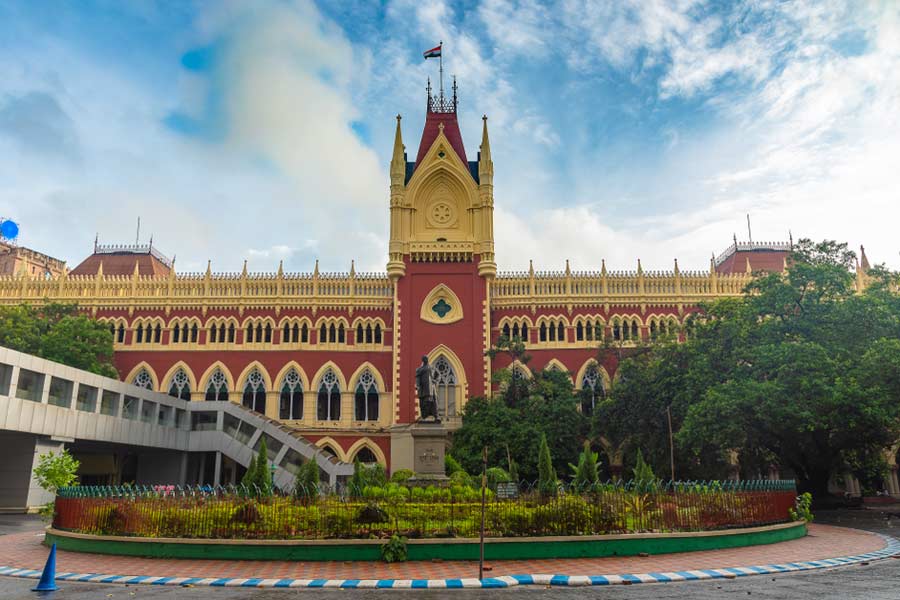
The majority of respondents were clueless about the origin of the name BBD Bag (named after Benoy Basu, Badal Gupta and Dinesh Gupta, who in 1930 shot dead Colonel NS Simpson, the notorious inspector general of prisons, at Writers’ Buildings). If 50 per cent let it pass, only six persons got the answer right. Most couldn’t get all the three names — If Badal and Dinesh came easily, Benoy eluded them. They came up with different permutations and combinations: “Binod Badal Dinesh” and even “Binod Badshah Dinesh”! One even said that BBD Bag was named after Benud Behari Dutt — the chain of jewellery stores. India’s political history does not seem to have much relevance among the MBA, or would-be MBA generation.

“Calcutta has been looked upon as being politically conscious since it was the hub of many youth movements that originated from its college campuses like Presidency College and Ashutosh College. The campus politics that exists today is without any real passion or purpose. The ones who pursue it do so under peer pressure. Quiz them about Marx or Che Guevara and chances are that you will draw a complete blank,” agrees Sagar Sarkar, 23, an IT professional.

But Calcutta seems to be more informed about its present. Asked to name the longest-serving Indian chief minister, an overwhelming 96 per cent were quick to name Jyoti Basu. A record 26 years of holding the state’s top job cannot be forgotten in a hurry. M. Karunanidhi of Tamil Nadu — who has been chief minister for five terms — and Delhi chief minister Sheila Dikshit were the other names that cropped up.

But Gandhi is dandy

It may be the school textbook or Bollywood’s brush with Bapu, but the average Calcuttan’s Gandhi IQ is in place. A whopping 94 per cent got his full name — Mohandas Karamchand Gandhi — right. If some needed a little prodding and encouragement, we let that pass. However, one person said the name was Mohanlal Karamdas Gandhi and two said that it was Motilal Karamchand Gandhi.

Another Gandhi-related question — maybe a few notches more difficult than the first — saw the majority coming up with the correct answer. Asked to name the Mahatma’s assassin, 31 of the total 50 knew it was Nathuram Godse. The rest passed the question. There were no innovative answers.

Naming the country’s first President also came easy to 90 per cent of the people questioned. Thanks perhaps to all those years of learning by rote, Rajendra Prasad’s name was at the tip of the tongue. Though two said it was Jawaharlal Nehru, the first Indian Prime Minister, and for two others it was Lal Bahadur Shastri (Nehru’s successor). One respondent said the first Indian president was BR Ambedkar — best-known as the “architect” of the Indian constitution.

August 15 is India’s Independence Day. Hopefully, it is well-known. But how many are aware of when our sub-continental cousin Pakistan celebrates its independence? The survey threw up a mixed bag. Twenty-eight correctly said that it was August 14. For six, August 16 it was, while four people zeroed in on August 15. One came up with January 26.

“The findings of this survey are extremely significant,” says market research veteran Shiloo Chattopadhyay. “They point to two critical issues: first, basic knowledge level among today’s youth is going down because little or no value is attached to such knowledge — neither by society, nor by a prospective employer. Second, the westernisation of our culture has rendered such knowledge ineffective in the minds of the young generation. They would rather know the difference between a bar and a lounge bar than answers to questions like these.”

Yet some questions, which weren’t asked by the survey, remain. This is not to rake up the old Bengali sentiment of how Netaji has not been given his due, but how is it that an overwhelming majority knows Rajendra Prasad, and not the INA? Even if the dissemination of knowledge is attributed to textbooks? How does a nation talk about its past to its globalised young? Through KBC alone? Who are the freedom fighters acceptable to Bollywood? And do we really need a Vice-President?

The Q, the A and the correct %

Q: Who is the Vice-President of India?
A: M. Hamid Ansari (full name 0%; 12% got only his surname right)

Q: Who wrote Vande Mataram?
A: Bankim Chandra Chattopadhyay (26%)

Q: What was the name of the army brought to prominence by Netaji Subhash Chandra Bose?
A: Azad Hind Fauj (20%)

Q: What is Gandhiji’s full name?
A: Mohandas Karamchand Gandhi (94%)

Q: Who was India’s first President?
A: Rajendra Prasad (90%)

Q: Who has been the longest-serving chief minister in India?
A: Jyoti Basu (96%)

Q: Name one state other than West Bengal where there is a strong Communist presence
A: Kerala (18%)

Q: Which date marks Pakistan’s Independence Day?
A: August 14 (56%)

Q: Name Mahatma Gandhi’s assassin.
A: Nathuram Godse (62%)

Q: Who is BBD Bag named after?
A: Benoy Badal Dinesh (12%)

Top
Email This Page