The Telegraph
 
 
IN TODAY'S PAPER
WEEKLY FEATURES
CITY NEWSLINES
FEEDS
  RSS
  My Yahoo!
SEARCH
 
Archives Web
 
ARCHIVES
Since 1st March, 1999
 
THE TELEGRAPH
 
 
Email This Page
Coalition, collision & khichdi
- Verdict at The Telegraph debate: Coalition does not reflect the nature of Indian society

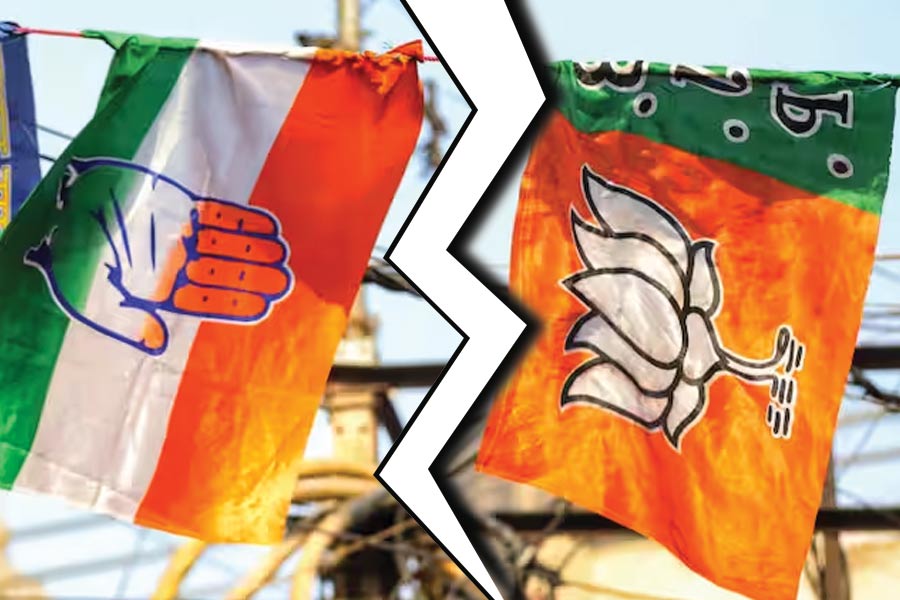
A coalition government does not reflect the nature of Indian society — that was the verdict pronounced by the audience on Sunday at The Telegraph Calcutta Club National Debate.

The team arguing against the motion — “This house believes that a coalition government reflects the nature of Indian society” — won the show of hands, hands down, on the Calcutta Club lawns, filled with over 2,000 people.

In the 90-minute war of words, Salman Khurshid, Saugata Roy, Kunal Sarkar and Priya Ranjan Das Munshi packed too much of a punch for Sheila Dikshit, Sanjiv Goenka, Ravi Shankar Prasad and Roopen Roy. The debate was moderated by Rudrangshu Mukherjee of The Telegraph.

Salman Khurshid drew the loudest cheers, recounting how Bernard Shaw had defined a nightmare marriage to a beautiful but air-headed lady — an offspring with his beauty and her brains — and likening a coalition government to that.

“People in Uttar Pradesh don’t even understand the difference between coalition and collision and keep saying collision government,” he said.

The Congress leader took on his colleague and Delhi chief minister Sheila Dikshit, who proposed the motion and stressed on good governance as the order of the day. “The coalition represents a fractured view of India,” she said.

Trinamul leader Saugata Roy was quick to pounce on Dikshit’s “fractured view of India” observation, to which she conceded that the word “fractured” should be replaced by “pluralistic”.

BJP spokesperson Ravi Shankar Prasad — riding the wave of single-party wins in Gujarat and Himachal Pradesh — dwelt on the whys and whats of the coalition. He rubbished the “Bhago, bhago mil jao varna BJP aa jayega (Quick, join hands otherwise the BJP will come to power),” coalition ruling the country.

“A clear understanding between parties” and “a leader who can be respected by all” must be the basis of coalition governance, Prasad argued in favour of the motion.

His ally for the evening, industrialist Sanjiv Goenka, compared a coalition to the joint family system, with one head who puts the interests of others above his own gain.

He championed the cause of a coalition, as it had “led to progress of a kind never seen before in India” and then likened it to khichdi, “a wholesome daily diet”.

The final member of the ‘for-the-motion’ family, corporate chief Roopen Roy, took the coalition-spells-progress line before pointing out how the rise of regional parties had made coalition governments inevitable.

Those speaking against the motion managed to pick holes in the arguments of their opponents with ease.

Summing up why a coalition is not desirable, Saugata Roy said: “Too much khichdi gives indigestion.”

Seated between Trinamul leader Roy and the Congress minister Priya Ranjan Das Munshi, cardiac surgeon Kunal Sarkar rubbished a coalition manifesto as “a cookery lesson of Sanjeev Kapoor, with half teaspoon of non-alignment, one teaspoon of right-of-centre economy and two teaspoons of socialism, with some regional herbs and spices.”

Salman Khurshid then delivered the final culinary upper cut — “Coalition is the reflection of sickness and so it requires a healthy dose of khichdi.

The last word from the audience: burp!

Top
Email This Page