TT Epaper LHS
The Telegraph
TT Mobile
 
 
IN TODAY'S PAPER
WEEKLY FEATURES
CITY NEWSLINES
FEEDS
  RSS
  My Yahoo!
SEARCH
 
Archives Web
 
ARCHIVES
Since 1st March, 1999
 
THE TELEGRAPH
 
CIMA Gallary
 
Email This Page
BELIEFS AND PREJUDICES
- Why it has been a pleasure to be proved wrong by Sourav Ganguly
Maharaj redux

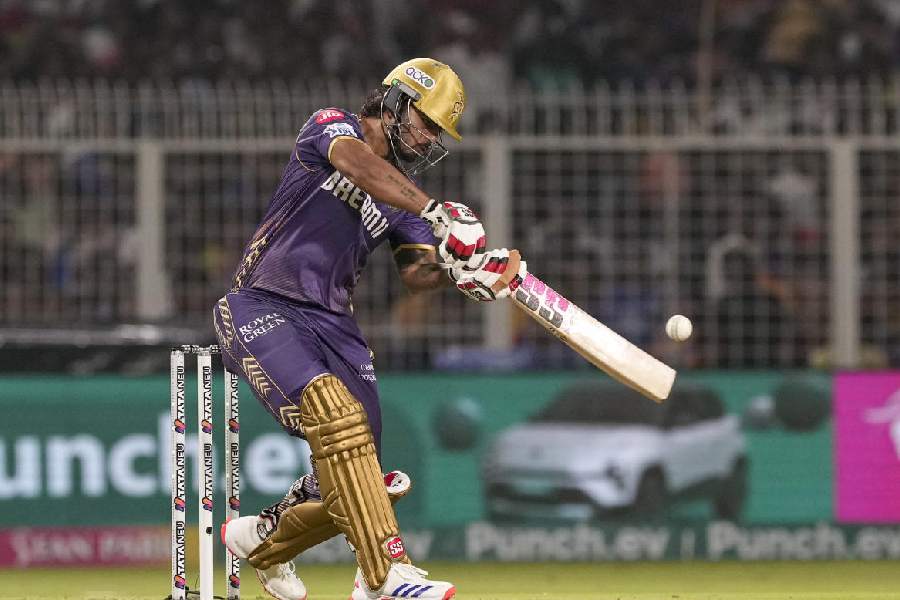
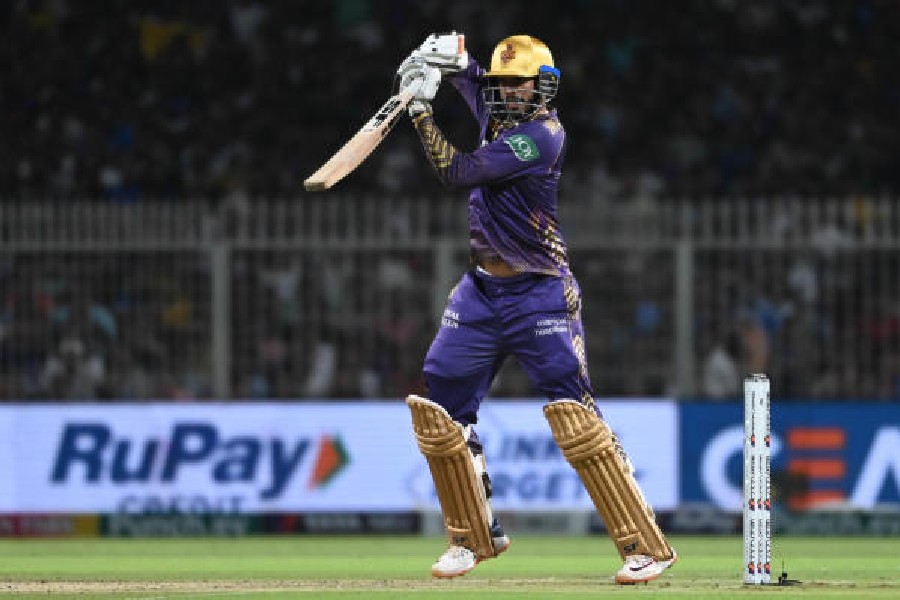
There were two incidents during the Bangalore Test against Pakistan which demonstrated that Sourav Ganguly is enjoying his cricket more than ever. The first occurred late on the first day, towards the end of the mammoth, match-and-series-saving partnership between Ganguly and Yuvraj Singh. The medium pacer, Yasir Arafat, bowled a straight, good-length ball which Yuvraj hit, off the back foot, way over mid-off’s head for four. It was a shot which required uncanny hand-eye co-ordination, as well as a superb sense of timing. It was, in fact, a shot no one else in the Indian team, perhaps no one else in world cricket, would or could have played. Sourav walked down the wicket to congratulate Yuvraj, and in the process, picked up the younger man’s bat and shrugged his shoulders, as if to say: “What is there in you or your instruments that allows you to play a shot like this?”

Earlier that day, that self-same Arafat had drilled a big hole in the Indian batting order. In his first spell in Test cricket he took, in quick succession, the wickets of Rahul Dravid, Wasim Jaffer and V.V.S. Laxman. India were tottering at 61 for 4, when Yuvraj walked in to join his fellow left-hander and former captain. In four hours of brilliant batsmanship, they took the match away from the opponents. By the time of Yuvraj’s pick-up shot over mid-off, the match had been saved. Although the younger man got out soon afterwards, the next morning Ganguly went serenely on to complete his first double hundred in Test cricket.

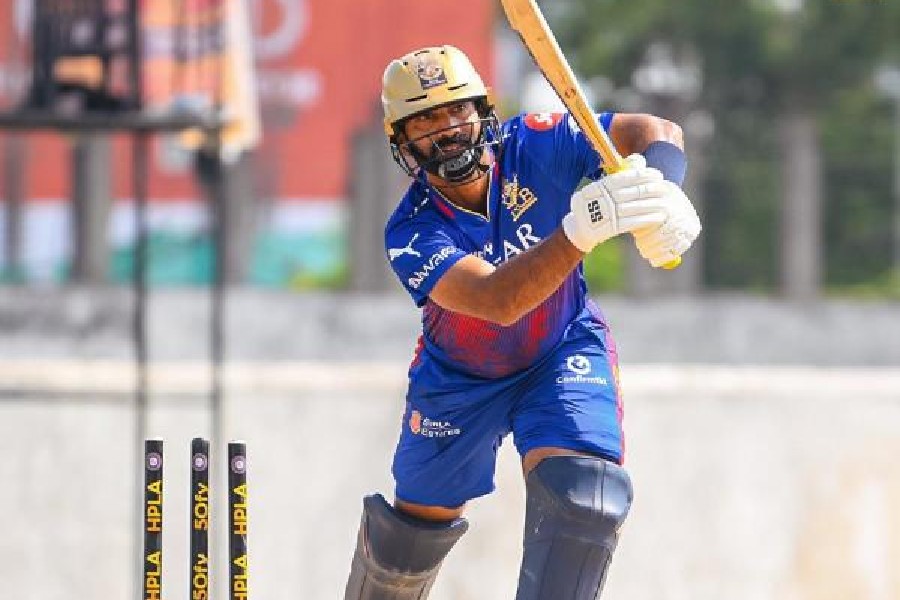
The second incident of which I speak took place late on the second afternoon. With India posting a total in excess of six hundred, now there was a match to be won. However, the pace bowlers wasted the new ball, and Anil Kumble’s first spell was not especially penetrative either. Ganguly was handed the ball, in the hope of his breaking the opening partnership. After he had bowled three deliveries, the wicket-keeper, Dinesh Karthik, came up to the stumps. Apparently he had noticed that the Pakistani openers were standing outside their crease. Ganguly bowled one more ball and then, walking down the pitch, waved Karthik back to his original position some eight or ten yards behind. The gesture was composed equally of indignation and impatience; it was made by a man who showed a certain pride in his bowling. In Bengal they have always had a disdain for spin bowlers — and to be treated as one of this lesser breed was more than Ganguly could abide.

When Sourav Ganguly was dropped from the Indian side in October 2005, this newspaper thought he should retire from international cricket. So did this writer, although he was prudent enough not to express his opinion in print. It appeared to us then that Ganguly fitted into the Indian team as captain, or not at all. Once he had been replaced as skipper by Rahul Dravid, we thought that he should look for an alternative profession. We believed that his presence in the side would be bad for team spirit — in the past, former captains had always attracted grumblers to their side when playing on. We also thought that his best days as a batsman were behind him. Besides, was not he holding up the long overdue elevation of Yuvraj Singh?

Those of us who advocated Ganguly’s retirement thought it was in his own best interests. One cannot see Sachin Tendulkar, for example, do anything other than play cricket. But for Sourav there were, and are, a range of other professions on offer. With his family background in business he could start a factory or two of his own. With his smooth, convent-accented English he could become a television commentator. With his appeal across Bengali society he could even become a member of parliament. Why not make a success of one of these other careers when his career as a cricketer appeared to be going nowhere?

Ganguly spurned this advice — advice offered sometimes in print, at other times behind his back, but visible and audible all the same. The former India captain knew and sensed that even his oldest, most die-hard admirers thought that he would never play international cricket again. But the man had other ideas. He went back to the Bengal Ranji Trophy team, and by accumulating a series of impressive scores brought himself back into contention.

Ganguly’s dak naam is ‘Maharaj’, and for much of his career in cricket he has in fact had a reputation for imperiousness. This was why we thought that if he was not captain, there could be no place for him in the side. However, his performances in domestic cricket led to his being flown to South Africa in December 2006 to join the Indian team there. He played two brave, battling innings as India won its first Test in that country. That was unexpected — more surprising still was his ringing endorsement of Rahul Dravid’s captaincy. It had been a close-fought match in which, as Ganguly told an interviewer, his successor had not put a foot wrong — making all the right bowling changes, and himself taking some fine catches at slip.

This past summer in England, it became clearer that in his months spent in the wilderness, Sourav Ganguly had remade himself as a batsman, and perhaps also as a man. His strokeplay no longer had the extravagant fluency of yore; where he once peppered the off-side boundaries with a series of thrilling drives and cuts, now he accumulated his runs through deflections on both sides of the wicket, the string of singles and twos interrupted by only the odd boundary. No longer would he stride down the wicket to loft a slow bowler in the stands — rather, he would work him away for singles, and wait for the short or full ball to hit his fours. These adjustments — necessary perhaps because of the slowing down of his reflexes — had made him a less attractive batsman, but also a more effective one. This new style of batsmanship was better suited to the demands of Test cricket — where a painstaking forty or fifty, made in three hours, is usually far more valuable than a dashing thirty scored in as many minutes.

Ganguly carried on in the Indian winter where he left off in the English summer — scoring runs in Test cricket slowly, steadily, but scoring them all the same. In the series against Pakistan he was far and away India’s best batsman. And, as in England, he made key contributions with the ball, bowling economical spells to give the fast men a rest, and even taking the odd wicket. Above all, with bat, ball, and in the field, he has shown himself to be a marvellous team man, playing always for his mates, rather than for himself. The way he generously praised Anil Kumble’s captaincy in the Delhi Test was one manifestation of this; the way he played second fiddle to Yuvraj during that great partnership in Bangalore was another.

When Sourav Ganguly was removed from the captaincy, and then dropped from the team altogether, I was one of very many Indians who thought these decisions wise and perhaps also overdue. In thinking as we did, we were perhaps subconsciously influenced by the belief — or prejudice — that Bengalis do not fare well in adversity, and by the further belief — or prejudice — that former Indian captains do not take kindly to playing under someone else. But through what he has done since, Ganguly has proved us all wholly, colossally, wrong. An apology is in order — in offering it here, may I also wish Sourav and his side good luck for the Australian tour.

Top
Email This Page