| Harsh lessons Sir — In Thrissur, Kerala, a teacher reportedly forced a child of three to drink urine after she had wet herself in class. Apparently, she believed that this would cure the child of her ‘nasty’ habit. The case was brought to the notice of the administration and the teacher punished. But penalizing teachers can hardly solve such problems. These incidents can be avoided if teachers are trained adequately to deal with young children. Primary education in our country will only improve if teachers are recruited on the basis of merit and skill alone. Yours faithfully, B.S. Ganesh, Bangalore
Spoilt by choice Sir — In India, the people’s fascination for official privileges and free lunches makes them crave for a career as a public servant. Indian politicians seldom retire, and are usually beyond redemption. They have no interest whatsoever in experiencing the plight of the man on the street. Why, our public servants even manage to fall ill after being taken into custody for alleged misdeeds, lest they miss out on the free medical treatment provided by the State. That ministers and civil servants flaunt impressive prefixes before their names is also symptomatic of a dysfunctional civil society. Sunanda K. Datta-Ray talks about the absence of ostentatious bureaucrats in Singapore (“Ring for the butler”, Nov 3) . This holds true for most countries in the West. In Britain, for example, even prime ministers have been known to travel by the tube unnoticed. Sadly, in India, it is a different case altogether as little has changed here since Independence. The toiling masses cannot hope to be delivered from the clutches of public servants as successive governments have done precious little to stop such malpractices in India. Yours faithfully, Surajit Das, Calcutta
Sir — “Ring for the butler” by Sunanda K. Datta-Ray was a pleasure to read. At the time of Independence, India had fewer states. Hence, there were lesser number of ministers and a smaller bureaucracy. The creation of new states on the basis of language led to a massive surge in the number of ministers and civil servants, most of whom are now facing charges of corruption. As a result, citizens have lost their respect for civil servants. Today, even the flashing red beacon is ignored by pedestrians and motorists alike. Significantly, the Delhi high court recently observed that ministers who are accompanied by gun-totting body guards are a nuisance to the public. If they fear for there lives, the court added, they might as well stay at home. I am sure that the citizens of this country would not disagree with what the court observed. Yours faithfully, A.S. Mehta, Calcutta
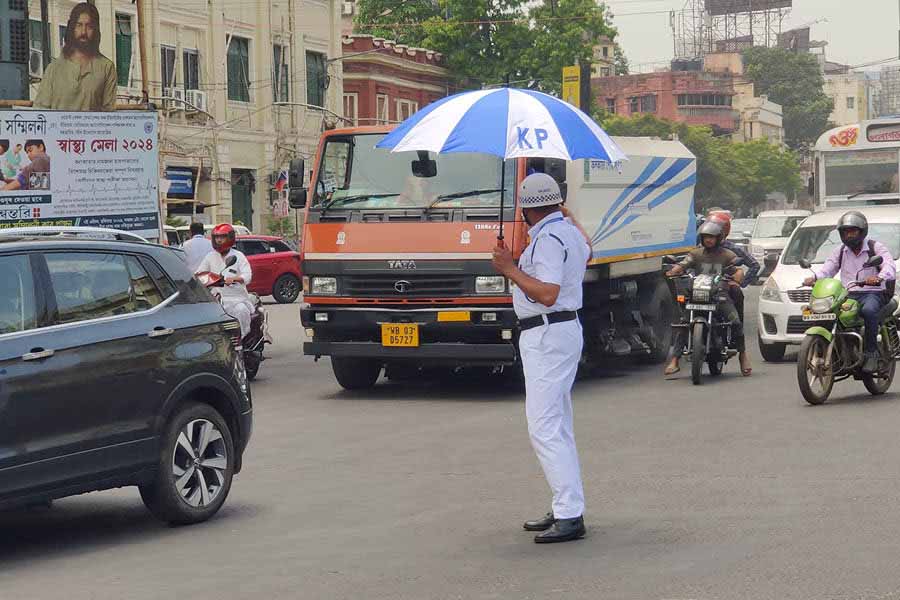
Parting shot Sir — After having lived and driven in Delhi and Bangalore, I found a couple of things peculiar to Calcutta’s traffic. In no other Indian city would anyone find such a proliferation of Ambassadors — bulky, unweildy vehicles that are unsuitable for a congested city such as this one. I am not sure if the authorities are interested in phasing out these old fossils in favour of newer alternatives that are friendly to roads as well as to the environment. Strangely, most Calcuttans prefer not to drive. Instead, they want to be driven around by chauffeurs. Perhaps the proverbial Bengali laziness has something to do with this preference for drivers. Many may find it hard to believe, but the fact remains that the collective quality of driving improves drastically when owners themselves drive their cars. This is something that we can experience only by starting to practise it ourselves. Yours faithfully, Jit Roy Chowdhury, Calcutta
|