The Telegraph
 
 
ARCHIVES
Since 1st March, 1999
 
THE TELEGRAPH
 
 
Email This Page
TELL THE TRUTH ON PAPER

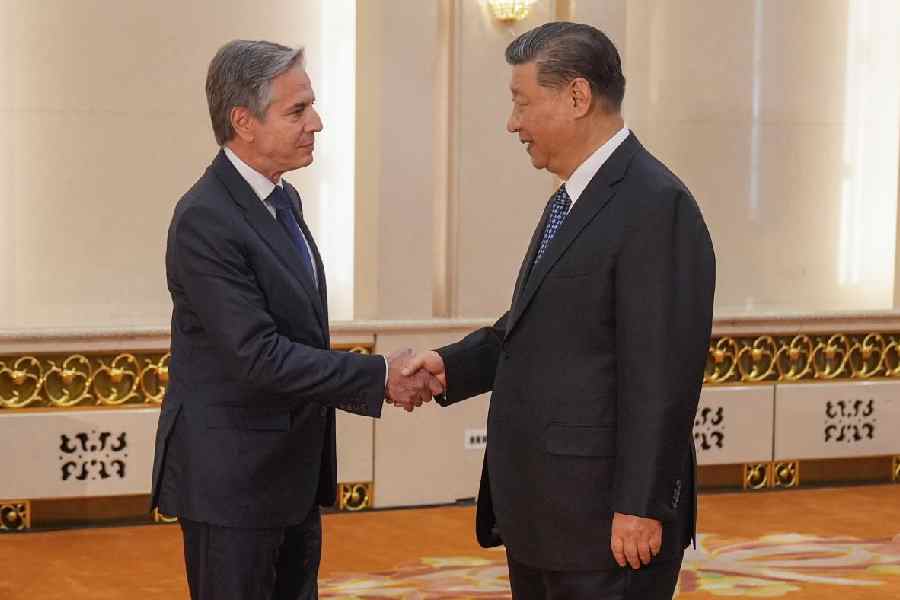
The visit of German chancellor, Angela Merkel, to India is just another of those boring official events. Some trade pacts have been signed, communiqués issued and so on. But when ‘the most powerful woman in the world’ visited China, the event turned out to be more than just exciting for the media. Four senior journalists were invited for a chat with her — and she was the one interviewing them.

The state of the Chinese news media is a topic of interest to everyone. But Merkel’s East German background probably gave her an edge in understanding the situation. One of the journalists who met her said she didn’t have to waste time acquainting her with the special features of her government’s relationship with the media. What surprised the journalists was the lack of any obvious security when they went to meet her. There was no frisking at all, and Merkel didn’t sit at the head of a long table in a conference room, but with them around a small table in an inner room. The hour-long meet saw a frank discussion between the chancellor and the four journalists who have worked in the Chinese press since 1980. The gist of the discussion, as narrated by one of those present, would cause many Indian Maoist intellectuals to blink.

The biggest change that had taken place, the journalists told Merkel, was that it was no longer possible for the government to use the media as propaganda for two reasons: first, today, there are other sources of information for the people, and, second, even journalists no longer believe everything the government says. After 1949, when the Communist Party took over, “theoretical experts”, obviously communist, were appointed to write commentaries on political events. Since the people had no access then to any other source of information, they had no choice but to be “misled”, this journalist said.

New vision

This can no longer happen. Today, the only way the government can control the press is by “brute power”, said the journalist, and by directly telling them, “this is what you have to write”. No written instructions are given, so that no record can be left. For instance, in August, when a bridge that had just been completed collapsed, killing more than 40 people, reporters talking to workers on the site were roughed up by goons; at the same time, editors got calls directing them to recall the reporters and rely on reports compiled by Xinhua, the official news agency.

This kind of censorship makes only the authorities feel they are in control; in truth, “the public is laughing in their faces’’, said the journalist. As for media professionals, they have long stopped believing that “news is the voice of the party’’. The older journalists, after 1980, swore “we should no longer tell lies’’; the younger ones are now trained in internationally recognized news values.

These news values, however, are not exactly visible in the main newspapers, where Xinhua rules. Apparently, they are reflected in smaller city newspapers, which are not funded by the government, but are more popular than the official papers, and have had more than their share of confrontations with the authorities. Even official newspapers now have an opinion page that can be fairly critical of the government on major issues.

The greatest change, which has itself contributed to these other changes, has been access to the internet. Today, a small blog posted on the internet can be fleshed out into a major investigation, attracting international attention, as it happened with the “Chongqing nail house story”, about a couple who resisted developers.

That evening, the four journalists saw on CCTV, Merkel urging the head of the National People’s Congress to formulate laws for the media as soon as possible. Ironically, the latest media law works more to block information than to release it.

Top
Email This Page