|
|
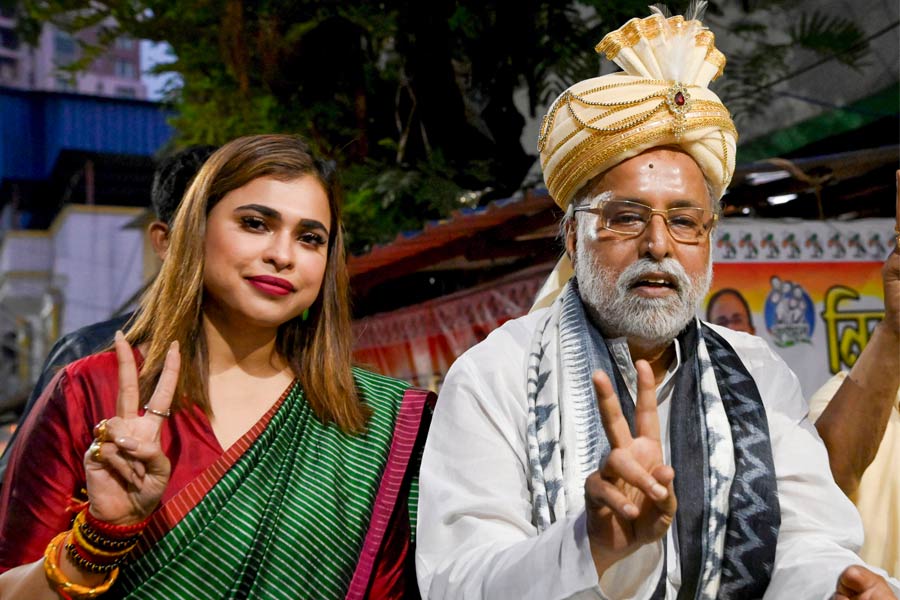
Parsons with Bhattacharjee. Picture by Pabitra Das |
Calcutta, Oct. 31: In the season of cold war between the Left and the UPA government, it doesnt get warmer than this.
His integrity is unquestioned was what Prakash Karat had said of Manmohan Singh in an exclusive interview to The Telegraph yesterday. Today, Buddhadeb Bhattacharjee gave the Prime Minister his unquestioned praise, calling him the only leader who can take India to the 21st century.
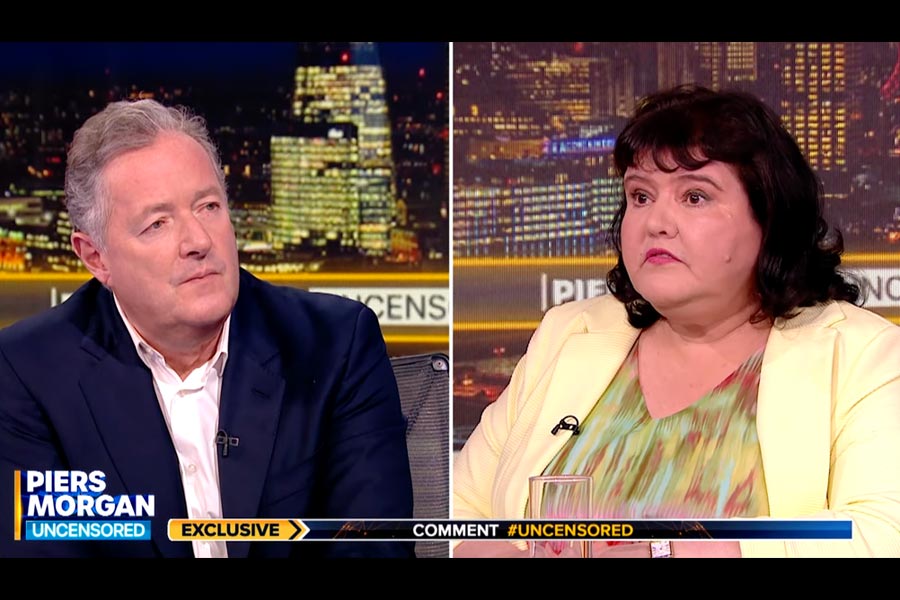
Ironically, there was an American angle to the Bengal chief ministers remark. He expressed his faith in Singh to a Time Warner delegation, led by its chairman Dick Parsons, that called on the chief minister at Writers Buildings.
Although the Indo-US nuclear deal did not provide the context for Bhattacharjees comment, the fact that it came close on the heels of the one by Karat makes it politically significant.
Karat had spoken of Singhs integrity to explain that the Lefts opposition to the nuclear deal did not mean it did not respect the Prime Minister or trust his honesty. But Bhattacharjees was an unqualified praise which would be seen as more spontaneous and generous than Karats.
During his meeting with the Time Warner delegation, the chief minister was asked if he needed to lobby in Delhi much in order to get the Centres help for his attempts to improve Bengals economy. He talked of the good equations he had with the Prime Minister and of the liberal assistance he had had from New Delhi.
He (Singh) is the only leader who can take India to the 21st century, who else? Bhattacharjee said. A member of the delegation had no doubt the chief minister honestly believed in what he said.
But Bhattacharjee did something else at the meeting with the delegation that Karat would have earlier suspected to be a capitalist design on Bengal. The chief minister proposed that the American group invest in setting up a film studio, an animation centre and other multimedia facilities in Bengal.
Thereby hangs a tale of the changing CPM.
In the mid-1980s, Warner Brothers had proposed to set up an amusement park on part of the land where the Salt Lake stadium now stands. Then chief minister Jyoti Basu — who had around the same time cleared the Nicco Park project, the citys first private-sector entertainment centre, also at Salt Lake — was enthusiastic about the idea.
But the CPM politburo shot it down with Karat, then a Young Turk, leading the charge against American investments in Bengal. The politburo had no great objection to the idea of an amusement park, but it wasnt amused that it was an American proposal. The CPM might have to agree to American investments in Bengal, party hawks like Karat argued, but not in entertainment.
Even Bhattacharjee didnt ask for an amusement park, said another member of the delegation. He is the sort of person who would like film studios and other things that matter for art and culture. Having heard of his passion for art and culture, some members brought copies of recent American movies. But he isnt the one, we figured out, for popular culture. He would much prefer classics.
Even when he proposed the investments in the film studio and the animation centre, he wanted these to promote culture as well as to create jobs and training facilities.
And, he also talked of communism but only to say that he wasnt building communism in a state in India. Where is communism anyway, he was said to have quipped.
Bhattacharjees day with big-time American businessmen had something of a climax in the official confirmation that he would meet the former US secretary of state, Henry Kissinger, when the latter visits Calcutta this weekend. Although Kissinger broke new grounds of détente in communist countries such as China and Vietnam, Bengals Left had long seen him as the archetypal US imperialist for the American roles in Pinochets Chile, during the Bangladeshs war of liberation and in other parts of the world.
The chief ministers meeting with Kissinger, who is in India on a business delegation, will be yet another signal of the CPMs changing face. Who better to signal that change than Bhattacharjee whom the Indian media keeps on calling Indias Deng Xiaoping, said a source involved in the arrangement for the meeting.
|