|
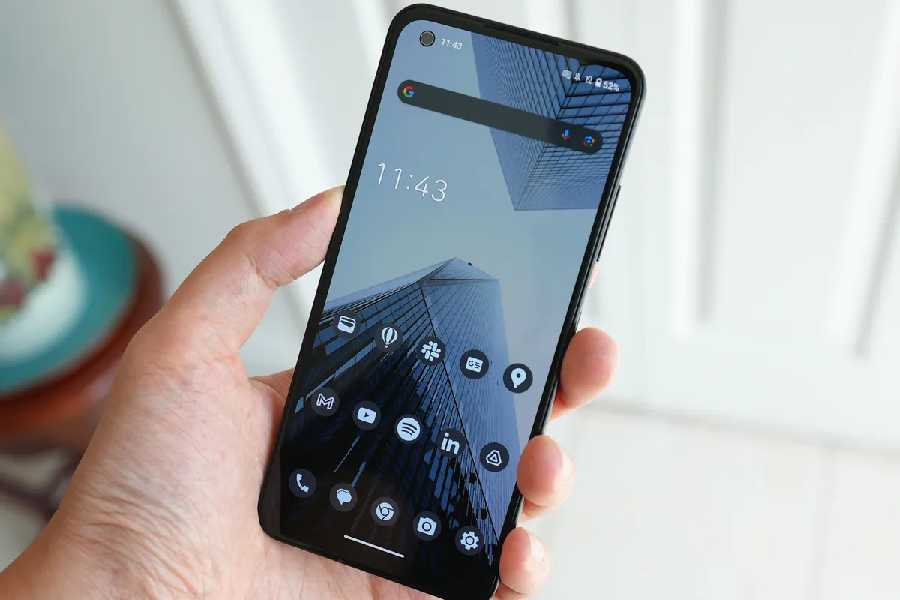
Have you ever been harassed by a busybody with a mobile camera phone? A private members bill introduced in the Rajya Sabha by Vijay Darda, which is pending for discussion, is intended to help you tackle that person. The Mobile Camera Phone Users (Code of Conduct) (MCPU) Bill, 2006, forbids:
• Anyone from using a camera phone to take a photograph or record a video of any other person without his knowledge or consent in any public place or public transport.
• The use of such phones in high security defence establishments and where photography is specifically prohibited, as well as while driving a motor vehicle.
• Children from owning or using such phones and their parents or guardians may be prosecuted in accordance with the provisions of the Act if their children are seen with camera phones.
• Anyone from shooting and circulating objectionable content.
Individual violators could be imprisoned for three years or fined up to Rs 25,000. Companies have also been brought under the scanner for instance, if an individual violates the rules at a time when he or she was in charge of, and was responsible to, a company for the conduct of business of the company, both the individual and the company will face punishment. For companies, the fine can run up to Rs 25 lakh.
The Union government is expected to create a mobile camera phone policy within six months of the commencement of the Act, if the Bill is passed.
To be sure, private members bills rarely make it to law. But they do serve a purpose by sparking off debate. Says Geetanath Ganguly, executive chairman of the Calcutta-based Legal Aid Services West Bengal, As privacy laws dont exist in India, the Bill is a good beginning. Joymalya Bagchi, criminal lawyer at the Calcutta High Court, agrees. The law in India, 50 years ago, did not recognise privacy as a fundamental right. When this Bill becomes an Act, it will be one of the pioneering laws on privacy in India. Measures for the protection of national security proposed by the Bill have also been approved by civil rights groups such as the Peoples Union for Civil Liberties (PUCL).
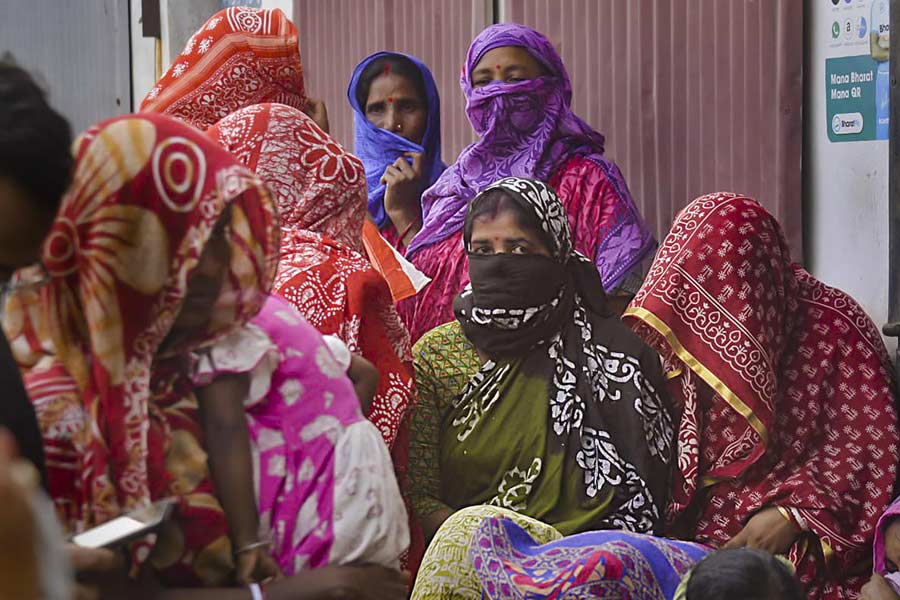
The Bill has raised the hopes of Indian women that they will find some protection against abuse by mobile users. Says Sangita Bhayana, Supreme Court advocate, The Bill would be beneficial if it is passed by Parliament. Mobile camera phones are being misused to take private photographs of girl students and other women in order to harass and blackmail them. Bhayana argues that the Bill should make punishment more severe.
Although Darda thinks that the punishment proposed under the Bill is adequate, he welcomes debate on the Bill. He decided to introduce the Bill when his wife complained to him about the dangerous misuse of mobile camera phones. His main intention was to stop harassment of women and misuse of phones by students. He says, I would like to ban the use of phones in schools.
The right to privacy is not among the rights guaranteed by the Indian Constitution. But courts have often used Article 19 and Article 21 to judge cases of violation of privacy. A Supreme Court judgment (PUCL vs the Union of India and another) delivered on December 18, 1996, on a public interest petition on telephone tapping also referred to Indias assent to the UNs International Convention on Civil and Political Rights, 1966 and to the UNs Universal Declaration of Human Rights, 1948, to justify the need for adequate protection of privacy.
The MCPU Bills requirement that individuals seek the consent of others before using mobile camera phones to photograph them in public places has been commended by many. But some think that consent should not be required in each case. Jayanta Chatterjee, advocate, Calcutta High Court, says, If somebody takes a picture of women at a Puja pandal without their consent, how does that matter? Unless something indecent is recorded or transmitted, it should not be considered an offence. The existing Indecent Representation of Women (Prohibition) Act, 1986, must be amended further to make it more effective.
However, if only indecent content were to be prohibited, camera phones could still function as an inadvertent aid to stalking and to the infringement of intellectual property, among other offences. For instance, if A takes a picture of B typing on his laptop at a public place with Bs consent and without receiving any payment from B, the picture could be transmitted simultaneously by A to others without Bs consent, aiding stalking and theft of Bs work (since many camera phones have powerful lenses these days). Bagchi explains that this is because under the Copyright Act, 1957, A is the owner of the picture because he hasnt received payment from B and can transmit it to somebody else without Bs permission. Copyright will have to be covered better in the future, says Darda.
Private residences and private places are where abuse of mobile camera phones takes place most often. Bagchi points out that although the Bill prohibits nosy parkers standing on a public road from taking pictures from an open window into a ground floor room, what isnt prohibited is clicking pictures of a neighbours house from ones own house as that isnt a matter of public concern. So, relatives and friends who would need to take permission in public places could possibly abuse such phones in private places.
But the passing of an Act on such matters isnt enough. More public awareness is required. Darda says, Companies, the government and social organisations should become involved. The current Bill holds companies manufacturing mobile camera phones responsible for the education of retailers who are then expected to inform customers of appropriate and ethical use. But Chatterjee thinks that such measures are impractical. It isnt clear yet if user manuals for such phones will prove to be as useless as statutory warnings on cigarette packs.
Some concerns regarding a possible threat to the work of investigative journalists have also been raised by the Bills introduction. Ganguly thinks that traditional methods of investigation and the Right to Information Act, 2005, will render all worries unnecessary. But Y.P. Chibbar, general secretary, PUCL, says, Care should be taken that legitimate electronic investigative journalism isnt restricted. A sting operation can be examined in court and shouldnt be prohibited. He thinks that the Bill should be referred for opinion and advice to the Press Council of India to prevent violations of the right to freedom of expression and the right to information. Darda, whos a media baron, disagrees: A journalists work isnt the same as that of a detective. When I was a journalist in the field, I used to discuss my story with a minister even if it was against him.
Hopefully, if the Bill becomes an Act, mobile camera phones will be used more ethically by people who are aware of their rights. |