|
Mahendra Singh Dhoni would probably never do this. Thats the first thought that strikes you when Pankaj Advani rings up to apologise for having missed your call. The reigning world billiards champion seems to be a man of few airs. He asks what would be a good time to meet and hangs up after a breezy see you.
No curious crowds collect as Advani drives into the Karnataka State Billiards Association (KSBA) campus in Bangalore in an olive green Santro. The small-built 22-year-old is trendily turned out in a chest-hugging black tee and pin-striped trousers. Advani spiked hair in tune with the times greets the receptionist and then makes his way to the unassuming KSBA restaurant. Apart from waving out to an odd acquaintance, he is left undisturbed to talk.
And, no, Advani doesnt mind missing out on public adulation hes used to being a face in the crowd, he says. For most sportspersons, achievements come first, not popularity, he says, philosophically, if not quite accurately.
However, what irks Advani is missing out on government recognition more so when a team of 11 bat-and-ball wielding men in blue get showered with largesse. An achievement is an achievement. But the Karnataka government, which was very prompt in rewarding players of the Twenty20 cricket squad, never rewarded me when I won world titles, says Advani.
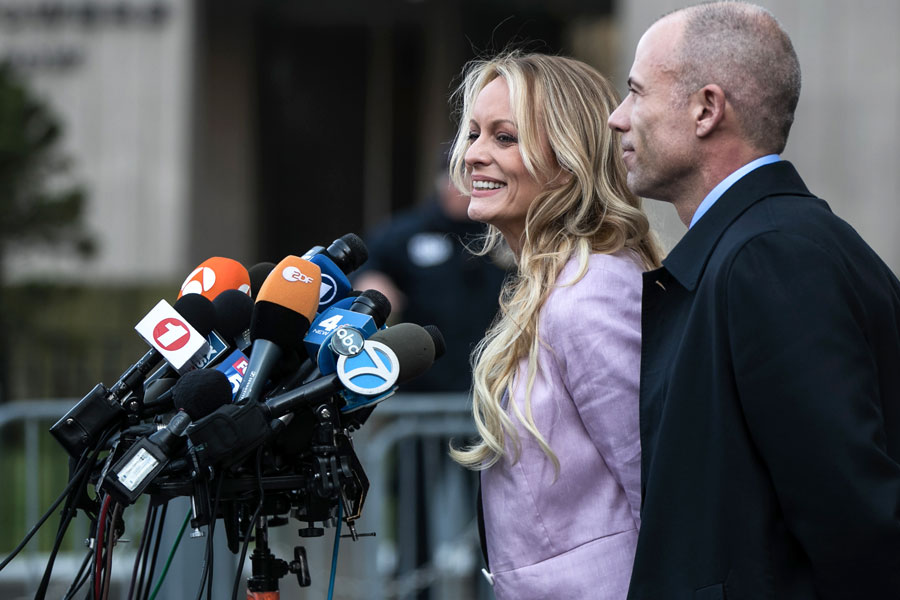
The timing seemed almost strategic. Four days after the Indian cricket team was fancily felicitated at Mumbais Wankhede Stadium, four Bangalore-based sportspersons swimmers Nisha Millet and Shikha Tandon, former hockey player Ashish Ballal and cueist Advani held a press conference to protest discrimination against non-cricket-playing sportspersons in the country.
But it was not the Wankhede celebration that triggered the protest. Last month, Advani returned from Singapore after winning and retaining for the second time in a row the world billiards championship title. The KSBA held a felicitation ceremony, where the secretary of Karnatakas Department of Youth Services and Sports (DYSS), A.S. Shrikanth, was invited as a guest of honour. Shrikanth left Advani aghast when he asked the champ to forward a request to the government to recognise his achievements and to apply for a Rs 1,00,000 cash award.
I am not going to apply for any award. Rahul Dravid and Sania Mirza were rewarded by the Karnataka government without making any requests, says Advani.
Theres one award that Advani got without asking. He was declared one of the 15 winners of this years Eklavya Award given to sportspersons by the Karnataka government. But on the day of the award function, Advani was busy watching India and Australias first One Day International match at Bangalores Chinnaswamy stadium. He skipped the ceremony.
The four-time world champion cueist says the Eklavya award came as too little, too late. I should have got this award eight years ago. After winning the Arjuna Award and the Rajiv Gandhi Khel Ratna, it has no meaning for me, he says.
Advani now plans to fight for his rights. The protest press conference was one part of a plan to demand recognition for high-achieving Indian sportspersons. We are waiting to see how the government reacts to our first protest. I have some more plans in mind, says Advani, although he doesnt divulge details.
The government may be sitting pretty, but Advani says hes been flooded with keep-it-up calls from fellow sportspersons across the country. Hundreds of people have called me to say they felt equally strongly about the issue, he says.
Although the congratulatory calls were welcomed, they also reminded Advani that his focus was shifting from the game. Sometimes I think I should go back to concentrating on my game. But then my conscience pricks me and I dont want to keep quiet about the discrimination in sports any longer. Im trying to strike a balance, he says.
Thats important, for Advani rates his calm and composed temperament as his biggest match-winning asset. I keep my cool in the worst of situations. This helps me to come back into the game, says Advani. He adds that hes been down and almost out in practically all tournaments hes gone on to win.
In the semi-finals of the 2005 World Billiards Championship, held in Malta, Advani was 4-0 down to an Australian player. The Australian is among the slowest players in the world. He keeps the opponent off the table for long durations, affecting his rhythm, says Advani. The crowds had written off Advani, but he won the match 5-4.
Talk of life outside billiards, and Advani says hes not tied to the game. For me, there is more to life than snooker, he says. The commerce graduate loves to hang out with friends, break dance and worships Michael Jackson. Hes been itching to watch a horror film, but his friends are too scared to accompany him. So Advani so far single makes do by enjoying films such as Dhamaal with his pals.
Advani grew up in Bangalore after spending some years in Kuwait, where his father, who died when he was six, had a business. After the first war in Iraq, the family moved back to India.
Advanis elder brother taught him his lifes two favorite things break dance and snooker. As a 10-year-old, Advani would accompany his brother to snooker parlours during the summer vacations. Thats where I got hooked to the game, he recalls.
The two brothers then joined a snooker summer coaching camp at KSBA, Bangalore. The older brother, the cuist champ feels, was the better player of the two, but lost interest in the game. The younger one pursued it with a passion.
I would practise snooker for seven hours a day. At first, my mother thought I was wasting my life. But she finally came around, he says. At 11, when Advani approached coach Arvind Sarur for assistance, he was told hed have to wait till he was a little taller. I was five feet tall and too short to get good shots on the pool table, says Advani. Sarur began coaching him only after he had put on a few more inches.
At 17, Advani won the Senior National Snooker Championship and became the number one player in the country. This entitled him to represent India at the World Snooker Championship held in China the following year. I was playing against veterans and nobody expected me to win, says Advani.
Advani went on to win all the league matches but lost the last match to a South African player. I felt depressed and thought Id never get anywhere in the sport, he recalls. Thats when ace snooker player Michael Ferreira asked him to live in the present. He told me not to think of the title but to take the tournament match by match. It changed my approach to the game, says Advani. The China championship was Advanis first international win. Today, he has four world titles, an Asian billiards title and an Asian games gold medal under his belt.
As Advani, who is employed by the Oil and Natural Gas Corporation, prepares to take up the cause of sports, he feels there are big lessons to be learnt from the Board of Control for Cricket in India (BCCI). The BCCI needs to be applauded for making India a cricket-obsessed nation. It has marketed the game very well, says Advani, who feels every sport can be similarly sold. More can be done for billiards as well, he adds.
Advanis grouse with billiards is that the sport has no structure. There are only two sub-junior tournaments held in a year. Every eager player cannot make it into these, he says.
Advani feels hes lucky to have got his breaks. And like his favourite tennis player Roger Federer and probably unlike the Indian cricket team he wants to remain a consistent champion.
|