TT Epaper LHS
The Telegraph
TT Mobile
 
 
IN TODAY'S PAPER
WEEKLY FEATURES
CITY NEWSLINES
FEEDS
  RSS
  My Yahoo!
SEARCH
 
Archives Web
 
ARCHIVES
Since 1st March, 1999
 
THE TELEGRAPH
 
CIMA Gallary
 
Email This Page
RULES OF THE TALENT SHOW GAME

1. Curb public voting

In a democracy, people have as much right to choose their talent idols as they have to elect their politicians, but not when the show ceases to be a contest and degenerates into a provincial battle. If the finale of Indian Idol 3 had people belonging to the hill towns of Shillong and Darjeeling frantically voting for their representatives, then participants on Zee TV’s Sa Re Ga Ma Pa and STAR Voice of India — predominantly belonging to small towns — are left with no choice but to openly appeal to people from their regions to vote for them. Text votes jam the networks and public call booths are specially hired for the purpose of voting non-stop for the ‘local’ candidate.

The clear winners of the game are television channels and cellphone service providers. “One’s artistic talent is being tested less now. The worst thing is that an SMS is sent to decide the winner,” is what Lata Mangeshkar had to say in a recent television interview.

t2 recommends: Continue the system of public voting in order to keep audience interest alive, but let the judges have an equal say in the decision-making process, along the lines of celebrity dance shows like Nach Baliye and Jhalak Dikkhla Jaa. Having judges like Javed Akhtar, Bappi Lahiri, Alka Yagnik and Udit Narayan stare helplessly while a deserving candidate is booted out due to lack of public (read, regional) votes is of questionable wisdom and virtue. Granted yeh public sab jaanti hai, but in such matters the judges might just know better.

2. Steer clear of personal drama

Probing the personal lives of contestants has become a standard practice on talent shows. Most often, participants are projected as people who have been struggling all their lives. Personal details with respect to their childhood, their hard times and even failed love affairs are “revealed” by the participants’ parents, siblings, aunts, uncles and neighbours. Sony left Indian Idol 3 participant Abhishek and quite a few members of the audience teary eyed when it decided to bring his biological and foster parents together on the show. All for the sake of TRPs. “An entire episode on Indian Idol was taken up with the judges debating whether participants Chang and Deepali’s alleged affair had affected their performances or not. It was pretty disgusting,” says college student Aayushi Bhatnagar.

t2 recommends: The focus should be on what the show is meant to showcase. We want to know how a contestant sings on stage, not how he snores in bed.

3. Junk the juvenile judges

Judges arguing amongst themselves on talent shows is passe. The squabbles are scripted and look horribly staged. Whether it is Himesh Reshammiya engaging in a verbal duel with Ismail Darbar and the other judges on Sa Re Ga Ma Pa or Anu Malik questioning Alisha Chinai’s ear on Indian Idol, the audience is left yawning. “Although one knows that it’s not for real, it’s sometimes good fun to watch the judges arguing like kids. But seeing it in every second episode does get irritating after a while,” feels Gayatree Dutta, a homemaker.

t2 recommends: The judges are no actors and should stick to doing what they do best — shut up and listen. Giving them a larger say in the decision-making process should keep their hands full.

4. Ban crying

Shedding copious tears in every episode of every talent show has become the norm. A contestant makes it to the next round — everyone cries. A contestant is booted out from the show — everyone cries. A contestant’s dog has lost his bone — everyone cries. A judge misses another fellow judge on a particular episode — everyone cries. And the hapless audience has no choice but to sit through the torrent of tears. “All the rona dhona is best left to daily soaps,” feels television star Maninee De.

t2 recommends: You can’t stop people from crying, but there is nothing to stop the show’s editor from going snip-snip.

5. Ditch the dull format

All talent shows, irrespective of what talent they are scouting for, have more or less the same format. You’ve seen one, you’ve seen them all. The concept of the wild card is a clear favourite. But we’ve got news for you: shunting out a candidate in the initial rounds and then bringing him or her back is so last year.

t2 recommends: Stop basing shows on international models. Evolve your own concepts and hire some competent writers.

6. Stop celeb appearances

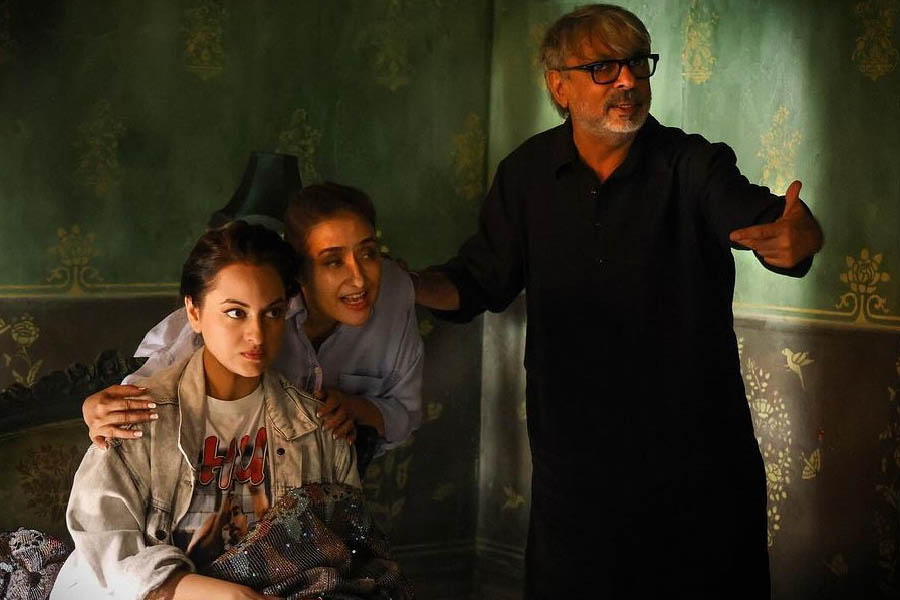
Inviting celebrities to spice up episodes is an art (or commerce) that our talent shows have perfected. Shows compete to get the biggest celebs on, and the stars do nothing more than go through the motions, though we all know they are there only to promote their next film. If Farah Khan, Deepika Padukone and Shreyas Talpade went Om Shanti Om on Sa Re Ga Ma Pa, then the Sawaariya team of Sanjay Leela Bhansali, Ranbir Kapoor and Sonam Kapoor did the honours on Voice of India the same night! Even Lalu Prasad has been a guest judge on Sa Re Ga Ma Pa, and so has Kapil Dev. Indian Idol finalists were even made to sing for Sonia Gandhi and Manmohan Singh!

“Having celebs on these shows is exciting once in a while, but the focus is lost when they start using the show as a platform to talk about their agenda. It’s a talent show and we would rather see and hear the contestants,” says media professional Mita Mehra.

t2 recommends: Less is more. Bring on the stars, but only as a pleasant surprise.

7. Ban bitching…

Participants bitching about each other, questioning the judges’ abilities and recommending which participant should be ousted from the show is all in bad taste. And we see it on almost all talent shows. Even the ones which don’t feature Rakhi Sawant.

t2 recommends: China has warned against the use of “sensational and inflammatory remarks” on talent shows. We second it.

8. Focus on talent, not appearance; say no to gender bias

Every talent contest has at least one makeover session for its participants. This is because appearances count a lot on our talent shows, sometimes even overshadowing talent. Calcutta girl Smita Adhikary openly admitted on Indian Idol that she wasn’t getting enough votes because she wasn’t as “attractive” as the others. Even a drastic makeover session did not better her prospects. And then, of course, is the clear gender bias, with the scales tilted clearly in favour of the men. Women hardly make it to the final stages of these talent shows, though they most definitely do have what it takes.

t2 recommends: Design a format which gives boys and girls an equal chance to succeed. Practice sessions to hone one’s skills should be given priority over sessions at the salon.

9. Encourage originality

Tune into STAR Voice of India — a participant is singing a Lata Mangeshkar classic. Switch to Sa Re Ga Ma Pa — a contestant has everyone in raptures rendering a Kishore Kumar song. If talent is all about originality, then the aspirants on these shows should also be judged on the basis of new compositions.

t2 recommends: Lata Mangeshkar emphasised the need to compose original songs. It is only then that the judges will be in a position to determine how good they are. For once, we agree with her.

10. Stop stock lines

Every talent show will invariably have the following stock lines, episode after episode:

• Main aapko gale lagana chahta hoon

Public jo bhi chahe, mere liye aap already winner ho

• Aapne aaj apne performance se humein rula diya

Mindblowing

You have sung this song even better than the original singer

• Jaane se pehle, aap kuch kehna chahenge?

t2 recommends: Hire some original writers who know more than 17 words.

Mir’s Musts

a. Contestants should be given ample time to prepare. They are amateurs and are under constant pressure to perform. It’s a competition all right, but the pressure factor needs to be curbed.
b. The contestants should be groomed well. Above all, there is a need to make them realise that it is the means to an end, not the end itself.
c. Less involvement of the contestants’ parents on the show. The parents indulge in unnecessary squabbles and spoil the camaraderie between contestants.
d. Shooting schedules need to be well planned. In contests where children are involved, the shooting should be during school vacations.
e. Prizes should be in the form of incentives, not cash. This especially holds true where children are involved.

(Mir anchors Dance Bangla Dance on Zee Bangla)

(What do you hate most in talent shows? Tell t2@abpmail.com)

Top
Email This Page