|
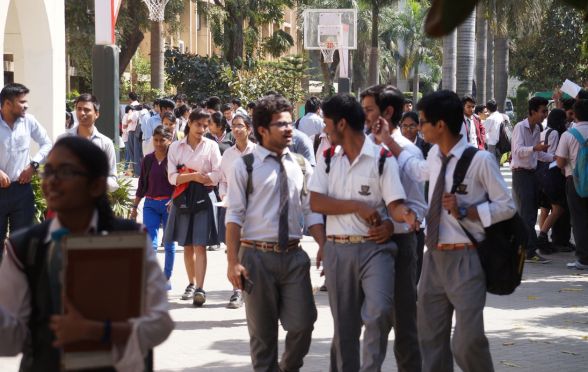
The previous issue of The Telegraph in Schools features an interesting topic: what children say they will never do when they grow up. School children of different age groups have given their responses. Some of the answers are tongue-in-cheek (“I shall never eat vegetables”), while some are thought-provoking (“I will not allow ambition to dominate me”). Many of the retorts are also ingenious: “When I become a lawyer, I will never fight for the wrong person.” These resolutions are refreshing because while we are used to hearing from children what they want to do and become when they grow up, we seldom get to hear what they don’t want to do as adults.
What they want to do and be are often predictable — at least that is what appears from what children say in public and write in their term-end papers. But the habits that we adults try and beat into our children are often pratices that we ourselves don’t follow or believe in. In this age of consumption, the ‘to-dos’ are everywhere — screaming out of glitzy hoardings and life-style ads; the ‘never-to-dos’, on the other hand, are like vapid edicts hanging on sarkari noticeboards. Therefore, it is interesting to note the things that the kids say they would never do when they grow up. They offer an insight into the workings of young minds.
Amid the bewildering range of resolutions that these school children have come up , there is a touching, recurring theme: concern for aged parents. “I will never send my parents to old-age homes”, a number of respondents have said. This, again, is an impassioned reaction to a reality that has crept into urban, middleclass homes. Everyday, we come across heartbreaking stories of aged parents left behind by ambitious children; we also read reports of lonely parents found dead in flats and neighbours woken up by the stench. Of late, this disturbing reality has entered the realm of popular culture.
Ray of hope
The sighs and tears for forsaken parents now sell well in the marketplace of mass culture. But, whichever way we look at it, there is no denying the fact that the number of the aged in India will continue to grow in the coming years. In the backdrop of such a grim reality, it is heartwarming to learn that a number of schoolchildren have resolved to reverse the process. Can there be anything more reassuring than the fact that all the hard work that goes into raising children would not be wasted and that they are a sound investment, ensuring a happy old age for most adults?
But then, this too raises a rather unsettling question: are adults preparing themselves well to be worthy of their children’s love and care? Shall we become charming old people with an endearing attitude to whom our children would love to turn in the course of their busy lives? Or shall we turn into cynical, verbose dotards whose care will be warranted by a sense of cold gratitude? While most of us have a clear idea about what kind of an adult we want our children to grow into, we don’t seem to have a clue as to what kind of parents our children want us to be. In our culture, there is no mechanism through which children can give their inputs about adults.
The TTIS children seem to have found a remarkable channel to do this. Among the things they have resolved never to do are: make career precede their self-respect; be jealous of successful people around them; support religious dissension; gossip; use violence against helpless children; pressurize their own children to be outstanding, spy into their private lives, fight with anyone in front of them and so on. Through these strictures the children, possibly, want to tell us, adults, something and guide us to an old age where we can bond with them not just as parents, but also as considerate human beings. |