TT Epaper LHS
The Telegraph
TT Mobile
 
 
IN TODAY'S PAPER
WEEKLY FEATURES
CITY NEWSLINES
FEEDS
  RSS
  My Yahoo!
SEARCH
 
Archives Web
 
ARCHIVES
Since 1st March, 1999
 
THE TELEGRAPH
 
CIMA Gallary
 
Email This Page
Nandigram scare for Tatas in TN

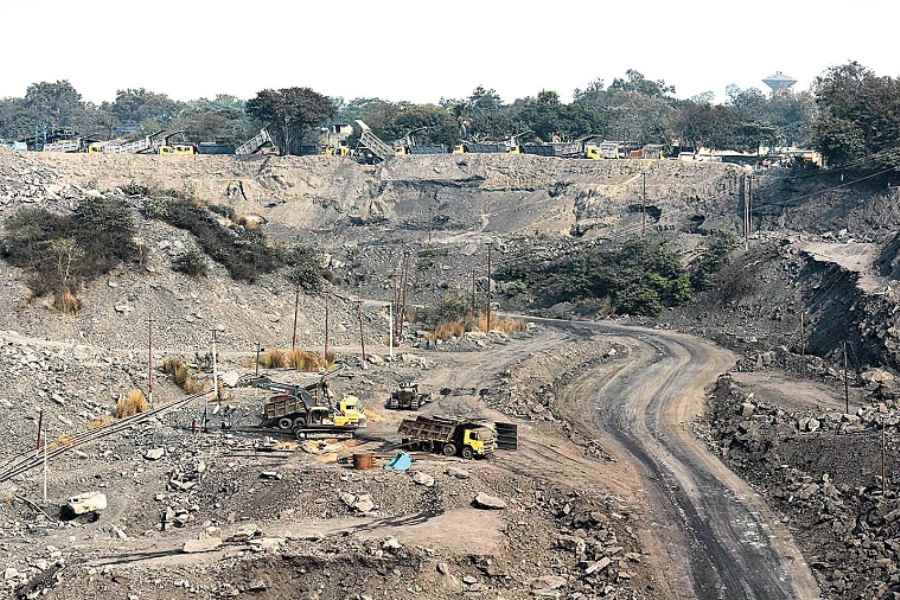
Sattankulam (Tuticorin), Aug. 28: After Singur, the Tatas are facing a Nandigram. The threat comes from a red-soil belt in southern Tamil Nadu that Tata Steel wants to mine.

Most farmers in Sattankulam — literally the Devil’s Pond — and its neighbourhood are ready to give the state government hell if it tries to force them to part with their land for the 12,633-acre project.

The Tatas, who signed a memorandum of understanding with the DMK regime on June 28 this year, want to mine the area’s rich ilmenite deposits for titanium oxide, which is used to make white paint.

The project area covers seven “revenue villages” — each of them made of several villages and panchayat areas — in the drought-prone districts of Tuticorin and Tirunelveli.

The entire belt, just off the coast, is rich in minerals of which ilmenite is the most abundant, its black deposits dotting the red earth over miles and miles of uneven terrain.

Sattankulam, a two-hour drive from Tirunelveli, is to be the hub of the project that will seek to exploit 5 lakh tonnes of the mineral a year over the first phase of six years.

In Sattankulam, Arasur and nearby village panchayats, where the bulk of the mineral is deposited, farmers are unanimous that they will not sell their land.

They say that thanks to drip irrigation and good crop selection, they have been growing a variety of fruits and vegetables and even paddy.

“The state is lying when it says the entire theyri (ilmenite-bearing) land is unfit for cultivation,” fumed A.V.K. Balasubramaniyan, 70, at Vijayaramapuram, adding his family had been “farmers for 10 generations”.

“From cashews to mangoes, coconuts, palm trees or vegetables — you name it, we grow it. Our unique variety of drumsticks is exported to the UK and West Asia. Why should we sell our land?”

Pratap Singh at nearby Naduvakuruchi said “99 per cent” of the farmers do not know anything other than agriculture. “How can they survive?”

The farmers have rejected even the Tatas’ offer of one job per family.

“The Tatas can take our land over our dead bodies,” said Sudalaimani Nadar, 68, at Pottalvilai.

But a smaller group, mostly made of well-to-do farmers owning larger tracts, wants to sell — if all its demands are met. “We have no objection to giving our land,” said Suresh at Karikovil village.

“Our panchayat alone has 200 acres where no profitable agriculture is possible,” added the farmer whose main source of income is his small business. His two brothers work in cities.

“Let the Tatas pay up to Rs 5 lakh an acre, we’ll sell our land,” agreed a wealthy farmer, owner of 80 acres, who did not wish to be named. “The issue is not land acquisition but the price.”

“But no government mediation,” added S. Sakthivel, owner of a 12-acre coconut grove in Sasthavinallur.

However, the government, which wants to mediate the land acquisition, has suggested only Rs 60,000 an acre after angering the farmers with an initial offer of Rs 7,300 an acre.

“How will that help? Our joint families are large. Besides, they will take only skilled and technically qualified workers,” said Singh of Naduvakuruchi, who grows drumsticks on his 15 acres.

“I know only to pluck and collect plants. The Tatas will not give me a job,” said Vasuki, a woman farm worker at Pannamarai.

Now a poster war is being fought in these villages dominated by the Nadars, who belong to the Other Backward Classes.

Some of the posters paint Tata Steel as an “outsider looking to grab land” and the others, claiming to represent the Podu Makkal (public), welcome the company and the jobs it will bring.

Top
Email This Page
 
 
Biz2Credit Bizsense