|
|
Less is more: Amendments to the Dowry Prohibition Act will put a limit on marriage expenses |
Indian women have reason to rejoice. The central government is in the process of amending about 40 laws to make them more effective and women-friendly. A few amendment bills have been tabled in Parliament already, and more will be introduced soon. But while welcoming the initiative, women activists say that it is not enough to merely give more teeth to the laws; the government must also take steps to ensure that they are implemented on the ground.
On the cards are amendments to laws such as the Commission of Sati (Prevention) Act, 1987, the Hindu Marriage Act, 1955, the Maternity Benefit Act, 1961, the Medical Termination of Pregnancy Act, 1971, and the Dowry Prohibition Act, 1961. A sexual harassment at the workplace bill is also on the anvil.
The central government has set up an inter-ministerial committee on legal equality, headed by the secretary of the ministry of women and child development, to monitor the status of these amendments.
Some of these amendments are long overdue, say womens activists. For instance, in the Commission of Sati Prevention Act, the amendment seeks to rename the act as a sati murder. Most support this amendment. In fact, the village community involved in the act, including the pandit who performs the puja, should also be held responsible for a sati murder, says Ranjana Kumari, director, Centre for Social Research (CSR), Delhi.
However, others are unhappy that the new law does not simply call sati an act of murder. Why is it necessary to call it a sati murder? Why not simply a murder, asks Rukmini Sen, lecturer at the National University of Juridical Sciences, Calcutta.
The practice and glorification of the act continues, so if there is a prefix sati to murder, the glorification of the socio-cultural practice of sati is perpetuated, she adds.
Another significant amendment due to be rolled out is in the Dowry Prohibition Act. Here the amendment will exclude dowry givers from punishment, provide for the appointment of dowry prohibition officers, and limit marriage expenses to 20 per cent of the annual income of the brides parents or guardians. Again, in the Maternity Benefit Act, the government is trying to push through an amendment that will increase the medical bonus of a woman factory worker from the current Rs 250 to Rs 1,000. And the proposed amendment to the Hindu Marriage Act will omit epilepsy as a ground for divorce.
As in the case of the amendment to the sati act, womens activists have shown a mixed response to all these initiatives. Sen, for instance, is sceptical about the effectiveness of limiting wedding expenses through the law. It is more important to have consistent campaigns against the expensive paraphernalia associated with weddings and the tremendous social pressure that goes with it, she says. Moreover, merely raising the mandatory medical allowance in the Maternity Benefit Act is not enough, feels Sen. Pregnant women are often denied jobs and there is no legal provision yet that could haul up the employer for that.
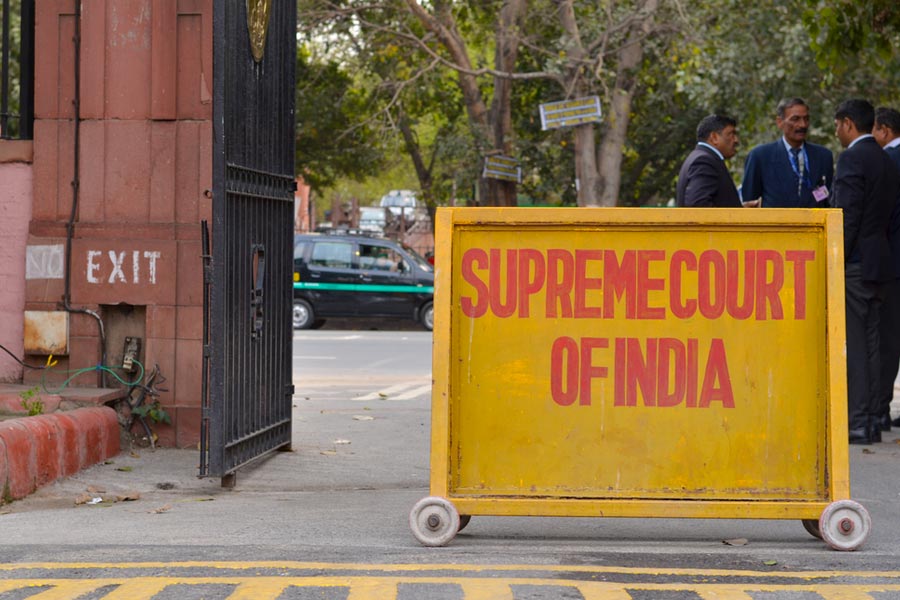
Activists also say that dowry laws need to be clearly enunciated and not be susceptible to multiple interpretations by courts. For instance, in a recent case the Supreme Court held that seeking financial assistance from in-laws by the son-in-law to meet urgent domestic expenses does not amount to a demand for dowry warranting criminal prosecution. This is a bit alarming as such judgements allow the husband and his parents to harass the wife on some pretext or another throughout her life, says CRSs Kumari.
The sexual harassment at the workplace draft bill may also come in for some changes. Activists and experts want the law to have a broader definition of sexual harassment and to clarify whether an establishment which has violated a provision of this law can be forced to pay monetary damages to the suing party.
There is also a need to include sex-based discrimination which is non-sexual in nature as in sabotaging a colleagues work in order to reduce the competitive threat a woman poses, says Kumari. The current draft bill only protects women against harassment by men. It would be better to make this bill gender neutral, as women can sexually harass men as well, and same sex harassment is also possible, she says.
However, activists are unanimous in their opinion that no matter how many worthy amendments the government ushers in, unless the action on the ground improves, there will be no real benefit to women. One of the biggest problems is that there is no effort to educate the women for whom these laws are meant, says Lotika Sarkar, the activist-lawyer who headed the committee on the status of women in India in 1974. The changes have to take place on the ground. Unless that happens, the laws will only remain on paper, she says.
One example of this is the Domestic Violence Act. The Act empowers the court to pass protection orders to prevent an abusive husband from aiding or committing domestic violence. However, in the absence of adequate human resources and institutional mechanisms, it becomes difficult to ensure proper implementation of the law, says Kumari. An enabling environment should be created so that women benefit from the new law, she says.
Responding to criticism that most laws aimed at protecting women remain only on paper, Deepa Jain Singh, secretary, ministry of women and child development, says, Legislation is very important in a democratic set-up. But there are steps beyond the passage of a law. For instance, the states have to implement them in letter and spirit and civil society too has to be involved in the process.
In 1961, Jawaharlal Nehru, while talking about a women-related law, had this to say: Legislation cannot by itself normally solve deep-rooted problems. One has to approach them in other ways too. But legislation is necessary and essential so that it may give that push and have that educative factor...
His words ring true even today. |