TT Epaper LHS
The Telegraph
TT Mobile
 
 
IN TODAY'S PAPER
WEEKLY FEATURES
CITY NEWSLINES
FEEDS
  RSS
  My Yahoo!
SEARCH
 
Archives Web
 
ARCHIVES
Since 1st March, 1999
 
THE TELEGRAPH
 
CIMA Gallary
 
Email This Page
HOW TO BRIDGE THE GAP

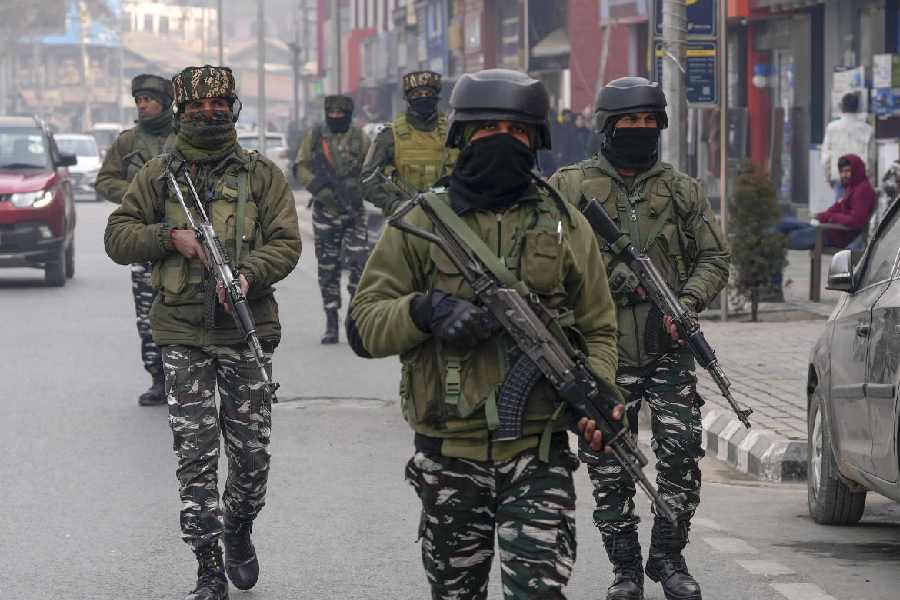
That the distance between the seats of administration and the areas to be administered is often enormous is becoming increasingly evident in the context of militant attacks in different parts of the country. The killing fields remain what they are even as government spokesmen in state capitals and New Delhi continue to make inane statements about possible measures being taken to provide security to the people.

Take Assam. For years now, the United Liberation Front of Asom and other smaller extremist groups are being allowed to carry on with their acts of depredation with the government remaining a spectator. Yes, ‘allowed’ is the right word in the absence of a better one to indicate official inaction. Another word is ‘connivance’, which can be safely used in the context of the role of a section of the state’s politicians. Recently, the chief minister of Jammu and Kashmir has spoken of such connivance in his own state. His counterpart in Assam, also a Congressman, would do well to speak in the same voice.

The current targets in the state are Hindi-speaking people, mostly from Bihar. With no employment at home, these hapless people had, like generations of their predecessors, been forced to go to Assam to seek jobs or set up small shops in far-flung areas. They were tolerated because the Assamese do not like to live by the sweat of their brows. It was much the same with the hard-working peasants from former East Bengal, whom the British had encouraged to set up home in Assam for increased agricultural production and, thereby, land revenue.

Wretched lot

The attackers do not stand to gain anything material. But they know they will reap a rich harvest at another level, that of popular sympathy and support. The average Assamese has never had any love lost for the ‘outsider’, even though the latter performs tasks which are essential to keep the economy moving and which the son of the soil has always shied away from. The politicians of the state have always taken advantage of this dog-in-the-manger psyche to divert attention from their own shortcomings, needlessly blaming those from outside the state. And now the Ulfa and others have decided that this is the best way of worming their way back into people’s hearts.

Of course, it is not just the poor in remote areas who are being killed. Blasts at Guwahati’s business centres like Fancy Bazar have also occurred, and may well recur. The ensuing panic may cause the trader from Rajasthan or Gujarat to shell out protection money. Such tactics have been profitably used by the Gorkha National Liberation Front in the Darjeeling hills. Nowhere is the trader from western India a popular figure and so anybody who can browbeat him enjoys support. And the Ulfa will badly need support at home if Bangladesh does stick to its commitment of flushing out Indian extremists.

It is a dangerous situation. The Biharis are not only there in Assam, but they do manual labour in most other north-eastern states which have their own extremist outfits. The latter may well follow Ulfa’s example as the overall situation is similar in the region. The Biharis will prove to be sitting ducks while their leaders back home remain totally incapable of uniting and telling the Centre to do something. The Bihar chief minister, Nitish Kumar, can meet the prime minister to express concern for the goings-on, but not Lalu Prasad, who could have strengthened the case. Which means the Bihari in Assam, Manipur or elsewhere in the region will continue to spend sleepless nights. There is no way he can return home, for that will mean death from starvation. Today they truly are the most wretched lot in India. Do the ‘do-gooders’ in Guwahati, looking for a ‘honourable settlement’ with the ‘boys’ think about them?

Top
Email This Page